
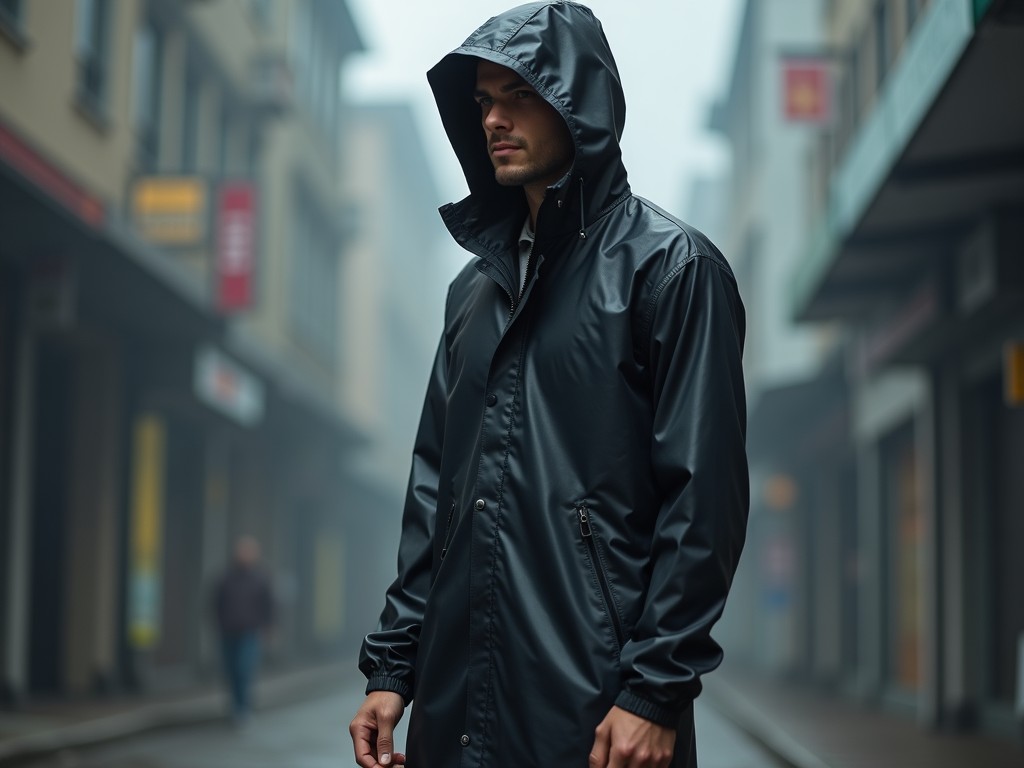
Long Rain Jacket For Men Top Factory
Long Rain Jacket for Men – Industrial Top Factory Specification
This document details the technical specifications, material construction, and performance characteristics of a long rain jacket designed for men in industrial environments. It is intended for procurement engineers, safety officers, and OEM buyers evaluating protective outerwear for prolonged exposure to wet conditions in manufacturing, logistics, utilities, and field service operations.
Material System Overview and Functional Requirements
The jacket is engineered as a three-layer laminate system to balance waterproof integrity, breathability, and mechanical durability. Unlike consumer-grade rainwear, it prioritizes seam sealing longevity, abrasion resistance at high-wear zones, and compatibility with underlying PPE such as harnesses, tool belts, and communication gear. The extended length (typically 85–95 cm from nape to hem) ensures coverage over trousers and boots during prolonged bending, kneeling, or overhead work, reducing water ingress at critical interfaces.
Key performance targets include a minimum hydrostatic head of 15,000 mm, moisture vapor transmission rate (MVTR) of at least 8,000 g/m²/24h, and tear strength exceeding 25 N in both warp and weft directions per ASTM D5034. These values are not marketing claims but baseline thresholds validated through third-party lab testing under ISO 811 and ISO 9073 standards.
Layer Construction and Material Composition
The outer shell consists of 100% nylon 6,6 with a 40D filament yarn construction, treated with a durable water repellent (DWR) finish based on C6 fluoropolymer chemistry. This outer layer provides initial bead-off of rain and resists snagging from conveyor edges, metal brackets, and abrasive surfaces commonly found in industrial settings. The nylon 6,6 selection offers superior UV stability and heat resistance compared to polyester alternatives, critical for outdoor storage and intermittent sun exposure.
The middle layer is a microporous polytetrafluoroethylene (PTFE) membrane laminated directly to the shell. This membrane features a pore structure of approximately 0.2 μm, allowing water vapor molecules (0.0004 μm) to pass while blocking liquid water droplets (20–100 μm). The lamination process uses a polyurethane adhesive layer to ensure bond integrity after repeated flexing and washing cycles, preventing delamination—a common failure point in lower-cost laminates.
The inner layer is a 100% polyester tricot mesh with a denier of 75D, designed to wick condensation away from the skin and protect the membrane from oils, sweat, and particulate contamination. This mesh adds no significant bulk but enhances wear comfort during extended shifts. All materials are OEKO-TEX® Standard 100 certified to confirm absence of harmful substances, supporting compliance with workplace safety regulations in regulated industries.
Seam Sealing and Closure System
All seams are sealed using 20mm-wide polyurethane tape applied via hot-air welding at 380±10°C. The tape thickness is precisely controlled to 0.18mm to ensure flexibility without cracking under repeated flex stress. Seam sealing extends to all external stitching, including shoulder yokes, sleeve attachments, pocket welts, and storm flaps—areas often overlooked in consumer designs but critical for industrial reliability.
The front closure features a YKK® Vislon® zipper with polymer teeth, coated with a hydrophobic finish and protected by an internal storm flap secured with touch-and-close fasteners. The zipper pull is oversized for gloved operation and includes a cord lock to prevent unintentional opening. Storm flaps extend 25mm beyond the zipper edge on both sides to prevent wind-driven water penetration, a detail validated through rain tunnel testing at 100 mm/hr intensity.
Design Features for Industrial Use
The jacket includes two lower front pockets with vertical zippers and drainage grommets at the base to prevent water accumulation. Pocket bags are made of the same 3-layer laminate to maintain waterproof integrity. Internal storage consists of a single mesh pocket for radios or documentation, positioned to avoid interference with harness D-rings. Adjustable cuffs use 20mm-wide hook-and-loop straps with thermoplastic polyurethane (TPU) tabs for durability, allowing tight sealing over gloves without snagging.
The hood is helmet-compatible, featuring a three-point adjustment system (circumference, brim depth, and face opening) using low-profile cord locks. Brim stiffness is achieved through a laminated polyethylene insert, maintaining shape in high wind while remaining stowable. The hood stows into a zippered collar compartment when not in use, reducing profile and preventing snagging on equipment.
Performance Validation and Testing
Waterproof performance is verified using a static column test per ISO 811, with specimens conditioned at 20°C/65% RH for 24 hours prior to testing. Results are reported as the minimum hydrostatic head across five specimens, with a target of ≥15,000 mm. Breathability is measured via the upright cup method (ASTM E96) using desiccant, with MVTR recorded after 24 hours. These tests are conducted on finished garments, not just fabric swatches, to account for seam and closure effects.
Abrasion resistance is assessed using the Martindale tester (ISO 12947-2) with a 12 kPa pressure and standard wool abrasive. The outer shell demonstrates no thread breakage after 50,000 cycles, exceeding the 20,000-cycle threshold for heavy-duty workwear. Dimensional stability after washing is evaluated per ISO 6330, with shrinkage limited to ±2% in both dimensions after five cycles at 40°C. Colorfastness to light (ISO 105-B02) and washing (ISO 105-C06) is maintained at grade 4 or higher to ensure visibility and professional appearance over time.
Customization Options and Industrial Adaptation
While the base configuration meets general industrial needs, the design supports adaptation to specific operational hazards. Optional reinforcements include Kevlar® stitching in high-stress areas (elbows, shoulders) for environments with sharp edges or welding spatter proximity. Reflective trim compliant with ANSI/ISEA 107-2020 can be applied to sleeves, torso, and hem for low-light visibility, using heat-applied polyurethane film that maintains flexibility after washing.
Color options are limited to dark navy, charcoal gray, and safety orange—not for aesthetic preference but to minimize visibility of dirt, oil, and grime while meeting site-specific conspicuity requirements. Sizing follows ISO 8559-1 dimensions with extended torso and sleeve lengths available upon request to accommodate layered PPE or larger builds without compromising range of motion. All customizations are subject to minimum order quantities and require technical review to ensure performance integrity is not compromised.
Quality Control and Manufacturing Consistency
Production occurs in a dedicated line with controlled temperature (22±2°C) and humidity (50±5% RH) to prevent material deformation during cutting and sealing. Each batch undergoes first-article inspection (FAI) comparing physical samples to approved specifications, including seam tape adhesion strength (peel test ≥1.5 N/mm), zipper functionality (100 cycles at 100N pull), and dimensional accuracy. In-process checks monitor seam sealing temperature, tape placement accuracy, and thread tension to prevent drift.
Final random inspection follows AQL 2.5 for major defects (e.g., open seams, missing tape, non-functional zippers) and AQL 4.0 for minor defects (e.g., slight shading, loose threads). All test data is retained for traceability, and conformance reports are available upon request. The factory maintains ISO 9001:2015 certification for quality management and ISO 14001:2015 for environmental management, ensuring consistent output and responsible manufacturing practices.
Packaging and Logistics Considerations
Each jacket is folded using a standardized method to minimize creasing in critical areas (hood, shoulders) and placed in a 50μm polyethylene bag with desiccant sachet to control moisture during transit. Bags are then packed into corrugated cartons (single wall, 150gsm) with dimensions optimized for palletization (600×400×300mm). Cartons are labeled with barcodes containing SKU, size, color, batch number, and QR code linking to the product’s technical data sheet and compliance documentation.
For export shipments, cartons are secured with polypropylene straps and corner protectors to prevent shifting. Pallets are stretch-wrapped with 80μm film and labeled according to ISPM 15 standards for wood packaging. Lead time from order confirmation to ex-factory readiness is typically 25–35 days for standard configurations, extending to 45–60 days for certified customizations (e.g., ANSI/ISEA 107, specific DWR formulations). Expedited options are available upon request with corresponding cost adjustments.
Technical Inquiry
For detailed specifications, test reports, or to discuss customization for your operational environment, contact our technical sales team. Provide your application details, required quantities, and any compliance standards (e.g., ANSI/ISEA, EN, CSA) to receive a tailored quotation and sample availability.
Request Technical Specification Sheet