
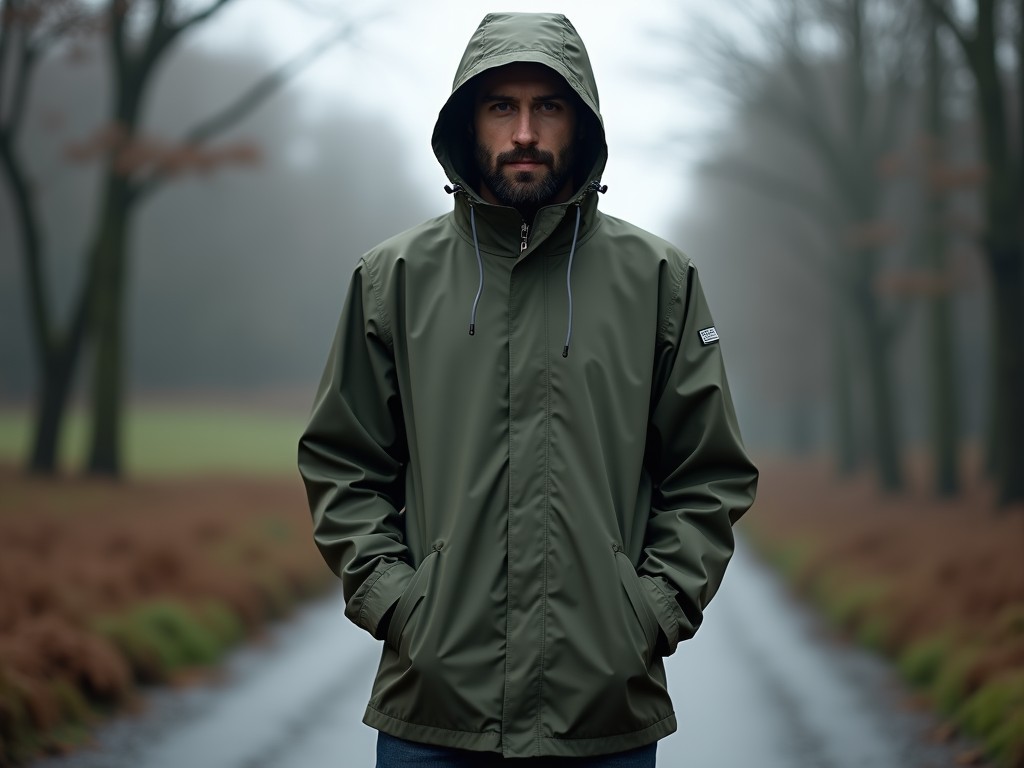
Lightweight Rain Gear For Men
Lightweight Rain Gear for Men
Industrial and field personnel operating in wet environments require rain protection that does not compromise mobility or add unnecessary thermal load. Lightweight rain gear for men addresses this need through precise material selection, seam construction, and ergonomic design. This page explains the technical characteristics that determine performance in real-world conditions, enabling informed procurement decisions based on measurable attributes rather than subjective claims.
The effectiveness of rain gear depends on three interconnected properties: water resistance, vapor permeability, and mechanical durability. These are quantified through standardized test methods such as hydrostatic head (resistance to water penetration), moisture vapor transmission rate (MVTR), and tear strength (ASTM D2261). Understanding how these metrics interact allows buyers to match gear specifications to specific operational demands, whether for prolonged exposure in temperate climates or intermittent use in high-activity scenarios.
Material Construction and Performance Metrics
The foundation of lightweight rain gear lies in the laminate or coated fabric system. Common constructions include a face fabric (typically nylon or polyester) bonded to a microporous or hydrophilic membrane, with a durable water repellent (DWR) finish on the exterior. The face fabric denier directly influences abrasion resistance—70D nylon offers a balance of low weight (~45 g/m²) and durability, while 30D variants reduce weight to ~25 g/m² but require careful handling in brush-heavy environments.
Membrane technology dictates the breathability-waterproofing trade-off. Microporous membranes (e.g., ePTFE) achieve hydrostatic head ratings of 20,000 mm or higher with MVTR values exceeding 15,000 g/m²/24h under controlled conditions (JIS L 1099 B1). Hydrophilic membranes, while slightly less breathable (MVTR ~8,000–12,000 g/m²/24h), provide superior resistance to contamination from oils and dirt, making them suitable for industrial settings where exposure to lubricants or chemicals is possible. DWR finishes, measured by spray rating (AATCC 22), typically maintain a score of 4–5 after 20 wash cycles when properly maintained.
Seam Sealing and Structural Integrity
Even the most water-resistant fabric fails if seams are not properly sealed. Industrial rain gear uses either tape sealing or welded seams to prevent water ingress at stitch lines. Tape sealing applies a polyurethane tape over sewn seams using heat and pressure, achieving a seal strength comparable to the base fabric. Welded seams, created through ultrasonic or RF bonding, eliminate the need for thread and tape, reducing weight and potential failure points—particularly beneficial in garments designed for minimal mass.
Seam placement also affects performance. Critical zones such as shoulder yokes and side panels often use flat-felled or lapped seams to reduce bulk and prevent chafing during prolonged wear. Bar tacks at stress points (pocket corners, belt loops) increase tear resistance by distributing load across multiple stitches. For applications involving frequent donning and doffing, reinforced cuffs and hems with bartack or double-needle stitching prevent fraying and maintain weatherproof integrity over time.
Design Features for Operational Use
Beyond material properties, functional design determines usability in active work environments. Adjustable hoods with laminated brims maintain visibility while shedding water; a minimum brim width of 50 mm ensures adequate runoff without obstructing peripheral vision. Pit zippers, when included, must be covered with storm flaps to prevent water ingress while allowing ventilation—typically positioned under the arm to align with natural airflow paths during movement.
Pocket configuration influences both utility and water resistance. Chest pockets with vertical zippers and storm flaps minimize water entry compared to horizontal designs. Interior mesh pockets, if present, should be constructed from hydrophobic polyester to prevent moisture retention. Adjustable cuffs with hook-and-loop closures allow sealing over gloves or sleeves, while adjustable hems with elastic drawcords prevent water runoff from entering the garment during bending or reaching motions.
Comparison of Common Configurations
| Feature | Lightweight Shell (30D Face) | Balanced Performance (70D Face) | Reinforced Industrial |
|---|---|---|---|
| Face Fabric Denier | 30D Nylon | 70D Nylon/Polyester | 70D Ripstop Nylon |
| Typical Weight (Size M) | 180 g | 260 g | 310 g |
| Hydrostatic Head (mm) | 15,000–20,000 | 20,000–28,000 | 20,000–30,000 |
| MVTR (g/m²/24h) | 12,000–18,000 | 10,000–15,000 | 8,000–12,000 |
| Tear Strength (N, ASTM D2261) | 15–20 (warp), 10–15 (fill) | 25–35 (warp), 20–28 (fill) | 30–40 (warp), 25–35 (fill) |
| Best Suited For | High-mobility, low-abrasion tasks | General field operations | Rough terrain, chemical exposure |
Typical values based on standard laminate constructions. Actual performance varies with membrane type, DWR formulation, and quality control. Custom constructions available upon request.
Quality Control and Validation
Consistency in performance begins with raw material inspection. Face fabric is tested for denier accuracy, tensile strength, and dimensional stability before lamination. Membrane lots are verified for MVTR and hydrostatic head using calibrated test equipment. Finished materials undergo spray testing (AATCC 35) to confirm DWR effectiveness and seam seal integrity is checked via hydrostatic pressure testing on sealed seams.
Garment-level validation includes wear trials simulating real-world conditions: prolonged exposure to simulated rain (IPX4 equivalent), articulated movement testing to assess seam fatigue, and abrasion resistance checks on high-wear areas. Dimensional stability is measured after multiple wash cycles to ensure fit and function are retained. These procedures are documented in internal quality reports available to customers upon request.
Customization and Procurement Considerations
Industrial buyers often require modifications to standard designs to meet specific operational or safety requirements. Common customizations include adjustable hood retention systems compatible with hard hats, reinforced knee patches for crawling operations, and integrated radio loops or badge holders. Color options extend beyond standard neutrals to high-visibility variants (ANSI/ISEA 107 compliant) with retroreflective tape placement optimized for 360-degree visibility.
Lead times depend on fabric availability and complexity of modifications. Standard configurations typically ship within 3–4 weeks; custom orders may extend to 6–8 weeks. Minimum order quantities vary by material but often start at 50 units for standard styles. Samples are available for evaluation, including detailed spec sheets with test data for hydrostatic head, MVTR, and tear strength. Quotations require details on intended use, expected exposure duration, and any required certifications.
Selecting appropriate rain gear involves balancing weight, protection, and durability based on actual use conditions. By focusing on measurable properties—fabric density, membrane performance, seam integrity, and design details—buyers can specify gear that meets operational needs without unnecessary over-engineering or inadequate protection. For technical inquiries, sample requests, or quotation details, contact our engineering team.