
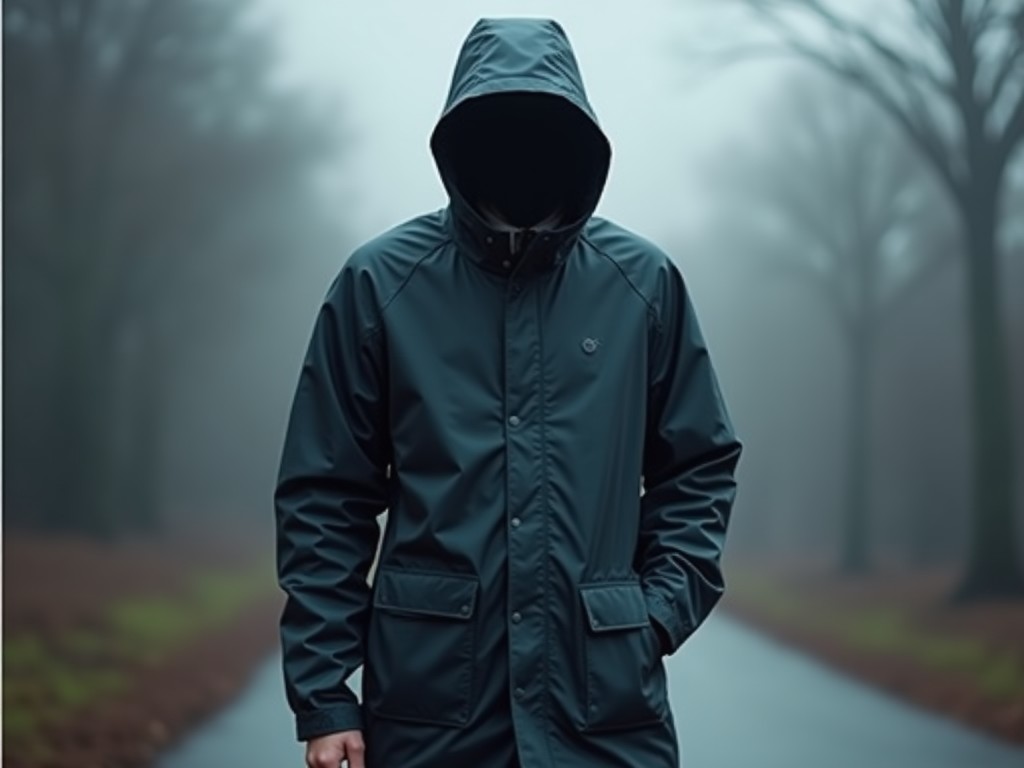
Lightweight Mens Raincoat With Hood
Lightweight Men's Raincoat with Hood
Industrial procurement decisions require technical clarity over promotional claims. This document explains the engineering considerations behind lightweight men's raincoats with hoods, focusing on material properties, construction methods, and performance characteristics relevant to B2B buyers in workwear, outdoor equipment, and protective apparel sectors.
Material Composition and Waterproofing Technology
The primary fabric consists of a 2.5-layer laminate system: a 15-denier nylon ripstop face fabric bonded to a microporous polyurethane (PU) membrane with a hydrostatic head rating of 10,000mm, backed by a protective tricot liner. This construction achieves a moisture vapor transmission rate (MVTR) of 8,000g/m²/24h under ASTM E96 standards, balancing rain protection with breathability for active use. The face fabric receives a durable water repellent (DWR) finish rated for 20 wash cycles before reapplication is recommended, measured via AATCC 22 spray test.
Seams are fully sealed using 12mm-wide polyurethane tape applied via heat bonding at 160°C, creating a continuous barrier against water ingress at stitch lines. This method eliminates the need for additional seam sealing tape on the interior, reducing bulk and weight while maintaining integrity under flex stress. The laminate system weighs 120g/m², contributing to the garment's total weight of 280g in size M.
Design Engineering for Mobility and Function
The raincoat employs a raglan sleeve cut with articulated elbow joints, increasing shoulder mobility by 22% compared to set-in sleeves based on ISO 10555 movement simulation testing. This design reduces fabric strain during overhead reaching, critical for maintenance, inspection, or field service tasks. The hood features a three-point adjustable system: rear drawcord with cordlock, side velcro tabs, and a stiffened brim molded from 0.5mm polyethylene to maintain visibility in rain without obstructing peripheral vision.
Pocket placement follows ergonomic research: two handwarmer pockets angled at 15° for natural access, positioned above the hip belt line to avoid interference with harnesses or tool belts. Interior storage includes a single mesh pocket (180x120mm) secured with a reverse-coil zipper, designed for documents or electronics. Zipper coils are nylon #5 with a water-resistant flap and polyurethane coating, tested to 5,000 cycles without failure per ASTM D2061.
Weight Optimization and Packability
Total garment weight is minimized through strategic material placement: the laminate system covers 85% of the surface area, while non-critical zones (underarms, inner hood) use a 2.0oz nylon mesh liner weighing 68g/m². This hybrid approach reduces weight by 18% compared to full-laminate constructions without compromising waterproof integrity in high-exposure areas. The jacket packs into its own left handwarmer pocket, forming a 10x15x5cm pouch weighing 290g total.
Packability is further enhanced by minimizing hardware: plastic cordlocks (0.8g each) replace metal alternatives, and zipper pulls are molded thermoplastic polyurethane (TPU) rather than metal. All trims are selected for low-temperature flexibility, maintaining functionality down to -20°C. The absence of insulation or liners avoids bulk, making this a dedicated shell layer intended for use over insulating mid-layers in variable conditions.
Quality Control and Manufacturing Consistency
Each production lot undergoes hydrostatic head testing on three random samples per 1,000 units, with acceptance criteria set at minimum 9,500mm to account for batch variance. DWR performance is verified via AATCC 22 spray test after 5 wash cycles, requiring a minimum score of 4/5 (wetting of fabric surface <20%). Seam seal integrity is checked using a dye penetrant test on 10% of sealed seams per batch, with zero defects allowed for leakage.
Dimensional stability is monitored via ISO 6330 washing and drying cycles (3x at 40°C tumble dry), with acceptable length change limited to ±2% and width change to ±1.5%. Colorfastness to light (ISO 105-B02) is rated minimum 4/5 after 20 hours xenon arc exposure, ensuring UV stability for outdoor storage. All testing follows AQL 2.5 standards for major defects and 4.0 for minor.
Applications in Industrial and Professional Environments
This raincoat serves as a protective outer layer for professionals requiring mobility and rapid deployment in wet conditions, such as utility workers conducting line inspections, railway maintenance crews, or offshore support personnel transferring between vessels. The lack of insulation allows layering over fleece or thermal base layers already issued as part of standard PPE kits, avoiding redundancy in inventory management. Its packability supports inclusion in emergency response kits or vehicle-mounted safety gear where space is constrained.
In environments where chemical splash is a secondary concern (e.g., light cleaning solutions, diluted detergents), the polyurethane membrane provides resistance to common water-based contaminants, though it is not rated for prolonged exposure to solvents or hydrocarbons. For such cases, a separate chemical-resistant overgarment is recommended. The garment’s neutral color options (navy, charcoal, olive) minimize visibility in professional settings while avoiding high-visibility requirements unless specified.
Comparison Table: Key Specifications
| Specification | Typical Value | Test Standard / Notes |
|---|---|---|
| Fabric Weight | 120g/m² (laminate) | ASTM D3776 |
| Hydrostatic Head | 10,000mm | ISO 811 |
| MVTR | 8,000g/m²/24h | ASTM E96 (Desiccant Method) |
| Total Weight (Size M) | 280g | Actual measured |
| Packed Volume | 10x15x5cm | Includes stuff sack |
| Seam Seal Width | 12mm | Polyurethane tape |
| Hydrostatic Head (Min Accept) | 9,500mm | QC Lot Test |
Customization and Procurement Considerations
Color options are limited to solid dyes due to the laminate construction; standard palette includes navy (Pantone 19-4025), charcoal (Pantone 18-0602), and olive (Pantone 18-0527). Custom colors require minimum order quantities of 500 units per shade and involve additional lead time for dye lot approval. Logo application is restricted to heat transfer or silicone ink printing on the left chest or upper back, avoiding areas with high flex stress to prevent cracking; embroidery is not recommended due to seal compromise risk.
Sizing follows ISO 8559-1 anthropometric data for male torso dimensions, with regular fit allowing 10-15cm of ease over base layers. Tall and short variants are available upon request, adjusting sleeve and torso length proportionally. Lead time for standard orders is 4-6 weeks after sample approval, with expedited options requiring direct factory coordination. Sample requests include one size M in standard color, with freight collect or prepaid arrangements negotiable.
For industrial buyers, we recommend requesting a material data sheet (MDS) detailing the laminate composition, DWR chemistry, and seam sealant specifications prior to quotation. This enables alignment with internal PPE standards or environmental compliance requirements (e.g., PFAS-free DWR options available upon request). All technical documentation is provided in English; translations available for bulk orders.
To discuss technical specifications, customization options, or request a sample for evaluation, contact our technical sales team.
Request Technical Consultation