
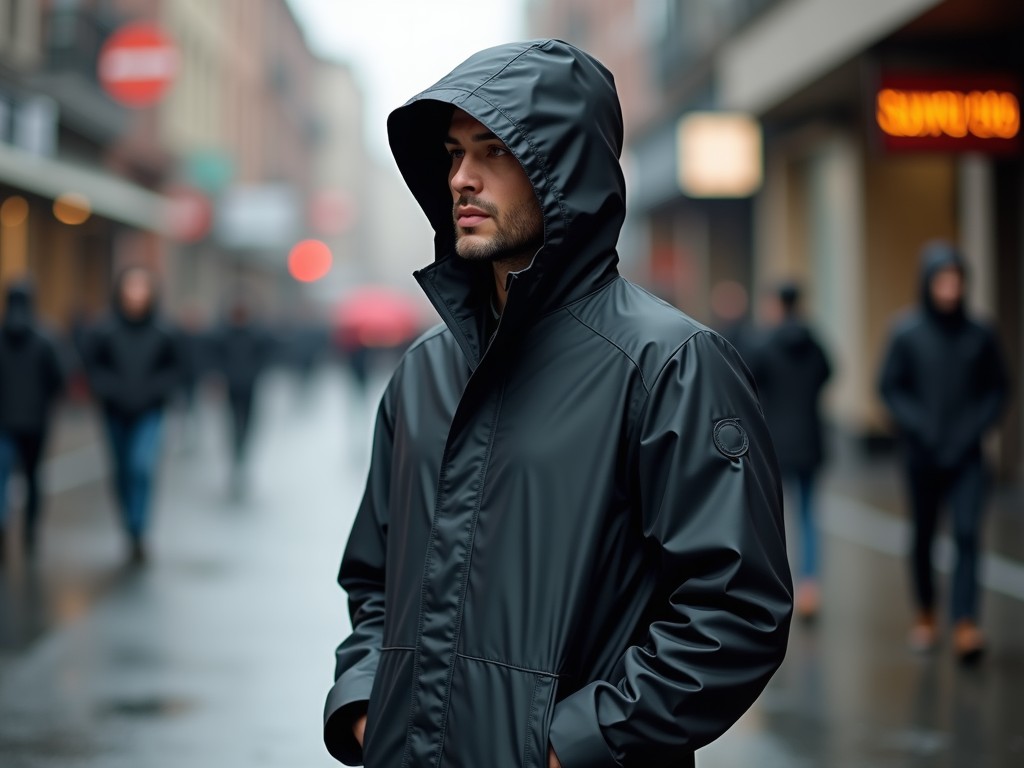
Light Rain Coat Mens Top Factory
Light Rain Coat Men's Top Factory
A men's light rain coat from a dedicated top factory represents a precision-engineered solution for light precipitation protection in industrial, commercial, and outdoor work environments. Unlike fashion-oriented rainwear, industrial-grade light rain coats prioritize functional performance metrics such as water resistance, breathability, seam integrity, and durability under repeated use. These garments are designed not merely to shed water but to maintain wearer comfort and mobility during extended shifts in variable weather conditions. The manufacturing process involves material selection, pattern engineering, seam sealing, and quality validation steps that directly influence field performance and service life. Understanding these technical attributes enables procurement teams to specify garments that reduce downtime, enhance worker compliance, and deliver long-term value.
Material Construction and Performance Characteristics
The foundation of any effective light rain coat lies in its base fabric system, typically a tightly woven polyester or nylon substrate coated with a microporous polyurethane (PU) or thermoplastic polyurethane (TPU) layer. This construction achieves a balance between hydrostatic head resistance—commonly ranging from 1,500mm to 3,000mm for light rain applications—and moisture vapor transmission rate (MVTR), which allows sweat to escape and prevents interior condensation. Fabric weight generally falls between 120–180 GSM, providing sufficient tear strength (often >20N in warp and weft directions per ISO 13937-2) while maintaining flexibility. The coating is applied via roll-to-roll lamination or direct coating, ensuring uniform thickness and adhesion; delamination resistance is validated through accelerated wash and flex testing. Surface treatments such as DWR (durable water repellent) finishes are applied to the outer face to reduce surface wetting and maintain breathability over time.
Seal Integrity and Garment Design
Water penetration risk in rain coats is highest at seams, zippers, and openings; therefore, seam sealing is a critical manufacturing step. Fully taped seams using heat-activated PU tape (typically 20mm width) are applied over all stitched joints to achieve a continuous waterproof barrier. Tape adhesion strength is measured post-application, with peel resistance >1.5N/mm considered acceptable for industrial use. Zippers are either coated or covered by storm flaps with hook-and-loop or snap closures to prevent wicking. The garment cut follows ergonomic patterning—articulated shoulders, gusseted underarms, and a slightly tapered torso—to allow unrestricted movement during tasks such as climbing, reaching, or equipment handling. Adjustable cuffs (via hook-and-loop or snap closures) and a drawcord hem minimize water ingress at extremities. A two-way front zipper with chin guard and storm flap enhances usability when wearing layers or harnesses.
Customization Options for Industrial Applications
Industrial buyers frequently require adaptations beyond standard catalog items to meet specific operational or branding needs. Common customization points include fabric color (Pantone-matched for corporate identity), logo application via screen printing, heat transfer, or embroidery on the chest, back, or sleeve, and reflective trim placement for low-visibility environments (compliant with EN ISO 20471 when required). Pocket configurations can be modified—adding internal secure pockets for electronics, external flap-covered pockets for tool access, or radio loops on the shoulder. Liner options range from none (for minimal insulation) to lightweight mesh or fleece bands in the collar and cuffs for comfort. Sizing is offered in standard industrial ranges (S–3XL) with optional tall or stout cuts; made-to-measure patterns are available for bulk orders exceeding 500 units, based on client-provided measurement charts.
Quality Control and Validation Protocols
Consistent performance begins with rigorous incoming material inspection: fabric is tested for hydrostatic head (AATCC 127), MVTR (ASTM E96), tear strength, and colorfastness to light and washing. During production, in-line checks monitor seam tape alignment, temperature, and pressure; first-off garments undergo full water spray testing (AATCC 35) to verify leak points. Final inspection includes dimensional stability assessment after washing (per ISO 6330), visual defect scoring (using 4-point system), and functional checks of zippers, closures, and adjustables. Bulk shipments are accompanied by a certificate of conformance detailing test methods and results; third-party lab validation (e.g., SGS, Intertek) is available upon request. These procedures ensure that each coat meets the specified performance threshold before leaving the factory, reducing field failure risk.
| Parameter | Typical Range / Specification | Test Standard |
|---|---|---|
| Hydrostatic Head | 1,500–3,000 mm | AATCC 127 |
| Moisture Vapor Transmission Rate (MVTR) | 2,000–5,000 g/m²/24h | ASTM E96 |
| Fabric Weight | 120–180 GSM | ASTM D3776 |
| Seam Tape Peel Resistance | >1.5 N/mm | ISO 11339 |
| Tear Strength (Warp/Weft) | >20 N | ISO 13937-2 |
| Colorfastness to Washing | Grade 4 or better | ISO 105 C06 |
Applications Across Work Environments
Light rain coats are specified in industries where workers face intermittent precipitation but require mobility and minimal thermal bulk. In utility and telecommunications, linemen and technicians wear them during aerial line work or ground-based repairs when sudden showers occur; the garment’s lightweight nature prevents overheating while maintaining protection. In construction, site supervisors and inspectors use them for outdoor progress checks or material deliveries, where full rain suits would be excessive. Logistics and warehouse personnel involved in loading/unloading at open docks benefit from the coat’s ease of donning and doffing between indoor and outdoor zones. Additionally, event staff, security personnel, and campus maintenance teams adopt these coats for their professional appearance and quick-deploy functionality during outdoor gatherings or patrols. The key selection factor is balancing precipitation defense with wearer comfort across fluctuating activity levels and ambient temperatures.
For procurement engineers and technical buyers seeking a reliable source for men's light rain coats manufactured to industrial specifications, direct engagement with the factory ensures transparency in material sourcing, process control, and customization capabilities. Unlike trading companies, a top-tier factory maintains oversight of every production stage—from yarn selection to final packaging—allowing for rapid response to design changes, quality concerns, or delivery schedules. This vertical integration reduces communication layers and enables technical collaboration during product development. To initiate a quotation or request sample evaluation, provide details on required quantities, desired specifications (e.g., hydrostatic head target, color, branding), and intended use case. The factory’s technical team will respond with a detailed proposal including lead times, tooling considerations (if applicable), and compliance documentation.