
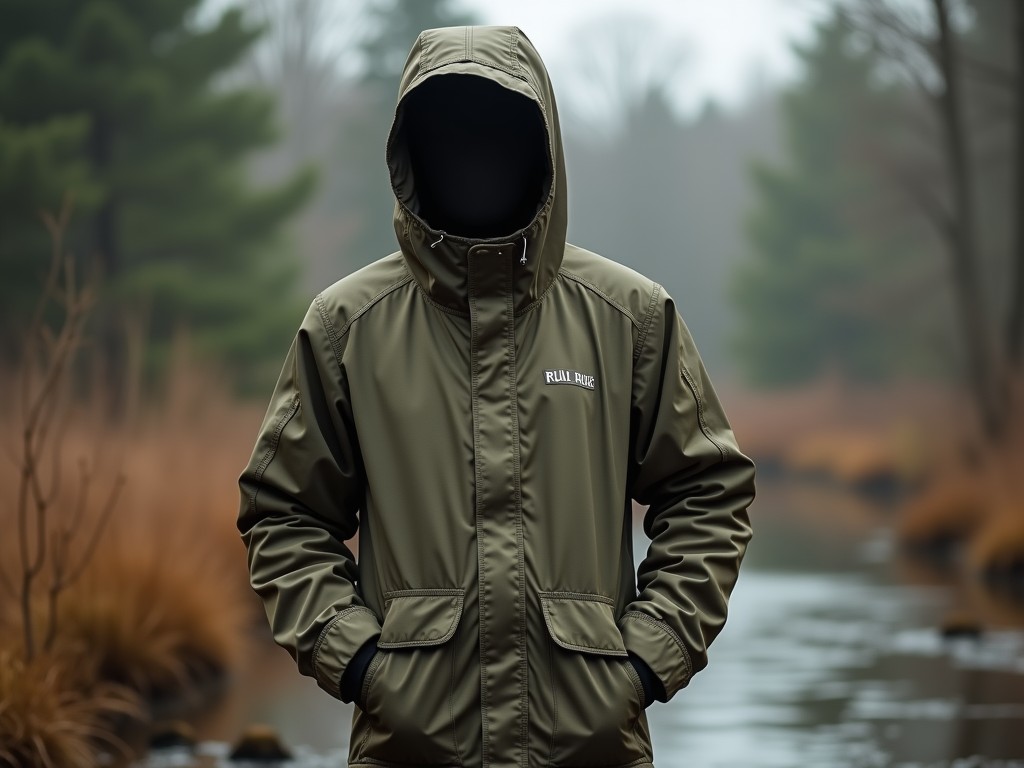
Hunting Rain Gear Suits Sale
Hunting Rain Gear Suits – Technical Specifications and Selection Guide
Selecting appropriate rain gear for hunting requires understanding material performance, environmental exposure limits, and functional design trade-offs. This guide explains the engineering characteristics that determine suitability for field use, focusing on measurable properties rather than subjective claims.
The following sections detail fabric construction, seam integrity, breathability metrics, and ergonomic considerations critical for prolonged wear in variable weather conditions.
Material Composition and Performance Characteristics
Effective hunting rain suits utilize multilayer fabric systems where the outer layer provides abrasion resistance and the inner membrane governs waterproofing and vapor transmission. Common configurations include a nylon or polyester face fabric laminated to a microporous polyurethane or ePTFE membrane.
Waterproof rating is measured in millimeters of water column (mm H₂O) using the hydrostatic head test. Suits rated at 10,000 mm H₂O or higher resist sustained rainfall and wind-driven spray without leakage. Breathability is quantified by moisture vapor transmission rate (MVTR), typically expressed in grams per square meter per 24 hours (g/m²/24h). Values exceeding 5,000 g/m²/24h indicate sufficient vapor transfer to reduce internal condensation during moderate activity.
Durable water repellent (DWR) finish on the outer fabric prevents saturation of the face layer, maintaining breathability and reducing weight gain. DWR efficacy diminishes with use and requires periodic reactivation via heat treatment or reapplication.
Seam Construction and Seal Integrity
Seam integrity is a critical failure point in rain gear. Needle holes from stitching create pathways for water ingress unless sealed. Fully taped seams apply a waterproof tape over stitched joints using heat-activated adhesive, eliminating leakage paths.
Critical seam areas—shoulders, sleeves, inseams, and hood attachments—require taping. Some manufacturers use triple-stitched seams with waterproof tape for added mechanical strength in high-stress zones. Seam tape adhesion strength should exceed 2.5 N/mm to resist delamination after flexing and washing cycles.
Inspect seam tape uniformity; gaps or bubbles indicate incomplete bonding and potential leakage points. Factory-applied tape is more reliable than field-applied solutions due to controlled temperature and pressure during lamination.
Ergonomic Design and Functional Features
Hunting-specific design prioritizes mobility, noise reduction, and accessory integration. Articulated knees and elbows use pre-bent patterning to maintain range of motion without fabric binding. Gusseted underarms improve reach when shouldering firearms or drawing bows.
Fabric weight influences both durability and noise. Heavier face fabrics (e.g., 150 denier nylon) resist brush abrasion but may generate more rustle. Lighter options (70–100 denier) reduce sound but sacrifice tear strength. Optimal balance depends on terrain and hunting method.
Pocket placement avoids interference with harnesses or belt systems. Chest pockets should be accessible when wearing a pack. Ventilation zippers under arms or along thighs allow controlled airflow without compromising waterproof integrity when closed.
Comparison of Common Rain Suit Configurations
| Feature | Lightweight Suit (70D Nylon) | Heavy-Duty Suit (150D Nylon) |
|---|---|---|
| Face Fabric Weight | 70 denier | 150 denier |
| Hydrostatic Head | 10,000 mm H₂O | 15,000 mm H₂O |
| MVTR | 8,000 g/m²/24h | 4,500 g/m²/24h |
| Abrasion Resistance (Cycles to Failure) | ~1,200 cycles | ~3,500 cycles |
| Typical Use Case | Mobile hunting, mild terrain | Brush-heavy areas, extended exposure |
Values represent typical ranges; actual performance depends on specific membrane technology and DWR treatment.
Quality Control and Testing Protocols
Consistent performance relies on standardized testing during production. Hydrostatic head tests are conducted on finished fabric panels and sealed seam samples to verify batch conformity. MVTR is measured using controlled humidity chambers per ASTM E96 standards.
Dimensional stability is assessed after washing and drying cycles to ensure no significant shrinkage or distortion that could affect fit or seam integrity. Colorfastness to light and perspiration is evaluated to prevent fading or staining during extended field use.
Visual inspection includes checking for fabric defects, misaligned tapes, and zipper function. Acceptable quality limits (AQL) are typically set at 2.5 for major defects and 4.0 for minor defects per batch.
Selection Considerations for Procurement
When specifying rain gear suits, prioritize matching the MVTR to expected activity levels. High-exertion hunting (e.g., spot-and-stalk) benefits from higher breathability, even if it means slightly lower hydrostatic head. For passive hunting (e.g., blind sitting), maximum waterproofing takes precedence.
Consider layering compatibility. Suits should accommodate insulating midlayers without restricting movement or compressing insulation, which reduces thermal efficiency. Check sleeve and torso length when wearing base and mid layers.
Request test reports for hydrostatic head, MVTR, and seam strength from suppliers. Verify that DWR treatment is renewable and that care instructions do not degrade membrane performance over time.
For technical specifications, customization options, or to request a quotation, contact our engineering team.
Request Technical Consultation