
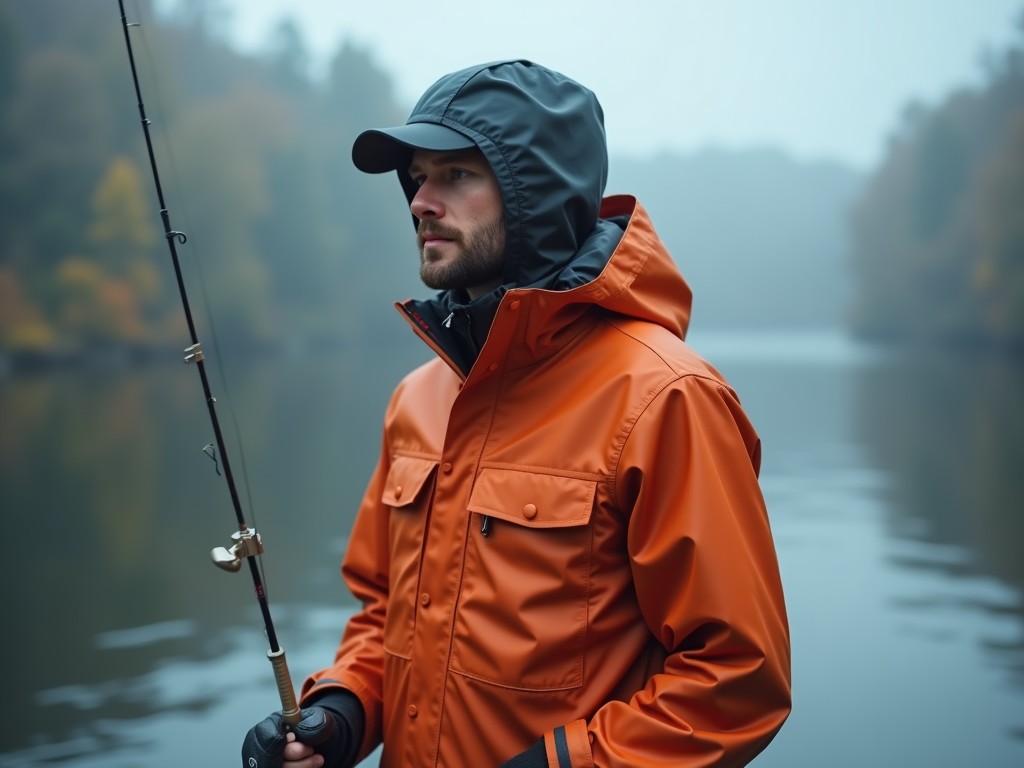
Fishing Waterproof Jacket Mens
Fishing Waterproof Jacket Mens
Selecting a fishing waterproof jacket requires understanding how material properties, seam construction, and ventilation systems interact to maintain thermal regulation and moisture management during prolonged exposure to wet conditions. This technical overview details the engineering principles behind effective marine outerwear, enabling procurement professionals to evaluate performance based on measurable specifications rather than marketing claims.
Material Performance and Waterproofing Mechanisms
The primary defense against water ingress relies on a microporous polyurethane laminate bonded to a nylon or polyester face fabric. This construction achieves a hydrostatic head rating of 10,000mm to 20,000mm, measured under ISO 811 standards, indicating the water column height the fabric can resist before leakage occurs. Unlike non-breathable PVC coatings, microporous membranes allow water vapor transmission (measured as RET < 9 m²Pa/W) while blocking liquid water, reducing internal condensation during high-exertion activities like casting or reeling.
Face fabric denier typically ranges from 70D to 150D nylon ripstop, providing tear strength between 20N and 35N (ASTM D5034) and abrasion resistance exceeding 20,000 cycles (Martindale test). A durable water repellent (DWR) finish applied to the outer surface causes water to bead and roll off, preventing fabric saturation that would otherwise degrade breathability. DWR efficacy diminishes over time and requires reactivation via low-heat tumble drying or reapplication of fluoropolymer-based treatments.
Seal Integrity and Closure Systems
Seam sealing is critical; stitch holes create pathways for water ingress unless addressed. Fully taped seams apply a 10–15mm wide polyurethane tape over all stitched seams using heat activation, achieving a seam leakage rate of <0.1mm/hour under hydrostatic pressure. Critically taped seams (only major seams) reduce manufacturing cost but leave shoulder, sleeve, and pocket seams vulnerable—unsuitable for prolonged immersion or heavy spray exposure.
Front closures utilize waterproof zippers with storm flaps and drainage channels. YKK AquaGuard® zippers, for example, feature polyurethane-coated coils and a hydrophilic membrane that swells when wet to block water migration. Alternative designs include overlapping flap systems with magnetic or Velcro® closures, which eliminate zipper failure points but may compromise adjustability in high-wind conditions. Adjustable cuffs with dual-layer neoprene seals and hook-and-loop closures maintain watertight integrity while accommodating varying glove thicknesses.
Thermal Regulation and Ventilation Design
Effective moisture management depends on balancing waterproofing with breathability. Underarm ventilation zippers (typically 20–25cm long) with storm flaps increase convective heat transfer by up to 40% when opened, measured via sweating guarded hotplate tests (ISO 11092). Pit zippers positioned along the natural arm swing axis minimize snagging on gear. Chest and back vents are less common in fishing jackets due to reduced airflow efficiency in seated positions but may appear in technical designs for active casting.
Mesh lining materials (100% polyester) enhance wicking and reduce skin adhesion compared to solid linings. Thermal insulation, when present, is limited to lightweight synthetic fills (40–60g/m² polyester) in collar or chest zones to avoid bulk that impedes casting motion. Most fishing jackets prioritize layering compatibility over built-in insulation, allowing users to adjust warmth via mid-layers based on ambient temperature and activity level.
Pocket Configuration and Functional Details
Pocket placement affects usability while wearing a personal flotation device (PFD). Chest pockets positioned above the PFD harness line remain accessible; lower hand-warmer pockets often become inaccessible when a PFD is worn. Waterproof pocket zippers with drainage grommets prevent water accumulation. Internal mesh pockets secure valuables while promoting airflow. Retractable tool holders or D-rings for securing pliers, knives, or tippet holders are integrated into shoulder seams or chest panels to minimize snag risk.
Adjustable hoods feature three-point adjustment (vertical, lateral, depth) and a stiffened peak to shed water away from the face. Hood volume accommodates wearing a beanie or lightweight balaclava underneath. Reflective trim on hoods, shoulders, and cuffs enhances visibility in low-light conditions, meeting EN ISO 20471 Class 2 requirements for background fluorescence when combined with sufficient reflective area.
Typical Specifications and Customization Options
| Parameter | Typical Range / Option |
|---|---|
| Fabric Hydrostatic Head | 10,000mm – 20,000mm (ISO 811) |
| Breathability (RET) | < 9 m²Pa/W (ISO 11092) |
| Face Fabric Denier | 70D – 150D nylon ripstop |
| Tear Strength | 20N – 35N (ASTM D5034) |
| Seam Treatment | Fully taped or critically taped |
| Closure Type | Waterproof zipper with storm flap |
| Ventilation | Underarm zippers (20–25cm) |
| Hood Adjustment | Three-point (vertical, lateral, depth) |
| Reflective Trim | EN ISO 20471 Class 2 compliant |
Customization options include adjustable hem drawcords with cord locks, removable hoods, and reinforced abrasion patches at high-wear areas (e.g., lower back, elbows). Color selection often prioritizes high-visibility safety orange or low-visibility earth tones based on operational environment. Sizing follows standard marine garment charts, with chest measurements ranging from 90cm to 130cm and sleeve lengths adjusted for layering compatibility. Custom logo placement is available via sublimation printing on face fabric or embroidery on sheltered areas like the upper chest or back yoke.
Quality Assurance and Testing Protocols
Manufacturing quality control includes roll-to-roll inspection of laminated fabric for delamination, bubbles, or inconsistent coating thickness. Seam tape adhesion is verified via peel strength testing (ASTM D903), requiring a minimum of 2.0 N/mm to ensure long-term durability. Finished garments undergo rain tower testing (AATCC 35) simulating 100mm/hour rainfall for 30 minutes, with internal moisture absorption measured via gravimetric analysis. Breathability is validated using sweating guarded hotplate tests across multiple humidity gradients to confirm RET values remain within specification after repeated flexing.
DWR performance is evaluated using spray rating tests (AATCC 22), with a minimum score of 80 (out of 100) required for initial effectiveness. Accelerated weathering tests (ISO 4892-3) assess UV resistance of face fabric and coatings, predicting colorfastness and mechanical property retention over 500 hours of exposure. All test data is available upon request for qualified buyers to validate performance claims against their specific operational requirements.
For technical inquiries, material data sheets, or to discuss customization options for your specific application, please contact our engineering team.
Request Technical Specifications or Quotation