
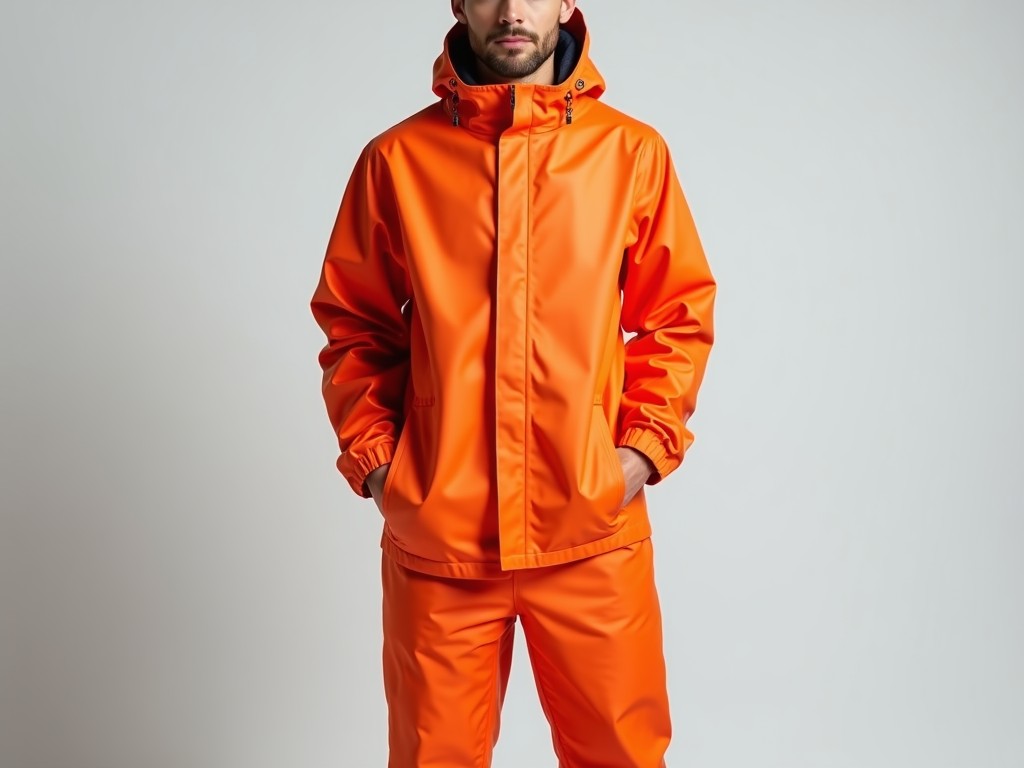
Direct Factory Raincoat Pants For Men
Direct Factory Raincoat Pants for Men
Raincoat pants designed for industrial use must balance waterproof performance with freedom of movement in demanding environments. Unlike consumer rainwear, industrial versions face exposure to oils, chemicals, abrasion, and prolonged wear, requiring specific material properties and construction details. Understanding these requirements helps buyers select garments that maintain protection without compromising worker safety or comfort during extended shifts.
Material Selection and Waterproofing Mechanism
The base fabric typically uses a nylon or polyester shell coated with polyurethane (PU) or polyvinyl chloride (PVC) to achieve waterproof ratings of 5,000mm to 10,000mm hydrostatic head, depending on the application. Seams are sealed using heat-activated tape or ultrasonic welding to prevent leakage at stitch points, a critical failure point in non-industrial rainwear. For environments with chemical exposure, specialized coatings such as nitrile rubber or neoprene may be specified to resist degradation from oils, solvents, or acids.
Design Features for Industrial Mobility and Safety
Industrial raincoat pants incorporate articulated knees and gusseted crotches to maintain range of motion when climbing, kneeling, or operating machinery. Adjustable waistbands with internal drawstrings or elasticized sides ensure a secure fit over layered clothing without restricting circulation. Ankle closures use either hook-and-loop straps or snap buttons to prevent water ingress while allowing quick removal over boots. Reflective trim, when required, is applied using heat-transfer tape that maintains adhesion after repeated washing and UV exposure.
Manufacturing Considerations for Bulk Orders
Direct factory production allows control over material batch consistency, seam sealing uniformity, and sizing tolerance across large quantities. Factories typically implement inline inspection at cutting, sewing, and sealing stages to detect coating defects, misaligned seams, or incorrect tape application before final packaging. For custom orders, factories can adjust coating thickness, seam type, or closure hardware based on provided specifications, with minimum order quantities often starting at 300 units depending on material availability.
Customization Options and Application Logic
Customization extends beyond size and color to include functional adaptations for specific work environments. For forestry or utility work, reinforced patches may be added at the knees and seat using abrasion-resistant fabrics like Cordura®. In food processing, antimicrobial treatments or FDA-compliant coatings can be specified to meet hygiene standards. Visibility requirements drive choices between silver reflective tape, fluorescent overlays, or full high-visibility shells meeting ANSI/ISEA 107 standards.
- Knee and seat reinforcement: 500D nylon or polyester oxford
- Waist adjustment: internal drawcord, side elastic, or belt loops
- Ankle closure: hook-and-loop, snap, or zipper with storm flap
- Reflective options: 50mm wide heat-transfer tape, segmented or continuous
- Lining: unlined, mesh, or fleece for thermal regulation in cold conditions
Quality Control and Testing Protocols
Finished garments undergo hydrostatic head testing to verify waterproof integrity, typically sampled at 10% of each production batch. Seam strength is measured using grab tensile tests to ensure tape adhesion exceeds fabric tear resistance. Dimensional stability is assessed after multiple wash cycles to confirm shrinkage remains under 3% in both length and width. For coated fabrics, adhesion testing evaluates coating-to-substrate bond strength to prevent delamination under flexing or heat exposure.
Typical Specifications Table
| Parameter | Typical Range | Notes |
|---|---|---|
| Fabric Weight | 180–240 gsm | Base shell before coating |
| Hydrostatic Head | 5,000–10,000 mm | Measured at 3M height, 20°C |
| Seam Strength | ≥20 N/mm | After tape application |
| Shrinkage (Wash) | ≤3% | After 5 cycles at 40°C |
| Temperature Range | -20°C to +50°C | Dependent on coating type |
Applications Across Industrial Sectors
In construction, these pants protect workers during concrete pouring, roofing, or exterior painting where sudden rain exposure is common. Utilities personnel use them during line maintenance or meter reading in wet conditions, where electrical safety requires non-conductive materials. Agricultural workers benefit from chemical-resistant versions when handling fertilizers or pesticides in damp fields. Transportation and logistics teams wear them during loading/unloading operations in open yards or during vehicle inspections in precipitation.
For technical inquiries, custom specifications, or sample requests, contact our factory directly to discuss your project requirements. Provide details on intended use, environmental exposure, required quantities, and any compliance standards to receive an accurate quotation and lead time.
Request Quotation or Sample