
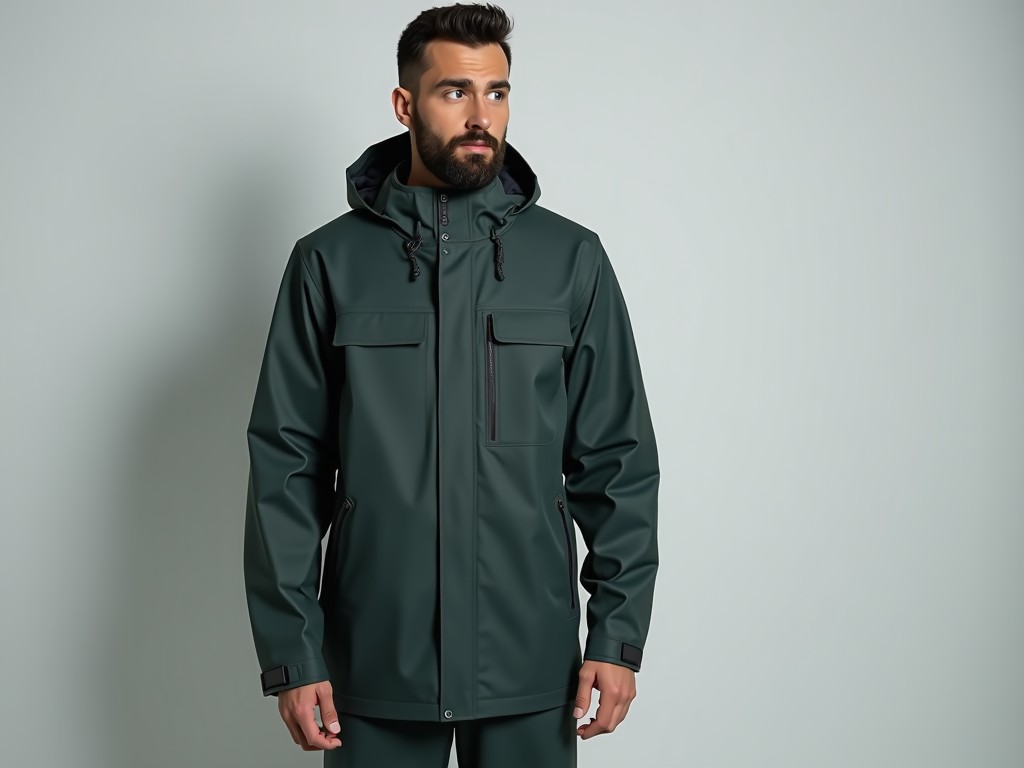
Direct Factory Rain Suits For Men
Direct Factory Rain Suits for Men
Industrial rain suits for men are engineered to provide reliable protection against prolonged exposure to wet conditions while maintaining mobility and durability in demanding work environments. These garments are designed as integrated systems—jacket and pant combinations—constructed from materials that balance waterproof performance with breathability and abrasion resistance. Unlike consumer-grade rainwear, industrial versions prioritize seam integrity, reinforcement at stress points, and compatibility with personal protective equipment (PPE) such as harnesses, tool belts, and safety boots. Procurement decisions hinge on understanding material specifications, construction methods, and performance standards relevant to specific operational hazards.
Direct factory sourcing eliminates intermediary markups and enables tighter control over material traceability, production tolerances, and quality consistency across large orders. Manufacturers can adjust formulation ratios in polymer coatings, seam sealing techniques, and reinforcement patterning based on field feedback without reliance on third-party interpretation. This direct line facilitates faster iteration cycles for custom requirements such as extended sleeve lengths, adjustable storm flaps, or specialized pocket configurations for instrumentation access. Buyers benefit from reduced lead time variability and the ability to conduct factory audits to verify compliance with internal safety or environmental protocols.
The following sections detail the technical characteristics of men’s industrial rain suits, including material options, construction methodologies, performance benchmarks, and customization pathways. Each element is explained to support informed evaluation based on functional requirements rather than promotional claims.
Material Systems and Performance Characteristics
The primary barrier against water penetration in industrial rain suits is typically a polymer-coated textile substrate. Common base fabrics include polyester or nylon weaves with denier ratings ranging from 150D to 600D, selected for tear strength and dimensional stability. These substrates are coated with either polyvinyl chloride (PVC), thermoplastic polyurethane (TPU), or rubber-based compounds to achieve waterproofing. Coating thickness is measured in microns or mils and directly influences flexibility, low-temperature performance, and chemical resistance. For example, a 200µm TPU coating on 300D polyester offers superior flexibility down to -20°C compared to a 300µm PVC coating on the same base, which may stiffen below -5°C.
Breathability, while secondary to waterproofing in constant wet exposure, becomes critical during intermittent use or in humid environments to prevent heat stress. Moisture vapor transmission rate (MVTR) is quantified in grams per square meter per 24 hours (g/m²/24h). Industrial rain suits typically achieve MVTR values between 2,000 and 8,000 g/m²/24h depending on coating microporosity or membrane lamination. Higher MVTR correlates with reduced interior condensation during moderate activity but often requires trade-offs in chemical splash resistance. Seam construction is equally vital; seams are either heat-sealed using RF welding or taped with waterproof adhesive strips to match the substrate’s hydrostatic resistance, commonly rated at 5,000mm to 20,000mm water column in standardized tests.
Abrasion resistance is assessed via Martindale or Taber abrasion tests, with industrial suits targeting minimum cycle counts of 10,000 to 25,000 before visible degradation. Reinforcements are applied to high-wear zones—knees, seat, elbows, and cuffs—using additional layers of coated fabric or abrasion-resistant polymers like polyurethane films. These patches are bonded or sewn with waterproof thread to maintain integrity. Colorfastness under UV exposure is also considered; pigments are selected to minimize fading and maintain visibility if high-visibility trim is integrated, though base colors like navy, olive, or gray are standard for non-high-vis applications to reduce visual fatigue in prolonged wear.
Design Features for Industrial Use
Industrial rain suits incorporate functional design elements that address real-world workflow constraints. Jackets often feature storm flaps over zippers, secured with snap closures or storm straps to prevent water ingress at the primary closure point. Ventilation is managed through underarm grommets or back vents with protective flaps, allowing heat dissipation without compromising waterproofing. Adjustable cuffs use hook-and-loop or snap systems to seal over gloves, while adjustable waistbands and ankle closures prevent billowing and inhibit water entry during movement or wind exposure.
Pant design includes reinforced knees and seats, often with articulated patterning to maintain range of motion during kneeling or crouching. Inseam gussets reduce stress accumulation, and adjustable suspenders or belt loops ensure secure fit over layered clothing. Pocket configurations are tailored to tool access—chest pockets with drainage grommets, interior utility pockets, and thigh pockets with flap closures are common. Reflective tape may be applied per ANSI/ISEA 107 standards if visibility is required, though placement avoids areas prone to abrasion or coating delamination. All hardware—zippers, snaps, hooks—is selected for corrosion resistance, typically using nylon or coated metal components.
Sizing follows standard industrial charts but includes allowances for layering over insulated garments or PPE. Custom length options (e.g., extended torso or inseam) are available to accommodate diverse anthropometrics without compromising seam placement. Donning and doffing efficiency is considered through wide leg openings with adjustable snaps and front-zip jackets with storm flaps that can be managed with gloved hands. These details reduce downtime and improve compliance in environments where frequent gear changes are necessary.
Performance Validation and Quality Control
Quality assurance begins with incoming material inspection, where coating adhesion, thickness uniformity, and substrate tensile strength are verified using standardized test methods (e.g., ASTM D751 for coated fabrics). Hydrostatic head testing is conducted on representative samples to confirm waterproof ratings before bulk production. Seam strength is evaluated via grab tests per ASTM D5034, ensuring sealed joints match or exceed the base material’s tear resistance. Dimensional stability is assessed after repeated wash cycles or exposure to temperature extremes to validate that garments retain fit and coverage over time.
In-line inspections during production monitor seam sealing temperature, pressure, and dwell time to prevent incomplete bonds. Final random sampling includes wear simulations—flexing, abrasion, and exposure to simulated rain—to detect early signs of coating cracking, delamination, or seam failure. Batch traceability is maintained through lot numbers linking raw material suppliers to finished goods, facilitating root cause analysis if field performance deviates from expectations. Documentation such as material safety data sheets (MSDS), test reports, and conformity declarations are provided upon request to support internal compliance audits.
While specific performance values vary by formulation, typical hydrostatic head ratings for industrial rain suits range from 10,000mm to 20,000mm water column, indicating resistance to heavy rain and wind-driven spray. MVTR values commonly fall between 3,000 and 6,000 g/m²/24h for balanced configurations. These figures are not guarantees but reflect achievable ranges based on material selection and process control. Buyers are advised to request test reports relevant to their specific use case—such as low-temperature flexibility or chemical splash resistance—rather than relying on generic claims.
Customization and Application-Specific Adaptation
Direct factory engagement enables precise adaptation of rain suits to niche operational demands. For example, workers in petrochemical environments may require suits with enhanced hydrocarbon resistance, achieved through specific polymer blends or barrier layers that resist swelling or permeation when exposed to oils and solvents. In forestry or utility work, chainsaw-resistant fabric can be laminated to the inner leg of pants as a sacrificial layer, though this adds weight and reduces flexibility—trade-offs that must be evaluated against risk levels.
Customization extends to ergonomic adjustments: elongated sleeves for workers with extended reach, reduced jacket length for confined-space operations, or articulated shoulders for overhead work. Pocket placement can be reconfigured to avoid interference with harnesses or radio harnesses. Ventilation zones can be added or modified based on microclimate assessments of the worksite. Color options are not limited to standard shades; custom dye lots are available for corporate branding or environmental camouflage, though UV stabilizers must be adjusted accordingly to maintain longevity.
Minimum order quantities for custom runs typically start at 200–500 units depending on complexity, though stock configurations are available for immediate dispatch. Prototyping services allow buyers to evaluate fit and function before full-scale production. Lead times for standard items range from 2–4 weeks; custom orders add 1–3 weeks for design approval and tooling adjustments. All custom specifications—material thickness, seam type, reinforcement placement, hardware selection—are documented in a technical dossier to ensure repeatability across reorders.
Applications Across Industrial Sectors
In municipal infrastructure maintenance, crews working on storm drainage, sewer inspection, or road repair face continuous exposure to rain and splash from traffic. Rain suits here must withstand frequent abrasion from curbs, gravel, and debris while allowing rapid movement between sites. The ability to wear suits over high-visibility vests or insulated layers without bulk is critical, as is quick drying between shifts to prevent mildew and odor buildup.
Maritime and offshore operations demand suits that resist saltwater degradation and maintain flexibility in cold, windy conditions. Coatings must resist UV embrittlement and retain elasticity after prolonged submersion. Reinforced seams and corrosion-resistant hardware are essential due to constant flexing and spray exposure. Workers often layer these suits over thermal liners, necessitating generous cut and adjustable closures to prevent compression of insulating layers.
Agricultural workers handling pesticides or liquid fertilizers require suits that act as a barrier to chemical permeation, not just water. Here, material selection shifts toward chemically resistant polymers (e.g., certain TPU formulations) and sealed seams to prevent liquid penetration at stitch points. Suits are often designed for easy decontamination—smooth surfaces, minimal pockets, and accessible closures—to facilitate washdown procedures after use.
Comparison of Common Material Systems
| Property | PVC-Coated Polyester | TPU-Coated Polyester | Rubber-Based Coated Nylon |
|---|---|---|---|
| Typical Hydrostatic Head (mm) | 10,000–15,000 | 15,000–20,000 | 8,000–12,000 |
| MVTR (g/m²/24h) | 1,500–3,000 | 3,000–6,000 | 1,000–2,000 |
| Low-Temp Flexibility (°C) | -5 to 0 | -20 to -15 | -10 to -5 |
| Abrasion Resistance (Cycles) | 8,000–12,000 | 15,000–25,000 | 10,000–18,000 |
| Chemical Resistance (Oils/Solvents) | Moderate | Good | Limited |
| Typical Use Case | General purpose, budget-conscious | High mobility, cold environments | Short-term, wet/dry cycling |
Values represent typical ranges; actual performance depends on specific formulation, coating thickness, and substrate construction. Custom material blends are available upon request.
Technical Evaluation Checklist
Before finalizing specifications, industrial buyers should verify the following technical points with the manufacturer:
- What is the hydrostatic head rating of the coated fabric, and is it tested per ASTM D751 or equivalent?
- Which seam sealing method is used—heat welding, taping, or ultrasonic—and what is the seam strength relative to the base material?
- What is the MVTR value, and how was it measured (e.g., ASTM E96 BW or desiccant method)?
- Are reinforcements applied to knees, seat, elbows, and cuffs, and what material is used for these patches?
- What type of thread is used for stitching, and is it UV-resistant and hydrophobic?
- Can the manufacturer provide test reports for low-temperature flexibility, chemical resistance, or abrasion resistance relevant to the intended environment?
- What is the minimum order quantity for standard vs. custom configurations, and what are the typical lead times?
For detailed specifications, material data sheets, or to request a quotation tailored to your operational requirements, contact our technical team directly.
Request Technical Consultation