
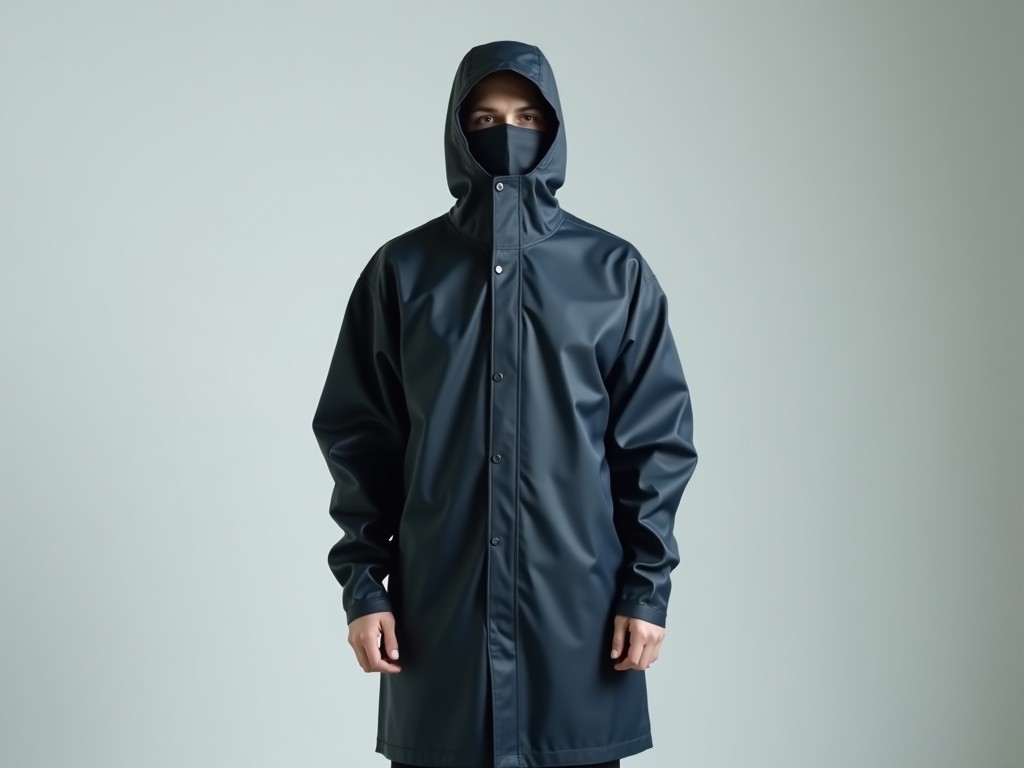
Direct Factory Rain Poncho For Men
Direct Factory Rain Poncho for Men
A direct factory rain poncho for men is a single-layer or multi-layer waterproof garment designed to provide full-body protection from precipitation while allowing unrestricted movement. Unlike tailored rain jackets, ponchos are cut as a simple geometric shape—typically a large rectangle or oval with a central head opening—enabling rapid deployment and compatibility with layered clothing, backpacks, or safety gear. Industrial buyers source these directly from manufacturers to eliminate intermediary costs, ensure material traceability, and maintain consistent specifications across large-volume orders for workforce distribution, emergency kits, or site-specific PPE programs.
Material Construction and Performance Characteristics
The primary material used in industrial rain ponchos is polyethylene (PE) or ethylene-vinyl acetate (EVA) copolymer film, selected for its inherent waterproofing, low-temperature flexibility, and resistance to tearing under stress. Typical thicknesses range from 0.018 mm to 0.035 mm, with heavier gauges (0.03 mm+) preferred for prolonged outdoor use or environments with abrasive surfaces. Seams are thermally bonded rather than sewn to eliminate needle holes that could compromise waterproof integrity, and edge reinforcement is often applied via heat-sealed tape or ultrasonic welding to prevent fraying during repeated donning and doffing.
Additives such as UV stabilizers are incorporated into the polymer matrix to delay degradation from sun exposure, extending service life in outdoor storage or prolonged use scenarios. Anti-static agents may be included for use in electronics manufacturing or explosive atmospheres where static discharge poses a risk. Some formulations include a matte finish additive to reduce glare under bright conditions, improving visibility and comfort for workers in reflective environments like road construction or open-pit mining.
Design Parameters and Functional Fit
Standard dimensions for a men’s direct factory rain poncho are based on anthropometric data for the 5th to 95th percentile male torso, with a typical width of 140 cm (measured edge-to-edge at the widest point) and a length of 100 cm from the shoulder point to the hem. This provides approximately 30–40 cm of overlap at the front and back when worn, ensuring coverage over the knees and sufficient drape to prevent water ingress at the sides. The head opening is usually 25–30 cm in diameter, large enough to accommodate hard hats, helmets, or balaclavas without restricting vision or airflow.
Sleeve-free designs are standard to maximize mobility and compatibility with gloves, tools, or harnesses. Some variants include adjustable snap fasteners or hook-and-loop tabs at the sides to create semi-sealed arms in high-wind conditions, though these are optional and application-specific. The poncho’s cut allows it to be worn over bulky insulation layers, making it suitable for use in cold-wet climates where workers require both thermal protection and rain defense without the bulk of a sealed jacket system.
Manufacturing Process and Quality Control
Production begins with extrusion of the polymer film to precise thickness and width tolerances, followed by cooling and winding into master rolls. The film is then die-cut into the poncho shape using hydraulic presses with precision steel rules to ensure dimensional consistency across batches. Thermal bonding equipment applies controlled heat and pressure to seal seams and edges, with parameters monitored via thermocouples and pressure sensors to prevent under-bonding (leak points) or over-bonding (material thinning or holes).
Quality assurance includes inline inspection for thickness variation using laser gauges, visual checks for pinholes or contaminants under bright light, and functional testing of a sample from each batch via hydrostatic head testing (typically targeting ≥1000 mm water resistance) and tear propagation resistance (measured per ASTM D1922 or equivalent). Dimensional stability is verified after exposure to 40°C and 90% RH for 24 hours to simulate tropical storage conditions. All inspections are documented per batch, with traceability codes linking raw material lot, production date, and test results.
Applications Across Industrial Sectors
In construction, these ponchos are issued to crews working on elevated structures, roadworks, or utility installations where full rain protection is needed without interfering with fall arrest systems or tool belts. Their loose fit allows quick removal when entering sheltered areas, reducing the risk of bringing water indoors. In logistics and warehousing, they protect outdoor loading dock personnel during sudden downpours, particularly in facilities with open-sided bays where traditional rainwear may snag on conveyor systems or pallet jacks.
Emergency response teams and disaster relief organizations stock these ponchos for rapid deployment due to their compact stowability—each unit folds to approximately 15×10×2 cm and weighs under 80 grams—making them ideal for inclusion in flood kits, earthquake response packs, or mobile medical units. Agricultural workers use them during pesticide application or harvesting in wet conditions, where the non-absorbent surface prevents chemical retention and allows easy rinsing. Mining operations specify them for surface crews exposed to sudden weather changes, valuing their resistance to mud and rock abrasion compared to fabric-based alternatives.
Customization Options and Ordering Considerations
Direct factory sourcing enables customization of material thickness, color, and additives without requiring large minimum order quantities for standard specifications. Common color options include high-visibility yellow (ISO 20471 compliant when combined with reflective tape), orange, navy, and camouflage patterns for specific operational environments. Custom printing of logos, safety warnings, or identification codes is available via flexographic or screen printing on one or both sides, with ink formulations selected for adhesion to polyolefin surfaces and resistance to washing or UV fading.
Packaging options range from individual polybagging for hygiene-sensitive applications to bulk packing in corrugated cartons with desiccant packs for long-term storage. Lead times depend on material availability and print complexity but typically range from 10–25 days for standard orders after artwork approval. For specialized requirements—such as flame-retardant additives (meeting ASTM D6413) or antimicrobial treatments—minimum quantities and extended lead times apply, and these should be confirmed during quotation. Buyers are advised to provide detailed use-case information (e.g., temperature range, exposure duration, compatibility with other PPE) to ensure material suitability.
| Parameter | Typical Range | Notes |
|---|---|---|
| Material Thickness | 0.018–0.035 mm | 0.03 mm+ recommended for rugged use |
| Width (Edge-to-Edge) | 130–150 cm | Based on 5th–95th percentile male torso |
| Length (Shoulder to Hem) | 90–110 cm | Ensures knee coverage and side overlap |
| Head Opening Diameter | 25–30 cm | Accommodates helmets and hard hats |
| Unit Weight | 60–90 g | Depends on thickness and size |
| Hydrostatic Head | ≥1000 mm | Standard water resistance target |
| Operating Temperature | -20°C to +50°C | With UV/stabilizer additives |