
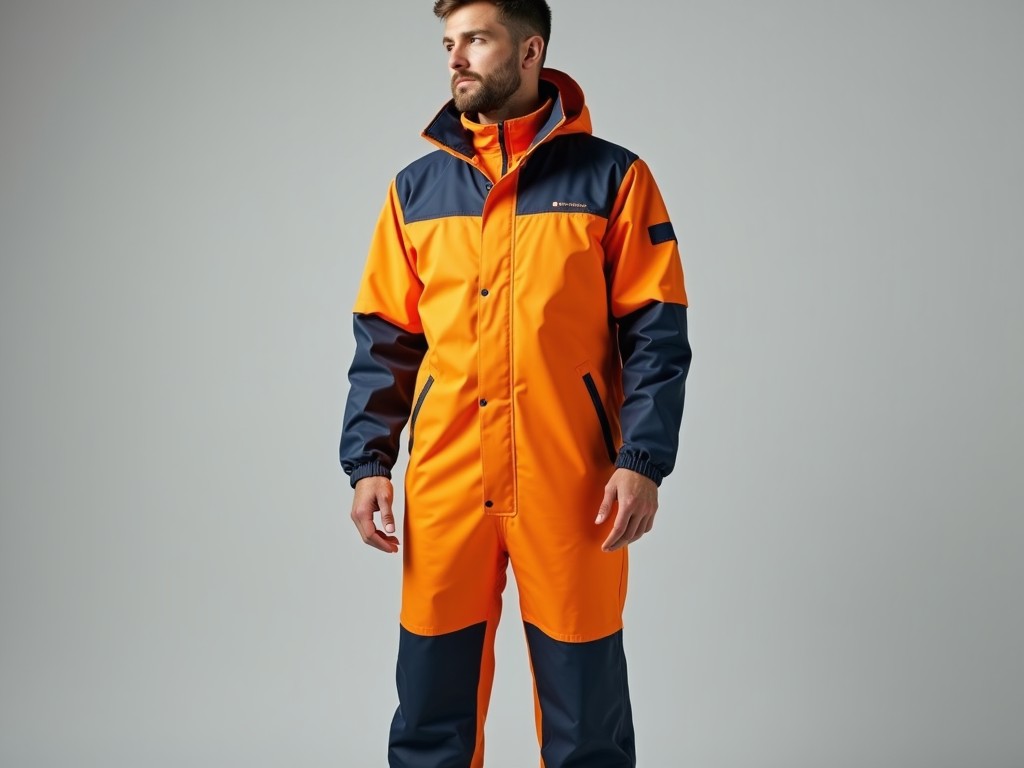
Direct Factory Mens Rain Suits For Work
Direct Factory Mens Rain Suits for Work
Workplace rain protection requires garments that balance waterproof performance with durability under physical strain. Direct factory production of mens rain suits eliminates intermediary markup while allowing precise control over material selection, seam construction, and sizing consistency. This approach ensures that each suit meets the functional demands of outdoor industrial environments without unnecessary cost inflation.
Material Selection and Waterproof Performance
The outer shell typically uses PVC-coated polyester or PU-laminated nylon with a hydrostatic head rating of 5,000mm or higher, measured under standardized test conditions (ISO 811). This level of resistance prevents water penetration during prolonged exposure to heavy rain or splashing from machinery. The coating is applied uniformly across the fabric substrate to avoid thin spots that could compromise integrity over time.
Seams are sealed using heat-activated tape or ultrasonic welding to maintain continuity of the waterproof barrier. Stitch holes are a common failure point in rainwear; eliminating water migration through these points is critical for sustained performance. Tape width and adhesion strength are controlled during production to ensure long-term bond integrity under flexing and temperature variation.
Design Features for Work Environments
The jacket includes a storm flap over the front zipper, secured with snap buttons or Velcro, to prevent wind-driven water ingress. The hood is adjustable via drawcords and designed to move with head rotation without restricting visibility. Storm cuffs at the wrists and ankles use internal gaiters or adjustable closures to seal against boots and gloves, minimizing water runoff into the garment.
Ventilation is addressed through underarm eyelets or back vents with storm covers, allowing moisture vapor escape while maintaining external protection. These features reduce internal condensation buildup during physical exertion, improving wearer comfort over extended shifts. Placement and sizing of vents are engineered to avoid creating direct water entry points.
Sizing and Fit Considerations
Mens rain suits are offered in standard chest sizes from 38" to 54", with corresponding sleeve and inseam lengths graded proportionally. Custom sizing is available upon request for non-standard body types or layering requirements over insulated workwear. Measurements are taken flat and specified in product documentation to avoid ambiguity.
The cut allows room for movement in the shoulders and torso while preventing excessive billowing that could snag on equipment. Articulated knees and elbows use gusseted panels or pre-bent construction to maintain mobility without stretching the waterproof layer. These design choices reduce fatigue during tasks requiring frequent bending or reaching.
Quality Control and Consistency
Direct factory oversight enables inline inspection at critical stages: fabric roll validation, coating thickness measurement, seam sealing integrity, and final garment testing. Each batch undergoes hydrostatic retesting on finished units to confirm performance consistency. Acceptance criteria are defined per order and documented for traceability.
Dimensional stability is checked after washing or exposure to heat to ensure the suit retains its shape and fit over multiple use cycles. Colorfastness and coating adhesion are assessed per applicable industry standards (e.g., AATCC or ISO equivalents). These controls reduce the likelihood of field failures due to manufacturing variance.
Applications in Industrial Settings
These rain suits are commonly used in construction, utility maintenance, municipal services, and logistics operations where workers face intermittent or prolonged exposure to wet conditions. Unlike disposable ponchos, reusable suits offer long-term cost efficiency when maintained properly. Their durability supports repeated donning and doffing in high-turnover work environments.
In environments with chemical splash risk, specific coating formulations (e.g., chemical-resistant PU) can be specified based on Safety Data Sheet (SDS) compatibility. This customization is managed through direct factory communication, ensuring material suitability before production begins. Generic rainwear may not provide adequate protection against industrial fluids.
Customization and Ordering Process
Buyers can specify adjustments to sleeve length, torso taper, or hood depth to accommodate layered clothing or personal preference. Logo placement options include heat transfer, screen printing, or embroidery on the chest, back, or sleeves, with artwork review provided before production. Reflective tape configurations can be added for low-visibility conditions per ANSI/ISEA 107 guidelines.
Minimum order quantities typically start at 50 units for standard styles, with lower thresholds available for sample orders or custom developments. Lead times range from 2–4 weeks for stock configurations to 6–8 weeks for fully customized orders, depending on material availability and complexity. Quotations are based on detailed technical packs including measurements, material specs, and artwork files.
Packaging and Logistics
Suits are folded and packed in polyethylene bags with desiccant packs to prevent moisture accumulation during transit. Cartons are labeled with size, quantity, style code, and country of origin for easy inventory management. Palletized shipments use corner bracing and stretch wrap to minimize shifting and damage.
Export documentation includes commercial invoices, packing lists, and certificates of origin upon request. Packaging methods can be adjusted for specific customer requirements, such as individual hanging packs for retail display or bulk stacking for warehouse distribution. All packaging materials are selected to protect the waterproof coating from abrasion or UV exposure during storage.
Long-Term Value and Maintenance
With proper care — cleaning with mild soap, avoiding harsh solvents, and storing away from direct sunlight — these suits maintain waterproof performance for 12–24 months of regular use. Repair kits containing seam tape and patches are available for minor damage, extending service life. Regular inspection of seals and closures helps identify wear before failure occurs.
The total cost of ownership considers not only purchase price but also replacement frequency, downtime due to inadequate protection, and potential liability from discomfort or illness. Direct factory sourcing reduces variables in the supply chain, improving predictability for budgeting and procurement planning. This model supports consistent quality across repeat orders.