
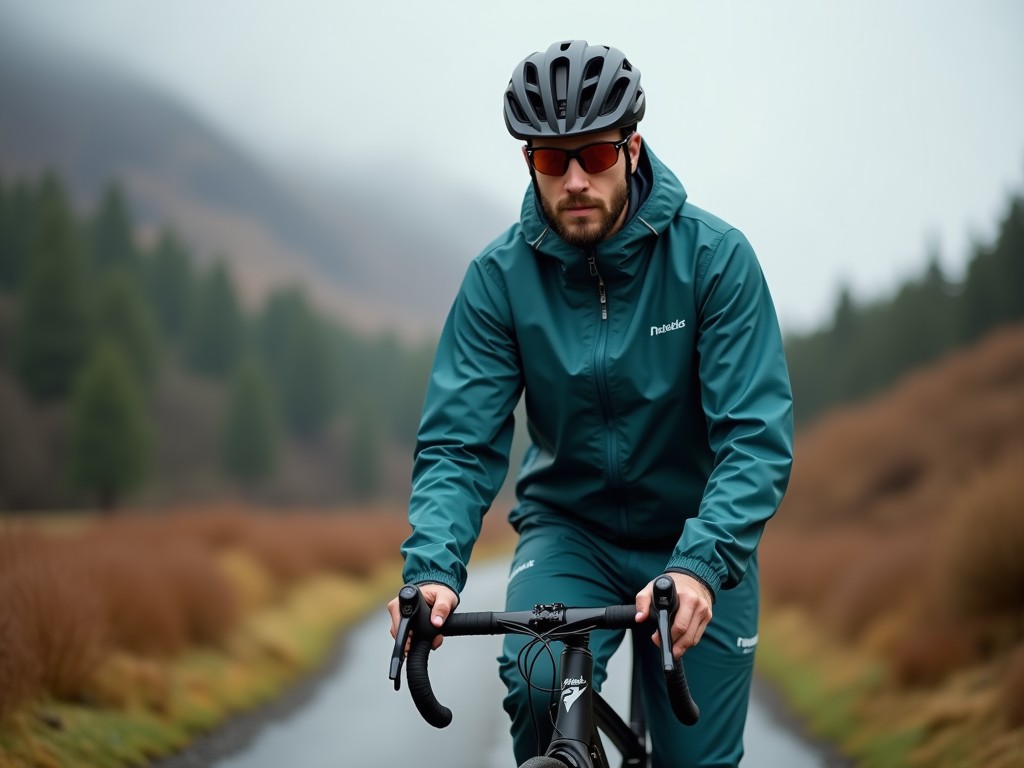
Cycling Rain Pants Mens Factory
Cycling Rain Pants Men's Factory Specifications
This page details the technical specifications, material options, and manufacturing considerations for men's cycling rain pants produced in industrial factory settings. The information supports procurement decisions for bulk orders, OEM partnerships, and private-label production.
Focus areas include waterproofing performance, seam construction, fit engineering, and compliance with industrial textile standards relevant to active outdoor apparel.
Core Functional Requirements
Cycling rain pants must maintain rider comfort and mobility while providing reliable precipitation protection during sustained aerobic activity. Key performance factors include hydrostatic head rating, moisture vapor transmission rate (MVTR), and abrasion resistance at high-wear zones.
Unlike general rainwear, cycling-specific designs prioritize articulation in the knee and seat areas to accommodate pedaling motion without binding or excess fabric accumulation. This requires precise pattern grading and gusset placement.
Waterproofing is typically achieved through laminated or coated polyamide or polyester substrates, with seams sealed via heat-activated tape or ultrasonic welding to prevent needle-hole leakage.
Material Construction Options
- Face Fabric: 40D nylon ripstop with DWR coating (typical hydrostatic head: 10,000–15,000 mm)
- Membrane Layer: Microporous PU or ePTFE laminate (MVTR: 5,000–15,000 g/m²/24hr)
- Backer: Tricot or mesh lining for skin comfort and wicking
- Reinforcements: 600D polyester at inner knee and seat (abrasion resistance > 30,000 Martindale cycles)
Material selection balances weight, packability, and durability. Factory sourcing allows customization of denier, coating type, and laminate structure based on target use case (e.g., road cycling vs. mountain biking).
Seal and Seam Engineering
Seam integrity is critical in rainwear failure modes. Industrial production uses either 2- or 3-layer seam sealing tape applied via heated roller laminators, ensuring full encapsulation of stitch holes. Tape width typically ranges from 20mm to 25mm depending on seam stress.
Alternative methods include ultrasonic welding for thermoplastic films or solvent-free adhesive bonding, eliminating needle penetration entirely. These methods add cost but improve long-term waterproofing reliability in high-flex zones.
Quality control includes hydrostatic retest of sealed seams post-production, with sampling rates aligned to AATCC 127 or ISO 811 standards. Batch tracking links seam parameters to raw material lot numbers.
Pattern Design and Fit Logic
Cycling rain pants employ articulated knees (typically 2-panel or 3-panel construction) and a curved seat panel to reduce fabric tension during riding. Inseam gussets or offset seam placement prevent chafing at the inner thigh.
Waist systems often feature partial elastic with adjustable tab closures (hook-and-loop or buckle) to accommodate layering without slipping. Ankle closures use adjustable hook-and-loop straps or zippered vents with storm flaps to seal over shoe cuffs.
Pattern grading follows anthropometric data for active male cyclists, with size ranges typically spanning S–3XL. Custom sizing blocks are available upon request for OEM clients requiring specific market fits.
Customization and Branding Options
| Customizable Element | Available Options | Tooling Impact |
|---|---|---|
| Fabric Color | Pantone-matched dye lots; standard black, navy, grey | Low (dye lot change) |
| Reflective Trim | 3M™ Scotchlite™ or equivalent; placement on calf, heel, waistband | Medium (die cut or laser) |
| Ventilation Zips | YKK® AquaGuard® or similar; thigh or side seam | Medium (zipper integration) |
| Waistband Label | Woven or printed; size, care, brand info | Low (sewn on) |
Customization requires tech pack submission including Pantone references, logo artwork (vector format), and placement guides. Minimum order quantities vary by component, with fabric and trim changes typically starting at 500 units per SKU.
Quality Assurance Protocols
Factory QC includes inline inspection during cutting, sewing, and sealing stages. Critical checkpoints involve seam tape adhesion (peel test > 1.5 N/mm), DWR re-activation after washing (AATCC 135), and dimensional stability after 5 wash cycles (ISO 6330).
Final random inspection follows ANSI/ASQ Z1.4 (ISO 2859-1) at level II, with AQL thresholds set at 0.65 for critical defects (e.g., open seams, missing tape) and 2.5 for major (e.g., skipped stitches, incorrect labeling). Records are retained for 36 months.
Test reports for hydrostatic head, MVTR, and colorfastness are available upon request. Factories may hold ISO 9001 or Oeko-Tex Standard 100 certification; verification is part of supplier qualification.
Packaging and Logistics
Units are typically folded to uniform dimensions (e.g., 30cm x 20cm x 5cm) and packed in polybags with silica gel desiccant to prevent moisture damage during transit. Carton markings include PO number, SKU, size, quantity, and country of origin.
Export packaging uses 5-ply corrugated cartons with edge protection and strapping. Palletization follows ISPM 15 standards for international shipments. Volume efficiency averages 20–25 units per carton depending on fabric thickness.
Lead times range from 45–75 days after sample approval and deposit receipt, influenced by fabric lead times and trim availability. Air freight options exist for urgent orders at increased cost.
Applications in Commercial and OEM Contexts
These pants are sourced by cycling apparel brands for private-label collections, sports distributors for house brands, and corporate wellness programs requiring bulk rain gear for employee commuting initiatives. The industrial factory model supports scalability for seasonal pre-orders and replenishment cycles.
Unlike retail-cut production, factory manufacturing enables tight control over material consistency and seam performance across large batches—critical for brands where warranty claims due to leakage can damage reputation. Technical documentation packages support product liability compliance.
OEM clients benefit from design-for-manufacturability (DFM) feedback during sample development, reducing revision cycles. Factories may offer incremental cost modeling based on fabric weight, laminate type, and trim selection to aid in target pricing.
For technical inquiries, customization requests, or to request a factory capability statement, contact our industrial sales team.
Request Technical Specification Sheet