
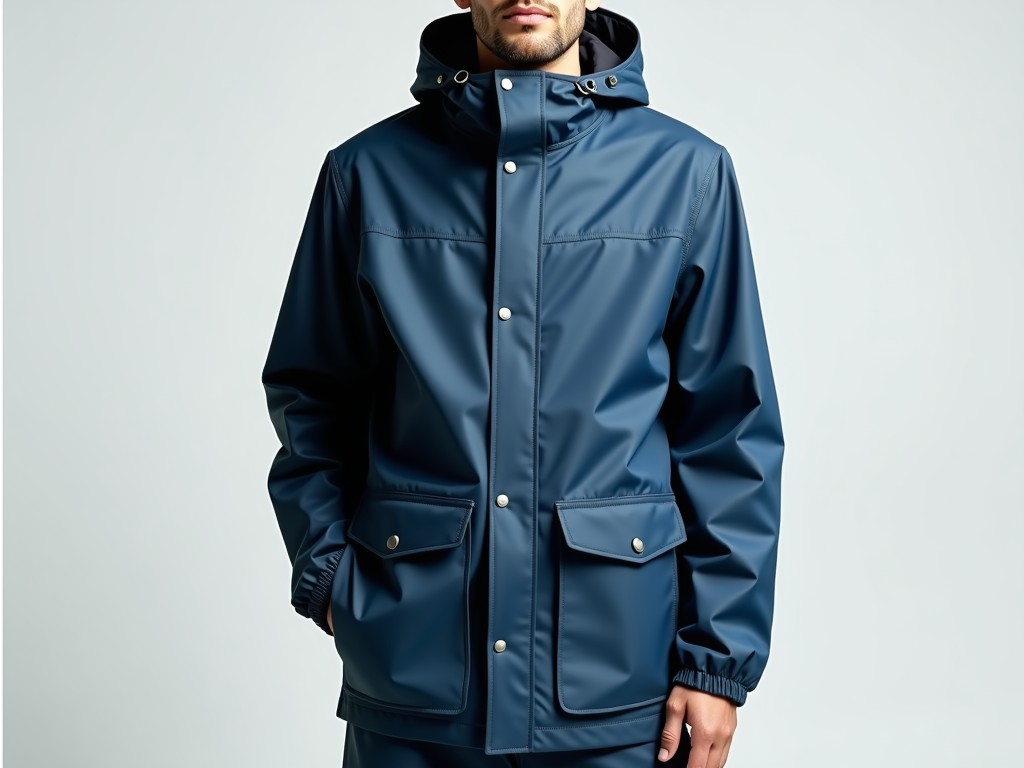
China Waterproof Rain Suit For Men
China Waterproof Rain Suit for Men
Waterproof rain suits for men are engineered to provide reliable protection against prolonged exposure to wet conditions in industrial, construction, and outdoor work environments. Unlike casual rainwear, these suits are designed with material science and seam integrity as primary considerations to ensure durability and functional performance under mechanical stress and repeated use.
Material Composition and Waterproofing Mechanism
The outer shell typically consists of a polyester or nylon base fabric coated with a thermoplastic polyurethane (TPU) or polyvinyl chloride (PVC) layer. TPU offers superior flexibility at low temperatures and better abrasion resistance compared to PVC, while maintaining a water vapor transmission rate (WVTR) below 5,000 g/m²/24h to balance waterproofing with minimal internal condensation. The coating thickness generally ranges from 0.15mm to 0.25mm, providing a hydrostatic head resistance of at least 5,000mm, which exceeds the EN 343 Class 3 standard for rain protection.
Seam Construction and Joint Integrity
Water ingress primarily occurs through stitch holes, so seam sealing is critical. Industrial rain suits use heat-activated tape applied over stitched seams, creating a continuous barrier. The tape width is usually 20mm, bonded at temperatures between 130°C and 160°C to ensure adhesion without degrading the base fabric. Seam strength is tested per ASTM D751, with peel resistance maintained above 8N/cm after 5 wash cycles at 40°C, confirming long-term integrity under laundering and field conditions.
Design Features for Functional Use
The suit includes a storm flap over the front zipper, typically 50mm wide, secured with snap buttons or hook-and-loop fasteners to prevent water penetration at the closure. The hood is adjustable via drawcords and designed to accommodate a hard hat, with a peak depth of 70mm to shield the face. Cuffs and ankles feature adjustable straps or elastic inserts to minimize water runoff into gloves or boots. Ventilation is addressed through underarm eyelets (6mm diameter) covered with waterproof flaps, allowing airflow while maintaining weather resistance.
Sizing and Fit Considerations
Industrial rain suits are cut with intentional ease to allow layering over workwear such as flame-resistant coveralls or insulated jackets. Standard sizes range from S to 3XL, with chest measurements increasing by 10cm increments. The back length is typically 5cm longer than the front to prevent exposure when bending. Custom sizing is available upon request, particularly for uniform programs requiring consistent fit across diverse body types.
Comparison of Common Materials
| Property | TPU-Coated Polyester | PVC-Coated Polyester |
|---|---|---|
| Hydrostatic Head (mm) | 5,000–8,000 | 3,000–6,000 |
| Flexibility at -20°C | Good | Stiff |
| Abrasion Resistance (cycles) | >10,000 | 5,000–8,000 |
| Weight (g/m²) | 180–220 | 200–250 |
| Recyclability | Yes (mechanical) | Limited |
Typical Applications in Industrial Settings
These suits are commonly used in infrastructure maintenance, where workers are exposed to rain for extended periods during road repair, bridge inspection, or utility line servicing. In maritime operations, they provide protection during deck work in offshore wind farms or port logistics, where salt spray and wave splash require corrosion-resistant materials. Agricultural workers involved in pesticide application or livestock management in wet climates benefit from the suit’s barrier properties, reducing skin exposure to contaminants carried by rainwater.
Quality Control and Testing Protocols
Each batch undergoes hydrostatic head testing on three random samples per 1,000 units, using a water column tester per ISO 811. Seam seal integrity is verified via dye penetration testing, where a dyed solution is applied under pressure to detect leaks. Visual inspection checks for coating uniformity, adhesion defects, and stitching accuracy. Dimensional stability is assessed after 5 wash cycles, with shrinkage limited to ±3% in length and width to ensure consistent fit over time.
Customization Options
Buyers can specify adjustments to coat length, sleeve taper, or hood depth based on operational needs. Reflective tape compliant with EN ISO 20471 can be applied to sleeves, chest, and back for visibility in low-light conditions. Color options include standard safety yellow, orange, navy, or black, with custom Pantone matching available for corporate branding. Logo placement is possible via heat transfer or screen printing on the left chest or back, using inks that maintain flexibility after curing.
For technical specifications, sample requests, or quotation details, please contact our engineering team.
Request Technical Data Sheet