
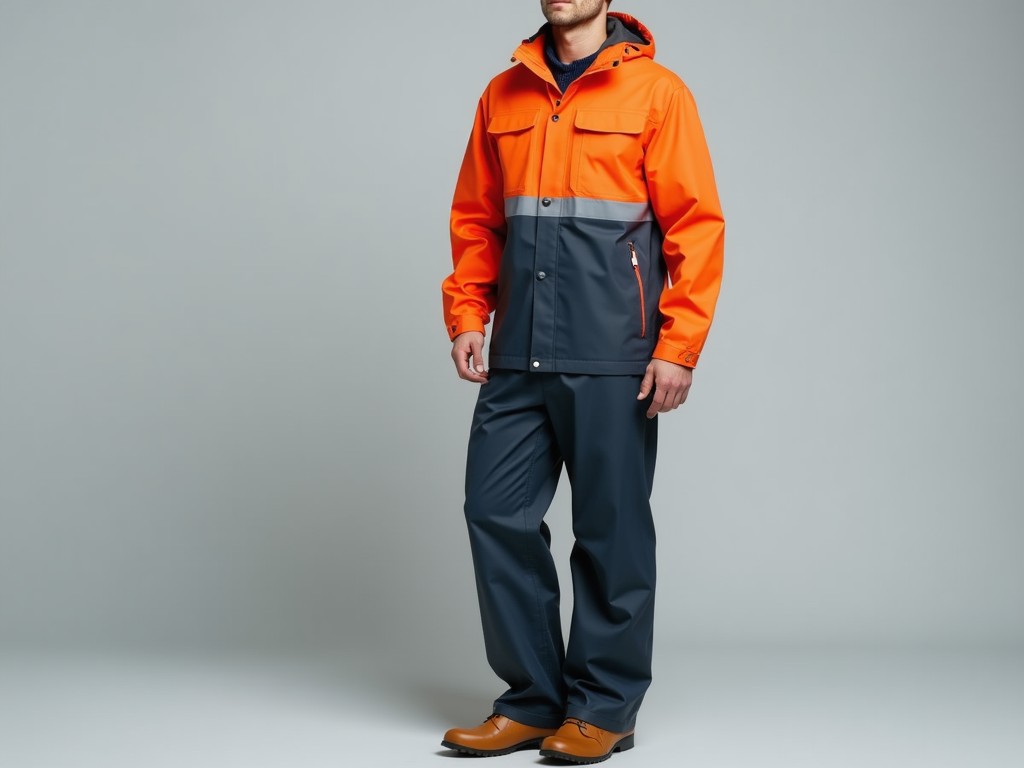
China Waterproof Rain Pants For Men
China Waterproof Rain Pants for Men
Waterproof rain pants for men are essential protective garments designed to shield the wearer from precipitation while maintaining mobility and comfort during outdoor or industrial tasks. These pants function as a barrier against rain, snow, and wind-driven moisture, preventing saturation of underlying clothing and reducing the risk of hypothermia or discomfort in wet environments. Unlike standard trousers, they incorporate specialized materials and construction techniques to achieve water resistance without compromising breathability or durability. The effectiveness of rain pants depends on the integration of fabric technology, seam sealing, and design features tailored to specific use cases such as construction, logistics, outdoor maintenance, or recreational activities in adverse weather.
Key Technical Features
The performance of waterproof rain pants is determined by several engineered characteristics that work in concert to provide reliable protection. Fabric selection is critical, with most industrial-grade pants using nylon or polyester substrates coated with polyurethane (PU) or polyvinyl chloride (PVC) to achieve water resistance. These coatings create a continuous film that blocks liquid water penetration while allowing water vapor transmission to varying degrees, depending on the coating thickness and formulation. Seam construction is equally important; stitched seams are potential leakage points, so high-quality rain pants employ either welded seams or seam tape applied over stitching to create a continuous waterproof barrier. Additionally, design elements such as adjustable waistbands, ankle cuffs with hook-and-loop closures, and reinforced knees or seat areas enhance fit, prevent water ingress at openings, and extend service life in high-wear zones.
- Fabric substrate: Typically 200D–600D nylon or polyester for abrasion resistance
- Waterproof coating: PU or PVC, commonly 0.1–0.3mm thick
- Seam treatment: Heat-sealed tape or ultrasonic welding
- Closure systems: Elastic or drawstring waist; snap or hook-and-loop ankle cuffs
Material Options and Performance Characteristics
The choice of coating material significantly influences the pant’s flexibility, weight, durability, and suitability for specific temperature ranges. Polyurethane (PU) coatings are preferred for applications requiring flexibility and low-temperature performance, as PU remains pliable down to approximately -20°C and adds minimal weight to the fabric. PVC coatings, while generally less expensive and offering excellent chemical resistance, tend to stiffen below 0°C and are heavier, making them more suitable for temperate climates or short-duration use where cost is a primary factor. Breathability, though limited in fully waterproof designs, varies with coating thickness and substrate porosity; thinner PU coatings on lightweight nylon can achieve moisture vapor transmission rates (MVTR) of 2,000–5,000 g/m²/24h, sufficient for light activity but inadequate for high-exertion scenarios without ventilation features.
| Property | PU Coating | PVC Coating |
|---|---|---|
| Flexibility at -20°C | Good | Poor (becomes brittle) |
| Weight (per m²) | 150–250 g | 250–400 g |
| Chemical Resistance | Moderate (oils, greases) | High (acids, alkalis) |
| Typical Use Case | Active outdoor work, cold climates | Static protection, mild weather, cost-sensitive |
Design Considerations for Industrial Use
Industrial buyers prioritize rain pants that integrate seamlessly with other personal protective equipment (PPE) and workflow requirements. Ankle circumference is a critical dimension; pants must accommodate safety boots or overshoes without creating gaps that allow water ingress, often addressed through adjustable cuffs with sufficient overlap. Waist adjustment mechanisms should allow for layering over insulated trousers or coveralls while maintaining a secure fit during movement. Pocket placement, if present, must be evaluated for accessibility when wearing a harness or tool belt, and zippers or flaps should be storm-covered to prevent water penetration. Reinforcement in high-stress areas such as the inner thighs, seat, and knees—achieved through double-layer fabric or abrasion-resistant patches—directly impacts longevity in environments involving kneeling, crawling, or frequent contact with rough surfaces.
Ventilation features, though secondary to waterproofing, improve wearer comfort during prolonged use. Side zippers with storm flaps or mesh-lined vents under a fly overlay allow heat and moisture escape without compromising the primary waterproof barrier. These are particularly valuable in temperate climates or during active work where perspiration accumulation could lead to discomfort or chilling upon cessation of activity. The inclusion of such features reflects a design balance between environmental protection and physiological comfort, recognizing that user acceptance depends on both performance and wearability.
Applications Across Industries
Waterproof rain pants serve distinct functional roles depending on the industry, driven by specific environmental exposures and operational needs. In construction and infrastructure maintenance, workers face prolonged exposure to rain during outdoor tasks such as concrete pouring, steel erection, or road repair; here, durability and compatibility with fall arrest harnesses are paramount. In logistics and transportation, personnel loading/unloading goods in open yards or at docks benefit from lightweight, easily donned pants that protect uniforms without hindering movement around vehicles. Utility workers conducting inspections or repairs on overhead lines or buried pipelines require pants that allow unrestricted leg movement and resist tearing from brush or debris. Even in non-industrial sectors like agriculture or outdoor event management, the core requirement remains consistent: reliable, uninterrupted protection from precipitation to maintain productivity and worker well-being.
Quality Control and Testing
Manufacturing consistency is verified through standardized testing protocols that assess both material and assembly integrity. Waterproofness is typically evaluated using hydrostatic pressure testing (e.g., ISO 811), where fabric samples resist water penetration under increasing pressure; a rating of 5,000 mmHH or higher is generally considered suitable for prolonged rain exposure. Seam strength is measured via tensile tests on taped or welded joints to ensure they withstand stress without delamination or tearing. Abrasion resistance, particularly for reinforced zones, is assessed using Martindale or Taber abrasion cycles to predict wear life. Dimensional stability after washing or drying is also monitored, as shrinkage or coating cracking can compromise fit and performance over time. These tests are not one-time validations but are integrated into production cycles to detect material batch variations or process drift.
Customization Options
Industrial procurement often requires adaptations beyond standard catalog offerings to meet specific safety, branding, or operational criteria. Common customization points include fabric color (for visibility or corporate identity), addition of reflective tape compliant with EN ISO 20471 for low-light visibility, and integration of brand logos via heat transfer or embroidery on non-critical areas such as the hip or thigh. Sizing adjustments can accommodate non-standard body proportions, particularly for workforces with specific anthropometric profiles. For specialized environments, customers may request alternative coatings—for example, a flame-retardant PU treatment for proximity to welding operations, though this requires validation to ensure it does not degrade the waterproof coating’s integrity. Minimum order quantities and lead times for custom features vary based on complexity and should be discussed directly with the manufacturer.
Packaging and Logistics
Protective packaging ensures that rain pants arrive at the destination without damage to the coating or contamination from moisture during transit. Standard packaging involves folding the garment and placing it in a polyethylene bag, which is then packed into cartons with adequate stacking strength for palletization. For export shipments, especially to humid climates, moisture-barrier liners or desiccant packs may be included inside the outer carton to prevent condensation-related issues such as coating tackiness or mold growth on substrates. Carton markings typically include product SKU, size, quantity, country of origin, and handling instructions. Bulk packaging options, such as vacuum-sealed packs for reduced volume, are available upon request and can lower freight costs for large orders, though they require careful handling to avoid creasing that might affect coating integrity.
Lead Times and Sampling
Production lead times for standard waterproof rain pants typically range from 15 to 25 days after receipt of order and confirmed artwork, assuming fabric and coating materials are in stock. This period includes cutting, sewing, seam treatment, quality inspection, and packaging. Custom features such as specialized coatings, reflective trims, or non-standard sizing can extend lead times by 7–14 days due to additional material sourcing or process adjustments. Sampling is a critical step in the procurement process; manufacturers usually provide pre-production samples for approval before full-scale manufacturing. These samples allow buyers to verify fit, coating feel, seam quality, and compliance with specified requirements. Sample production typically takes 5–7 days and may incur a cost that is credited upon placement of a formal order.
For technical inquiries, customization requests, or to receive a detailed quotation based on your specific requirements, please contact our engineering team.
Contact Us for Industrial Rain Pants