
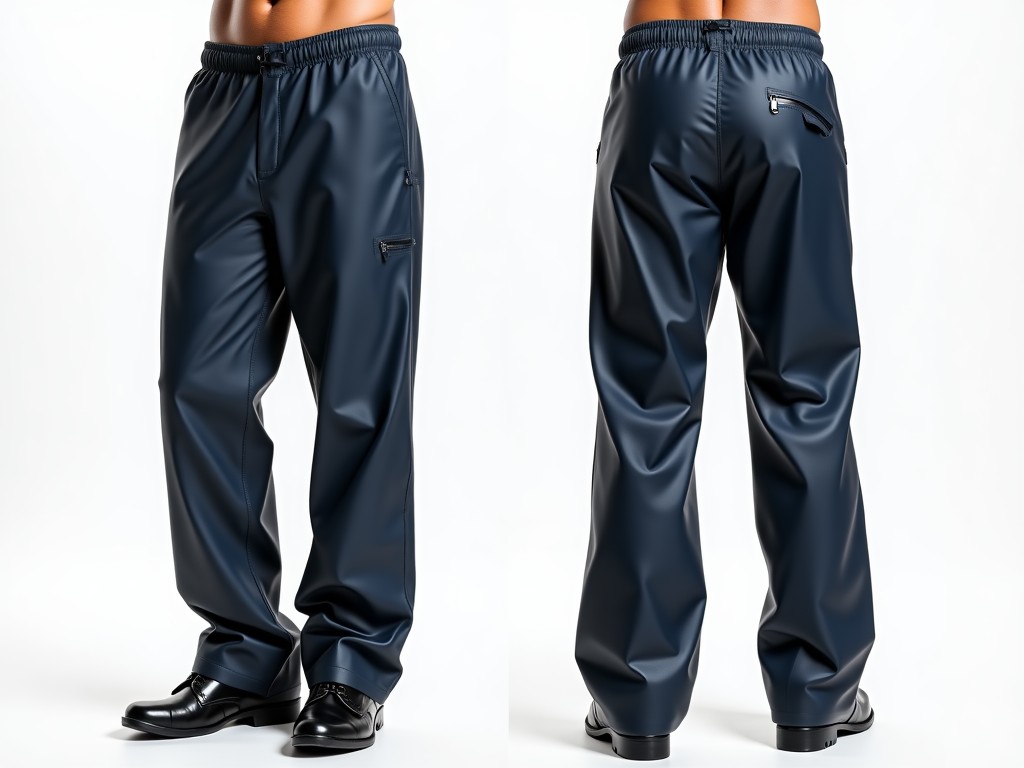
China Mens Waterproof Shell Pants
China Mens Waterproof Shell Pants
These pants are engineered as a protective outer layer for demanding environments where resistance to wind, rain, and abrasion is critical. Constructed from technical membranes laminated to durable face fabrics, they provide a barrier against precipitation while allowing moisture vapor to escape, maintaining wearer comfort during prolonged activity. Designed for industrial, outdoor, and tactical use, they prioritize functional performance over aesthetic styling, with attention to seam integrity, zone-specific reinforcement, and compatibility with layered systems.
Material Composition and Membrane Technology
The shell pants utilize a 2.5-layer or 3-layer laminate system, where a microporous or hydrophilic polyurethane membrane is bonded to a nylon or polyester face fabric. Common face fabrics include 50D nylon ripstop or 100D polyester oxford, selected for tear strength (typically >20N) and abrasion resistance (Martindale >20,000 cycles). The membrane layer provides a hydrostatic head rating of 10,000mm to 20,000mm, indicating resistance to water penetration under pressure, while maintaining a moisture vapor transmission rate (MVTR) of 8,000–15,000 g/m²/24h to manage perspiration. A durable water repellent (DWR) finish is applied to the outer surface to prevent saturation of the face fabric, preserving breathability in wet conditions.
Seam Construction and Waterproof Integrity
All seams are fully taped using thermoplastic polyurethane (TPU) tape applied via heat bonding to eliminate needle holes as potential leak points. Tape width is typically 20mm, covering both inner and outer seam allowances for redundancy. Critical zones such as the inseam, outseam, waistband junction, and knee articulation points receive reinforced taping. Seam strength is validated through hydrostatic testing post-application, ensuring no leakage occurs at pressures up to the rated hydrostatic head. This method maintains flexibility while achieving long-term waterproof integrity under flexing and laundering cycles.
Functional Design Features
The pants incorporate articulated knees and a gusseted crotch to maintain range of motion without binding during squatting, kneeling, or climbing. Ankle cuffs feature adjustable hook-and-loop closures or elastic shock cords to seal against snow, debris, or water ingress, compatible with boot gaiters or overshoes. Waist adjustment is achieved through a combination of internal elastic and external tab closures, allowing fine-tuning without belt loops that could snag on gear. Front closure uses a water-resistant YKK® aquaguard zipper with storm flap, secured by snap buttons to prevent zipper failure under load. Reinforced scuff guards at the lower inner cuff reduce abrasion from boot edges and crampon points.
Pocket Configuration and Accessibility
Two handwarmer pockets are positioned high on the torso to remain accessible when wearing a harness or backpack hip belt, each with water-resistant zippers and storm flaps. A single rear pocket, also water-resistant, provides secure storage for maps or small tools. Pocket bags are made from brushed polyester for comfort against the skin, with drainage eyelets to prevent water accumulation. All zipper pulls are oversized for gloved operation, and cord locks are low-profile to minimize snag hazard. Pocket placement avoids interference with climbing harnesses or tactical vests.
Sizing and Fit System
Sizing follows standard industrial sizing charts based on waist, inseam, and hip measurements, with regular, tall, and short inseam options available to accommodate diverse body proportions. The fit is designed as a trim athletic cut—close enough to minimize bulk under layers but loose enough to accommodate mid-layer insulation such as fleece or softshell. Inner lining is minimal, typically a lightweight nylon taffeta or mesh liner in high-sweat zones, to reduce friction and enhance layering compatibility. Custom sizing adjustments for waist, inseam, or taper are available upon request for OEM orders.
Quality Control and Testing Protocols
Each batch undergoes inline inspection for fabric defects, laminate adhesion (peel strength >8N/cm), and seam tape integrity. Finished products are subjected to hydrostatic head testing (AATCC 127), spray rating (AATCC 22), and moisture vapor transmission (ASTM E96) to verify performance claims. Abrasion resistance is tested via Martindale method, and tear strength via Elmendorf tear test. DWR durability is assessed through 20 wash cycles followed by re-treatment evaluation. Final audit includes dimensional stability check after washing and drying to ensure no shrinkage exceeds 2% in length or width.
Applications in Industrial and Outdoor Sectors
These shell pants are specified for use in wind energy maintenance, offshore platform work, mountain rescue operations, forestry surveys, and cold-storage logistics where exposure to wind-driven rain or snow is routine. In tactical contexts, they serve as overgarments for patrol units operating in variable weather. The breathability profile supports sustained physical exertion without overheating, while the waterproof barrier prevents conductive heat loss from wet clothing. Their low pack weight and compressibility make them suitable for emergency kits or vehicle-mounted storage where space is limited.
Customization Options for OEM Buyers
Customization is available for membrane type (e.g., switching from PU to ePTFE for higher MVTR), face fabric denier and weave, seam tape color, and pocket configuration. Additional features include RECCO® reflector integration for avalanche rescue, internal gaiter attachments, and custom logo placement via sublimation or embroidery on approved zones. Minimum order quantities vary by complexity but typically start at 300 units for standard modifications. Technical data sheets and material safety data sheets (MSDS) are provided upon request for all specified materials.
Packaging and Logistics
Pants are folded using a standardized method to minimize creasing and packed in individual polybags (50μm thickness) with desiccant packs to control moisture during transit. Cartons are double-walled corrugated fiberboard, sized to hold 20–25 units depending on size, with printed labels including SKU, size, color, batch number, and country of origin. Export packaging complies with ISPM 15 for wooden pallets if used. Lead time for standard orders is 4–6 weeks after sample approval, with air freight options available for urgent requests. All shipments include commercial invoice, packing list, and certificate of origin.
| Property | Typical Value | Test Standard |
|---|---|---|
| Hydrostatic Head | 10,000–20,000 mm | AATCC 127 |
| Moisture Vapor Transmission Rate (MVTR) | 8,000–15,000 g/m²/24h | ASTM E96 |
| Face Fabric Tear Strength | >20 N (warp/weft) | ASTM D1424 |
| Abrasion Resistance (Martindale) | >20,000 cycles | ASTM D4966 |
| Seam Tape Peel Strength | >8 N/cm | Internal Method |
For technical inquiries, customization requests, or to receive a detailed quotation based on your specifications, contact our engineering team. Provide details on intended use, required performance thresholds, quantity, and delivery timeline to enable accurate prototyping and pricing. We support sample development for validation prior to bulk production.
Request Technical Consultation