
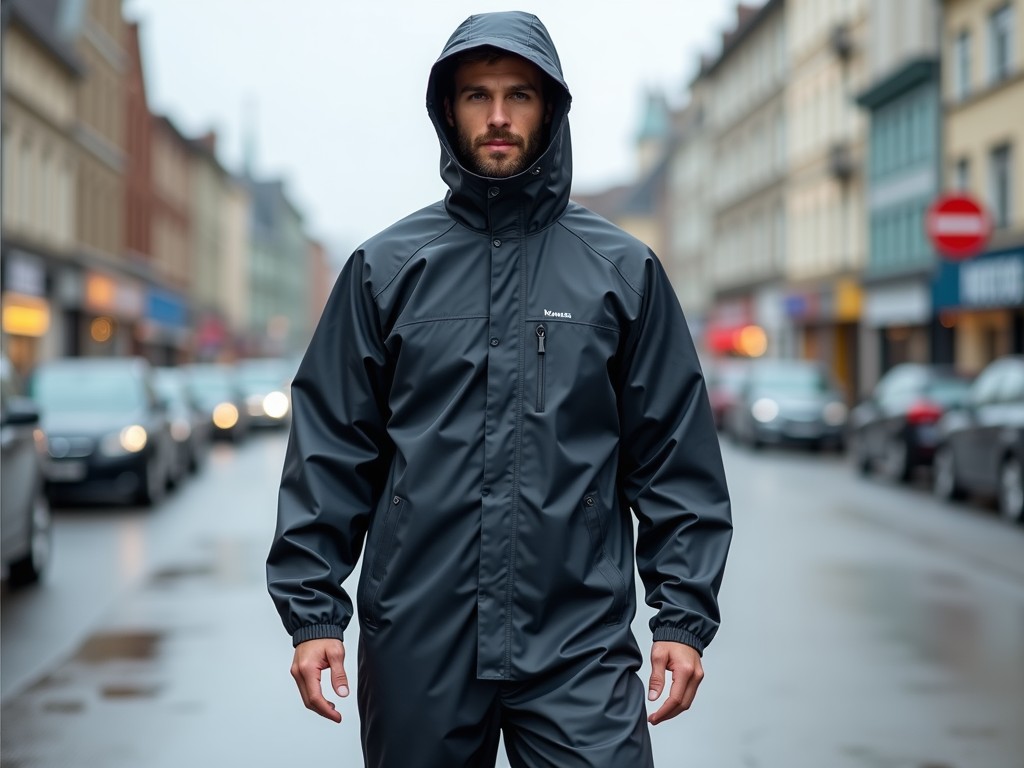
Buy Full Body Rain Suit Mens
Full Body Rain Suit for Men – Industrial Protection Against Prolonged Wet Exposure
Workers in utilities, wastewater treatment, marine operations, and outdoor maintenance require full-body protection from sustained rain, spray, and incidental chemical splash. A full body rain suit must prevent water ingress while allowing sufficient mobility and breathability for extended shifts. Material selection, seam construction, and closure design directly influence suit performance in continuous wet conditions.
Standard PVC-coated polyester suits often fail at stress points due to delamination or stiffening in cold environments. Alternatives like polyurethane (PU) or thermoplastic polyolefin (TPO) laminates offer improved flexibility and resistance to cracking. Seam integrity is critical—heat-sealed or taped seams prevent leakage at stitch holes, which are common failure points in sewn-only constructions.
Material Performance and Environmental Resistance
The outer shell typically uses a 0.35mm PU-coated nylon or 0.40mm TPO film bonded to a polyester scrim. These materials provide a hydrostatic head rating of at least 8,000 mm, meaning they resist water penetration under pressure equivalent to 8 meters of standing water—sufficient for heavy rain and wave splash. The coating also resists common industrial contaminants like diluted alkalis, oils, and mild acids.
Breathability is achieved through micro-porous layers or ventilation zones under the arms and back, allowing moisture vapor transmission rates (MVTR) of 3,000–5,000 g/m²/24h. This reduces internal condensation during physical labor. Linings, when present, are made of moisture-wicking polyester mesh to prevent skin adhesion and improve comfort during 8+ hour wear.
Design Features for Industrial Use
The suit includes an integrated hood with adjustable drawcord and storm flap over the front zipper to prevent water ingress at the neck and torso. Storm flaps overlap by at least 50mm and are secured with snap or hook-and-loop fasteners. Zipper teeth are nylon coil with a protective flap to resist corrosion and snagging.
Cuffs and ankles feature adjustable internal gaiters with elastic or Velcro closures to seal against boots and gloves. Reinforced patches at the knees, seat, and elbows use double-layer material or abrasion-resistant nylon to extend service life in crawling or kneeling positions. Reflective tape strips (50mm width, EN 20471 compliant) are positioned on shoulders, arms, and legs for low-light visibility.
Sizing and Fit Considerations
Industrial rain suits are designed to be worn over regular work clothing, including insulated layers in cold climates. Sizing follows chest measurements with ample ease: Small (90–95cm chest), Medium (96–101cm), Large (102–107cm), XL (108–113cm), 2XL (114–119cm). Inseam length is proportional to height, typically 78–82cm for average male stature.
Arm and leg length are adjustable via internal snap tabs or drawcords to prevent excess material from snagging on equipment. The torso cut allows full overhead reach without binding, critical for tasks like valve operation or ladder climbing. Suit weight ranges from 450g (light-duty PU) to 750g (heavy-duty TPO) depending on material thickness and reinforcement.
Quality Control and Testing
Each suit undergoes hydrostatic head testing on material samples and seam zones to verify water resistance. Seam strength is tested per ASTM D751 using grab tensile methods, requiring minimum 80N/50mm width. Dimensional stability is assessed after 5 wash cycles at 40°C to ensure no delamination or shrinkage >2%.
Visual inspection checks for coating uniformity, stitch integrity (if present), and correct placement of reflective elements. Functional testing includes zipper endurance (100 cycles), flap adhesion, and cuff elasticity recovery. Batch traceability is maintained via lot numbers linked to raw material certificates.
Applications in Wet-Exposed Industries
In wastewater treatment plants, workers face constant spray from aeration tanks and belt presses—suits prevent saturation of underlying uniforms and reduce hypothermia risk during night shifts. Marine maintenance crews use them during hull cleaning and dewatering operations where wave splash and spray are continuous.
Utility workers repairing overhead lines in storms rely on the suit’s dielectric properties (when made from non-conductive PU/TPO) and resistance to wind-driven rain. Agricultural equipment operators in rice paddies or fruit orchards benefit from full coverage during pesticide spraying and irrigation maintenance.
| Feature | Typical Specification | Purpose |
|---|---|---|
| Outer Shell Material | 0.35–0.40mm PU or TPO laminated polyester | Waterproofing, chemical splash resistance |
| Hydrostatic Head | ≥8,000 mm | Resists heavy rain and splash pressure |
| Seam Construction | Heat-sealed or taped | Prevents leakage at stitch holes |
| Reflective Tape | 50mm, EN 20471 compliant | Visibility in low-light conditions |
| Closure System | Storm flap + nylon coil zipper | Blocks water ingress at front opening |
| Reinforcement Zones | Knees, seat, elbows (double layer) | Extends service life in high-wear areas |
Customization Options for Specific Needs
For environments with hydrocarbon exposure, suits can be manufactured with nitrile-PVC blends offering superior oil resistance. Thermal linings (removable fleece or quilted polyester) are available for cold-storage or winter outdoor work. Detachable hoods allow conversion to a jacket-and-bib configuration when full head coverage is unnecessary.
Color options include high-visibility yellow, orange, or navy with matching reflective tape. Custom logos can be heat-transferred onto the chest or back using UV-stable inks. Leg length and torso taper can be adjusted upon request to accommodate non-standard body proportions or specialized gear integration.
Packaging is typically individual polybag with cardboard insert for shape retention during shipping. Bulk orders use recyclable corrugated cartons with moisture barriers. Labeling includes size, material code, care instructions, and lot number for traceability.