
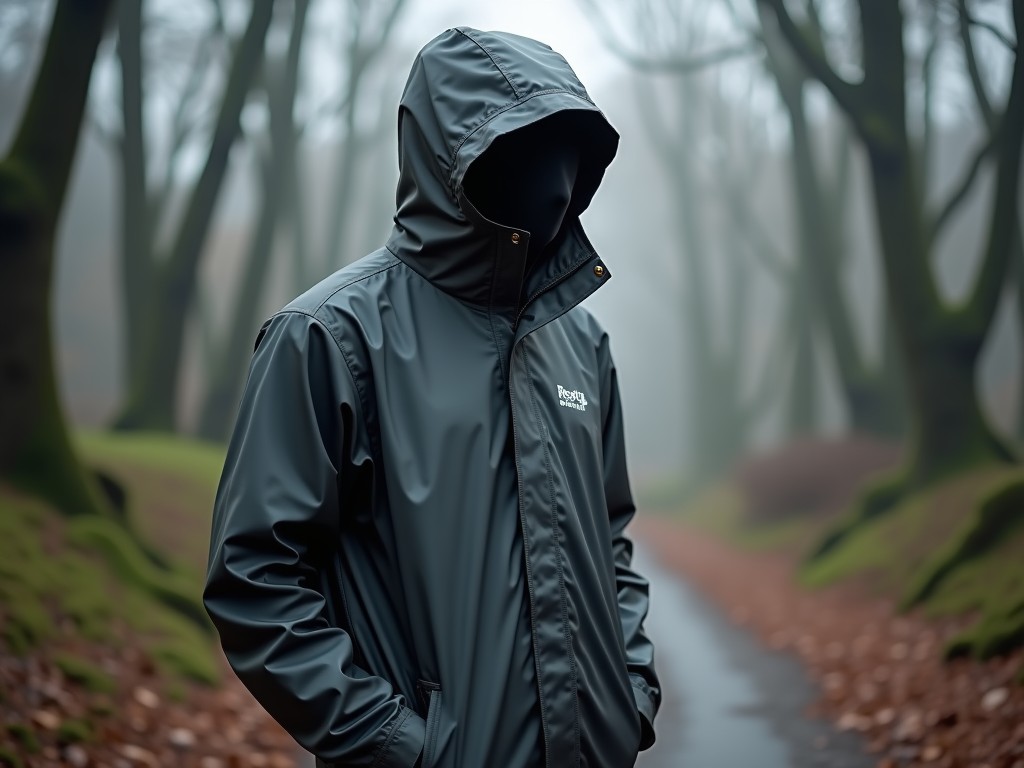
B2B Mens Packable Rain Suit
B2B Mens Packable Rain Suit
Engineered for professionals requiring reliable weather protection without compromising mobility, this mens packable rain suit delivers consistent performance in variable field conditions. Constructed from a 2.5-layer nylon ripstop fabric with a polyurethane coating, the suit achieves a hydrostatic head rating of 8,000 mm while maintaining a moisture vapor transmission rate (MVTR) of 5,000 g/m²/24hr. Seams are fully taped using 15mm-wide heat-activated tape to prevent leakage at stitch points, a critical detail for prolonged exposure to wind-driven rain.
The jacket features a helmet-compatible hood with laminated brim and rear adjustment via elastic cord locks, ensuring visibility and seal integrity when worn over headgear. Articulated elbows and gusseted underarms provide unrestricted range of motion during climbing, lifting, or equipment operation. Ventilation is managed through two underarm zippers with storm flaps, each equipped with water-resistant coil zippers rated for 5,000 cycles. The pants incorporate reinforced knees and seat using 420D nylon patches, extending wear life in high-abrasion zones common in utility and infrastructure work.
Packability is achieved through a proprietary folding system that reduces the suit to a compressed volume of approximately 1.2 liters, stored in an integrated stuff sack with silicone-coated interior to resist moisture wicking. The sack attaches to the jacket interior via hypalon loops, preventing loss during transit. Weight distribution is optimized at 480 grams total (jacket: 260g, pants: 220g), minimizing fatigue during extended carry. All components are sourced from bluesign®-approved suppliers, ensuring chemical safety and environmental compliance in manufacturing.
Technical Specifications
| Parameter | Value | Test Standard |
|---|---|---|
| Fabric Construction | 2.5-layer nylon ripstop | ASTM D5034 |
| Hydrostatic Head | 8,000 mm | ISO 811 |
| MVTR | 5,000 g/m²/24hr | ASTM E96 |
| Total Weight | 480 g | ISO 7211-5 |
| Packed Volume | 1.2 L | Internal measurement |
| Zipper Cycle Life | 5,000 cycles | ASTM D2061 |
Material Composition and Performance
The outer shell utilizes 40D nylon filament yarn with a tight 3x1 ripstop weave, providing tensile strength of 45 N warp and 38 N weft before tear propagation. A micron-thin polyurethane laminate is applied via solvent-free extrusion, creating a uniform barrier that resists delamination after 100 hours of UV exposure at 0.89 W/m². The inner layer consists of a non-woven polyester protector that shields the laminate from abrasion and oil-based contaminants, extending service life in industrial environments where contact with lubricants or solvents is possible.
Water resistance is maintained through a durable water repellent (DWR) finish based on C6 fluorocarbon-free chemistry, achieving a spray rating of 4/5 after 20 wash cycles per AATCC 22. This formulation avoids persistent organic pollutants while retaining effective beading angles above 90 degrees. Breathability is enabled by microvoids in the PU layer, allowing passive moisture transport without reliance on membranes that can clog in dusty or oily conditions—a common failure point in laminated systems used in mining or rail maintenance.
Thermal performance is neutral; the suit does not retain heat, making it suitable as a shell layer over insulating mid-layers in temperatures ranging from -10°C to +25°C. In sub-zero conditions, ice accumulation on the outer surface is minimized due to the low surface energy of the DWR treatment, reducing the risk of added weight or stiffness. Reflective trim options are available upon request for low-visibility scenarios, using 3M™ Scotchlite™ material compliant with ANSI/ISEA 107-2020 for Class 2 visibility.
Applications in Industrial Settings
Utility workers deploying this suit during storm restoration benefit from the rapid donning time—under 15 seconds from stuff sack to full coverage—critical when responding to sudden weather shifts at height. The absence of interior mesh linings prevents snagging on harness buckles or tool belts, a frequent issue with three-layer designs that add unnecessary bulk. Telecom technicians working on elevated towers value the suit’s low profile when maneuvering in confined spaces, where bulkier rain gear risks catching on antenna arrays or cable trays.
In food processing facilities, the smooth interior surface facilitates sanitation, resisting bacterial retention compared to brushed polyester linings. The suit withstands frequent cleaning with alkaline detergents at pH 11 and temperatures up to 60°C without degradation of seam tape adhesion. Agricultural operators applying pesticides or fertilizers prefer the non-absorbent shell, which prevents chemical uptake and allows for easy rinse-down between batches, reducing cross-contamination risk.
Emergency response teams deploying in flood zones rely on the suit’s neutral buoyancy when submerged—it does not absorb water to the point of hindering movement, unlike cotton-blend alternatives that can add over 1 kg of weight when saturated. The stuff sack doubles as a dry bag for electronics or documents, maintaining IPx4 protection when sealed properly. For extended operations, replacement DWR treatment is available via spray-on replenishment kits, restoring surface tension after prolonged use.
Customization Options
Color configurations are available in ISO safety hues: high-visibility yellow (Pantone 803C), orange (Pantone 1655C), and navy for low-signature operations. Custom Pantone matching is feasible for orders exceeding 200 units, with lab-dipped samples provided for approval prior to bulk production. Sleeve and inseam lengths can be adjusted in 25mm increments to accommodate anthropometric variations, particularly important for workforces with diverse body proportions.
Reinforcement patches can be relocated or expanded based on site-specific wear patterns—for example, adding extra coverage to the lower back for workers who frequently kneel on abrasive surfaces. Reflective tape width and placement comply with regional safety standards; ANSI/ISEA 107, EN ISO 20471, or CSA Z96 configurations are supported. Hardware alternatives include YKK® AquaGuard® zippers for enhanced spray resistance or metal-to-plastic snap fasteners for environments requiring non-magnetic properties.
Branding is applied via heat-transfer polyurethane film or silicone ink screening, both methods preserving the fabric’s breathability and flexibility. Embroidery is discouraged due to needle penetration compromising the laminate integrity, but woven labels can be affixed to the interior neck tape. Packaging options include individual polybags with silica desiccant, recyclable cardboard boxes, or reusable PP totes for closed-loop supply chains. Lead time for standard configurations averages 3–4 weeks; customizations may extend this to 6–8 weeks depending on complexity.
For technical inquiries, customization requests, or sample evaluation, contact our engineering team to discuss your specific operational requirements.
Request Technical Consultation