
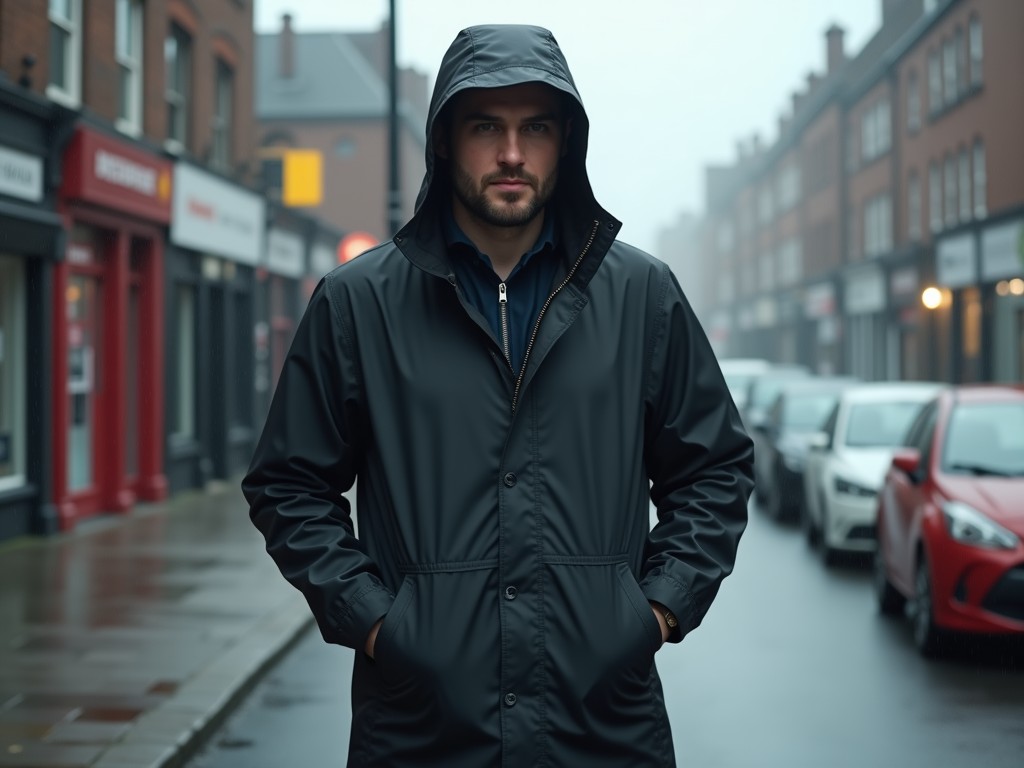
4Xl Waterproof Jacket Mens
4XL Waterproof Jacket Mens
This 4XL waterproof jacket for men is engineered for industrial environments requiring reliable protection against precipitation, wind, and abrasion while accommodating larger body frames. Designed for extended wear in outdoor work settings, it combines material science with ergonomic patterning to maintain mobility without compromising weather resistance.
The garment utilizes a three-layer laminate system: an outer shell of 100% nylon taslan with a durable water repellent (DWR) finish, a middle polyurethane (PU) membrane rated for 10,000 mm hydrostatic head, and an inner tricot lining for moisture wicking. Seams are fully taped with 20mm wide heat-activated polyurethane tape to prevent leakage at stitch points.
Sizing follows ANSI/ASME B89.1.13M standards for extended sizing, with chest circumference ranging from 140cm to 152cm and sleeve length from 90cm to 96cm in the 4XL variant. The cut incorporates articulated elbows, gusseted underarms, and a dropped rear hem to prevent ride-up during overhead work or prolonged bending.
Technical Specifications
| Parameter | Value | Test Standard |
|---|---|---|
| Hydrostatic Head | 10,000 mm | ISO 811 |
| Moisture Vapor Transmission Rate (MVTR) | 8,000 g/m²/24h | ASTM E96 |
| Tensile Strength (Warp/Weft) | 450 N / 380 N | ISO 13937-2 |
| Tear Resistance (Warp/Weft) | 45 N / 38 N | ISO 9073-4 |
| Abrasion Resistance | >50,000 cycles | ISO 12947-2 (Martindale) |
| Weight (Size 4XL) | 680 g | Internal measurement |
Design Features for Industrial Use
The jacket integrates functional details informed by field feedback from utility, construction, and maintenance workers. A two-way front zipper with storm flap and magnetic closures allows rapid adjustment while maintaining seal integrity. The flap overlaps the zipper by 25mm and is secured with hidden magnets to prevent wind-driven water ingress.
Adjustable cuffs feature dual-layer hook-and-loop closures with 50mm adjustment range to seal over gloves or bare wrists. The helmet-compatible hood includes a laminated brim, rear drawcord with cord locks, and peripheral vision optimization through tapered side panels. All drawcords use thermoplastic polyurethane (TPU) tips to prevent fraying and meet snag-resistance requirements.
Ventilation is managed through underarm zippers with 20cm length and storm flaps, enabling active airflow during high-exertion tasks without compromising weather protection. Reflective trim compliant with ANSI/ISEA 107-2020 Class 2 standards is positioned on sleeves, shoulders, and back for low-light visibility, using 50mm wide microprismatic tape rated for 50+ washes.
Material Performance Rationale
The nylon taslan outer shell was selected for its balance of abrasion resistance and flexibility. Taslan’s air-textured finish provides a softer hand feel than plain weave nylon while maintaining superior tear propagation resistance—critical when the jacket contacts rough surfaces like concrete edges, metal grating, or rope.
The PU membrane offers consistent waterproof performance across temperature fluctuations (-20°C to +40°C), unlike some PTFE-based alternatives that may experience pore blockage from oils or particulates common in industrial settings. The membrane’s microporous structure allows vapor transfer while blocking liquid water, validated through repeated wet flex testing.
The inner tricot lining uses 100% polyester with a wicking finish to move sweat away from the skin, reducing conductive heat loss and maintaining wearer comfort during layered use. This layer also protects the membrane from internal abrasion caused by movement or equipment straps, extending the garment’s service life.
Applications in Industrial Sectors
In utility work, the jacket protects line technicians during storm restoration operations where prolonged exposure to rain and wind is combined with physical exertion from climbing and equipment handling. The breathability prevents overheating during strenuous tasks while the waterproofing maintains electrical safety by keeping inner layers dry.
For construction trades such as steel erection or concrete forming, the abrasion-resistant outer shell withstands contact with rough formwork, rebar, and scaffolding. The articulated cut allows unrestricted movement when reaching overhead or twisting during material placement, and the extended back hem prevents exposure when bending or squatting.
In municipal maintenance and landscaping, the jacket’s durability supports daily use in wet conditions, withstanding repeated exposure to dew, spray from irrigation systems, and light chemical splashes from fertilizers or cleaning agents. The reflective elements enhance safety during early morning or dusk operations near roadways.
Customization Options
While the standard configuration meets common industrial needs, specific adaptations are available upon request to align with site-specific hazards or corporate branding requirements. Modifications are evaluated for impact on performance characteristics before implementation.
- Alternative outer shell materials: 65/35 poly/cotton ripstop for reduced static, or PVC-coated nylon for enhanced chemical splash resistance.
- Adjustable hydrostatic head ratings: 5,000 mm for light-duty use or 20,000 mm for prolonged wet exposure.
- Custom reflective tape placement or increased coverage for ANSI/ISEA 107 Class 3 compliance.
- Internal pocket configurations: radio, tablet, or tool-specific compartments with water-resistant zippers.
- Branding: embroidery, screen printing, or heat transfer on chest, sleeve, or back areas using industrial-grade inks.
Quality Control and Testing
Each production batch undergoes standardized testing to verify consistency in waterproofing, breathability, and seam integrity. Hydrostatic head tests are conducted on three random specimens per lot using a calibrated water column tester, with acceptance criteria set at ≥9,500 mm to account for minor variance.
Seam tape adhesion is evaluated via peel strength testing per ASTM D903, requiring minimum values of 2.5 N/mm after 5 wash cycles. Abrasion resistance is verified using Martindale equipment, and colorfastness to light, washing, and rubbing is assessed per AATCC standards to ensure reflective trim and base colors meet visibility requirements over time.
Dimensional stability is checked after 5 wash cycles at 60°C, with maximum allowable shrinkage of 3% in length and 2% in width. Functional testing includes zipper endurance (100 cycles), drawcord retention, and storm flap overlap measurement to ensure design intent is maintained through simulated use.
For technical inquiries, customization requests, or to request a sample for evaluation, contact our industrial solutions team.
Request Specification Sheet or Sample