
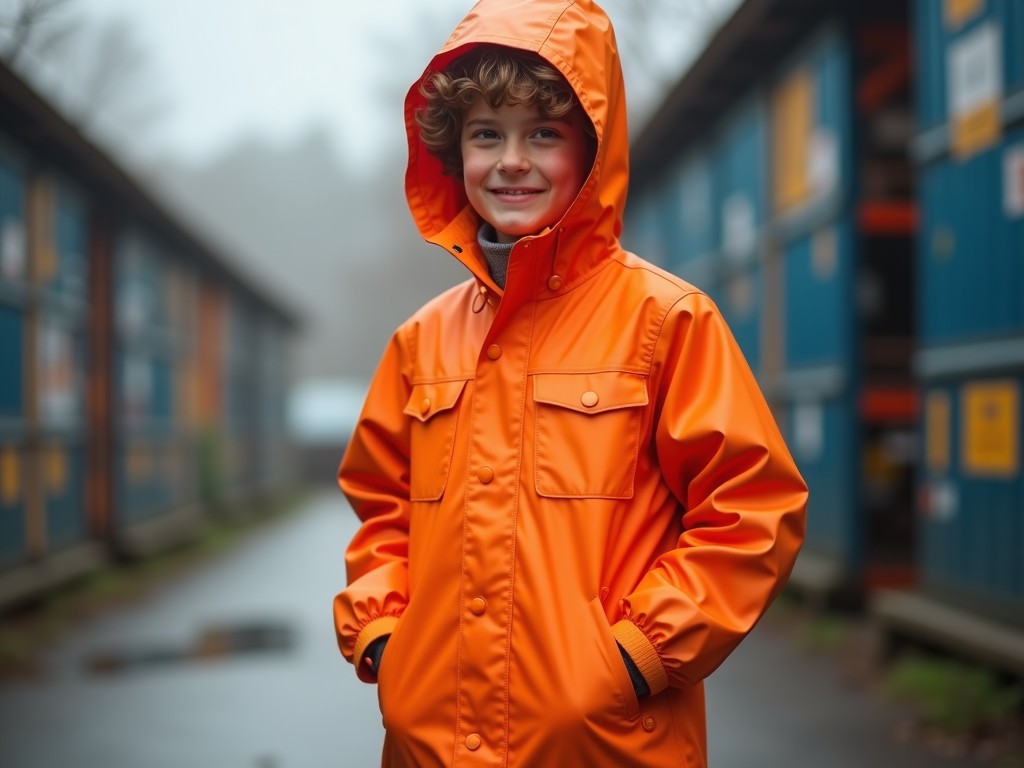
Youth Large Rain Jacket Top Factory
Youth Large Rain Jacket Top Factory
Youth large rain jacket tops are engineered for outdoor protection in variable weather conditions, designed to accommodate growing adolescents while maintaining performance standards required for active use. These garments balance waterproofing, breathability, and durability to ensure comfort during prolonged exposure to rain, wind, and temperature fluctuations. Factory production focuses on consistent sizing, seam integrity, and material performance to meet the demands of institutional buyers such as schools, youth sports organizations, and outdoor education programs.
Material Construction and Performance Characteristics
The outer shell typically uses a 2-layer or 2.5-layer laminate system with a polyurethane (PU) or thermoplastic polyurethane (TPU) coating applied to a polyester or nylon base fabric, providing a hydrostatic head rating between 5,000mm and 10,000mm depending on the intended use case. This coating prevents water penetration while allowing moisture vapor transmission, measured by a moisture vapor transmission rate (MVTR) typically ranging from 3,000 to 8,000 g/m²/24h to reduce internal condensation during activity. Seams are sealed using heat-activated tape or ultrasonic welding to maintain waterproof integrity at stitch points, which are common failure zones in lower-grade rainwear.
Inner linings may include a brushed polyester mesh for comfort against the skin or a solid polyester tricot for added durability, with thickness selected based on insulation needs—unlined shells are preferred for layering systems, while light mesh linings improve wear comfort in direct-contact applications. Zippers are typically coil-type with water-resistant flaps or polyurethane-coated zippers to prevent leakage at closure points, and pull tabs are designed for easy operation with gloves or cold hands. Adjustable cuffs and hems use elastic or Velcro®-style closures to seal out wind and water without restricting movement.
Design Features for Youth-Specific Fit and Function
Youth large sizing corresponds to chest measurements of approximately 36–38 inches and height ranges of 58–64 inches, with pattern grading adjusted to accommodate proportional growth in limb length and torso depth without creating excess bulk. Sleeve length is extended relative to adult small sizes to accommodate arm growth, while shoulder width is increased incrementally to maintain mobility during sports or carrying backpacks. The jacket cut allows for a full range of motion in the shoulders and arms, critical for activities like cycling, hiking, or team sports where unrestricted movement is essential.
Reflective elements are often integrated into the design using heat-transfer tape or laminated strips placed on the sleeves, back, and chest to enhance visibility in low-light conditions, meeting safety requirements for after-school activities or early morning commutes. Pocket placement is optimized for accessibility—hand-warmer pockets are positioned high enough to avoid interference with hip belts or harnesses, and interior security pockets may be included for storing small electronics or documents. Hoods are designed to be adjustable via drawcords or elastic systems and are sized to fit over helmets or hats when required, with a stiffened brim to shed water away from the face.
Manufacturing Considerations for Consistent Quality
Factory production emphasizes repeatability in cutting, sewing, and sealing processes to ensure dimensional accuracy across large batches, with automated cutting systems used to minimize material waste and maintain pattern integrity. Sewing is performed using flatlock or overlock stitches with polyester thread resistant to UV degradation and moisture, selected for tensile strength exceeding 4.5 N/tex to prevent seam failure under stress. Seam sealing is applied uniformly using calibrated heat-pressure equipment to activate tape adhesives without damaging the fabric coating, a process critical for maintaining long-term waterproof performance.
Quality control includes hydrostatic head testing on finished garments to verify waterproof resistance, spray testing to assess surface wetting-out, and seam leak testing under pressure to confirm seal integrity. Dimensional stability is evaluated after multiple wash cycles to ensure the jacket retains its shape and size, with shrinkage typically limited to less than 3% in both warp and weft directions. Colorfastness is tested to AATCC standards to prevent fading or bleeding, particularly important for brightly colored or high-visibility variants used in safety applications.
Customization Options for Institutional Buyers
Factories commonly offer customization of color, logo placement, and trim details to align with institutional branding or team identifiers, using methods such as screen printing, heat transfer, or embroidery based on logo complexity and required durability. Reflective trim width and placement can be adjusted to meet specific safety standards, and additional features such as internal name tags, reinforced stress points, or detachable hoods can be incorporated based on end-use requirements. Minimum order quantities for custom runs typically start at 100 units, with pricing influenced by fabric selection, coating thickness, and complexity of added features.
Lead times for standard configurations range from 3 to 5 weeks after sample approval, while custom orders may extend to 6–8 weeks depending on material sourcing and production scheduling. Factories provide pre-production samples for approval, allowing buyers to validate fit, function, and appearance before full-scale production begins. Packaging options include individual polybagging with cardboard inserts for retail presentation or bulk packing in cartons for distribution, with shipping marks and barcodes applied as needed for logistics tracking.
Typical Applications in Youth and Institutional Settings
Youth large rain jacket tops are frequently specified by school districts for field trip programs, outdoor education curricula, and athletic team travel, where reliable weather protection reduces the risk of hypothermia or discomfort during extended outdoor exposure. In youth sports leagues, these jackets serve as outer layers for soccer, baseball, and track teams during rainy seasons, allowing practices and games to proceed with minimal disruption while keeping athletes dry and warm. Outdoor recreation programs, such as scouting groups or summer camps, use them as standard issue gear for hiking, canoeing, and wilderness activities where weather unpredictability demands dependable personal protection.
Municipal recreation departments often procure these garments for lending libraries or after-school programs, ensuring equitable access to weather-appropriate clothing for participants regardless of socioeconomic factors. Some models are adapted for use in transitional seasons with removable liners or ventilation zippers, extending their usability across spring, autumn, and mild winter conditions. The focus on durable construction and replaceable components supports long-term use, reducing replacement frequency and total cost of ownership for budget-conscious institutions.
Comparison of Common Fabric Systems
| Fabric System | Typical Hydrostatic Head | MVTR (g/m²/24h) | Common Use Case |
|---|---|---|---|
| 2-layer PU-coated polyester | 5,000–7,000mm | 3,000–5,000 | Budget institutional use, short-term exposure |
| 2.5-layer TPU laminate | 8,000–10,000mm | 5,000–8,000 | Mid-range performance, active youth programs |
| 3-layer membrane (e.g., ePTFE) | 15,000mm+ | 10,000–15,000+ | High-end specialty use, limited youth applications |
MVTR = Moisture Vapor Transmission Rate. Values represent typical ranges; actual performance depends on specific fabric construction and coating thickness. Higher MVTR indicates better breathability during physical activity.
Quality Assurance and Testing Protocols
Factories implement inline inspections during cutting, sewing, and sealing stages to catch defects early, reducing waste and rework. Final inspection includes visual checks for stitching quality, trim alignment, and defect-free surfaces, followed by functional testing such as zipper operation, hood adjustment, and pocket accessibility. Random samples from each batch undergo hydrostatic head testing to confirm waterproof performance meets the specified threshold, with acceptable quality limits (AQL) typically set at 2.5% for major defects and 4.0% for minor defects.
Documentation such as material safety data sheets (MSDS), test reports, and compliance certificates (e.g., REACH, Oeko-Tex Standard 100) are available upon request to confirm that materials meet environmental and safety standards, particularly important for products intended for juvenile use. Factories maintain traceability records linking raw materials to finished goods, enabling root cause analysis in the event of field performance issues. Continuous improvement processes are driven by customer feedback and field return data to refine patterns, materials, and construction methods over time.
For technical specifications, customization requests, or sample evaluation, contact our manufacturing team to discuss your institution’s specific requirements. We provide detailed technical packs, size charts, and material data sheets to support informed procurement decisions. Lead times, minimum order quantities, and pricing are determined based on final design confirmation and material selection.
Request Technical Specification Sheet