
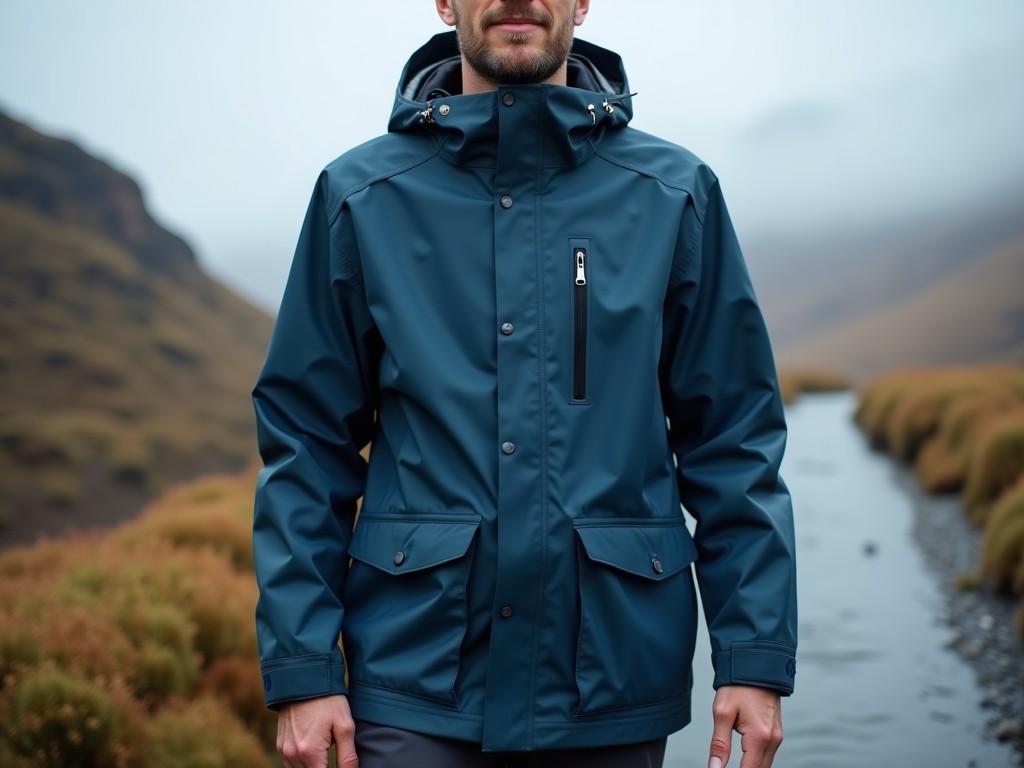
Waterproof Jacket 9 12 Months
Waterproof Jacket 9-12 Months
Industrial waterproof jackets rated for 9–12 months of continuous outdoor exposure are engineered for environments requiring sustained protection against precipitation, wind abrasion, and thermal cycling. These garments are not seasonal wear but functional components of personal protective equipment (PPE) systems where downtime due to material failure carries operational cost. Selection depends on understanding the degradation mechanisms of coatings, seam integrity, and substrate fatigue under cyclic wet-dry and UV exposure.
The 9–12 month rating reflects accelerated aging test correlations to real-world performance in temperate maritime or high-rainfall industrial zones. It does not imply immediate failure at month 13 but indicates the period over which key properties—hydrostatic resistance, tear strength, and flexibility—remain above defined safety thresholds. Buyers should evaluate this duration alongside specific hazard assessments rather than treating it as a universal warranty period.
Material construction typically involves a tri-layer system: an outer abrasion-resistant nylon or polyester shell, a microporous polyurethane (PU) or polytetrafluoroethylene (ePTFE) membrane, and an inner protective tricot or mesh liner. The membrane’s pore structure allows vapor transmission while blocking liquid water ingress, a balance quantified by moisture vapor transmission rate (MVTR) and hydrostatic head (HH) measurements.
Technical Specifications
| Parameter | Typical Value | Test Standard |
|---|---|---|
| Hydrostatic Head (HH) | ≥ 10,000 mm | ISO 811 |
| Moisture Vapor Transmission Rate (MVTR) | ≥ 8,000 g/m²/24h | ASTM E96 |
| Tear Strength (Trapezoidal) | ≥ 25 N (warp), ≥ 20 N (weft) | ISO 9073-4 |
| Abrasion Resistance (Martindale) | ≥ 50,000 cycles | ISO 12947-2 |
| UV Stability (Retained Tensile) | ≥ 70% after 500 hrs | ISO 4892-3 |
| Operating Temperature Range | -20°C to +40°C | Manufacturer Rating |
Values represent typical performance for standard configurations. Actual results vary based on material thickness, coating weight, and seam sealing method. Custom requirements can be accommodated upon request.
Material Selection Logic
Outer shell fabrics are selected based on denier count and weave tightness to resist snagging from tools, scaffolding edges, or mineral aggregates. Common choices include 210D nylon oxford or 300D polyester ripstop, where the ripstop pattern limits tear propagation from localized punctures. Denier directly influences both abrasion resistance and garment weight—a trade-off evaluated during prototyping.
Membrane choice affects long-term durability. PU coatings offer cost-effective waterproofing but may experience hydrolysis over 9–12 months in hot, humid climates, reducing HH performance. ePTFE membranes resist chemical degradation better but require careful lamination to avoid delamination under flex stress. Manufacturers specify membrane type based on expected environmental pH, temperature swings, and exposure to oils or solvents.
Seam sealing is critical to maintaining the 9–12 month rating. Heat-applied polyurethane tape is standard, with width and adhesion strength calibrated to prevent peeling under flexural stress. Seam failure often precedes fabric degradation in field reports, making tape compatibility with both shell and membrane a key qualification criterion during supplier audits.
Applications in Industrial Settings
These jackets are routinely specified in offshore wind turbine maintenance, where technicians face prolonged exposure to sea spray and high humidity. The 9–12 month cycle aligns with typical inspection and maintenance intervals, reducing the need for mid-campaign PPE replacement. Hydrostatic head retention ensures protection against wind-driven rain during turbine nacelle access.
In mineral processing plants, workers handling wet ore or slurry benefit from abrasion-resistant shells that withstand constant contact with damp aggregate. The MVTR specification prevents heat buildup during physical exertion in confined spaces, a factor linked to compliance with thermal stress guidelines. Jackets are often issued as part of a rotation system to allow drying between shifts.
Utilities engaged in underground cable repair or storm drainage maintenance use these garments for their resistance to mud splatter and rapid drying after submersion. Reflective trims compliant with EN ISO 20471 are frequently integrated for low-visibility conditions, adding a safety layer without compromising the waterproof barrier. Custom pocket layouts accommodate tools like multimeters or cable cutters.
Customization and Integration
Sizing systems follow ISO 13688 anthropometric data, with options for tall, short, or broad fits to accommodate layering over insulated mid-layers or harnesses. Sleeve length and torso cut are adjustable to prevent ride-up during overhead work—a common failure point in poorly designed rainwear. Articulated elbows and gusseted underarms maintain range of motion without straining seams.
Closure systems include storm flaps over zippers, with options for water-resistant zippers (e.g., YKK AquaGuard) or magnetic closures for gloved operation. Hood designs vary from stowable to permanent, with adjustable volume and peak stiffness to prevent water runoff into the collar. Compatibility with hard hats or hearing protection is validated during prototype trials.
Branding or identification patches can be applied via heat-transfer or sew-on methods, provided they do not puncture the membrane. Some suppliers offer detachable liners for seasonal adaptation, effectively extending service life by allowing the shell to be used in colder months with added insulation. All modifications undergo re-testing to confirm HH and MVTR remain within specification.
Quality Control Philosophy
Batch testing includes hydrostatic head on random samples from each production lot, with acceptance criteria set at 95% of units exceeding 10,000 mm. Seam seal adhesion is peel-tested per ASTM D903, requiring minimum values to prevent gradual delamination. Flexural endurance is assessed using a Martindale-type flex tester simulating 10,000 cycles of arm movement.
UV exposure tests are conducted in accelerated weathering chambers, with colorfastness and tensile retention monitored at intervals. Customers may request third-party test reports from labs such as SGS or Intertek as part of supplier qualification. Traceability is maintained via lot numbers linking to raw material certificates and machine settings.
Final inspection includes dimensional checks, seam continuity verification, and functionality tests of zippers and closures. Any deviation from tolerances triggers root cause analysis—often tracing to tension settings on sealing equipment or coating viscosity shifts. Continuous feedback from field returns informs design updates, particularly in seam geometry and tape selection.
To discuss your specific environmental exposure profile, required sizing range, or integration with existing PPE systems, please contact our technical team. We provide detailed material data sheets, test reports, and sample garments for evaluation under actual site conditions.