
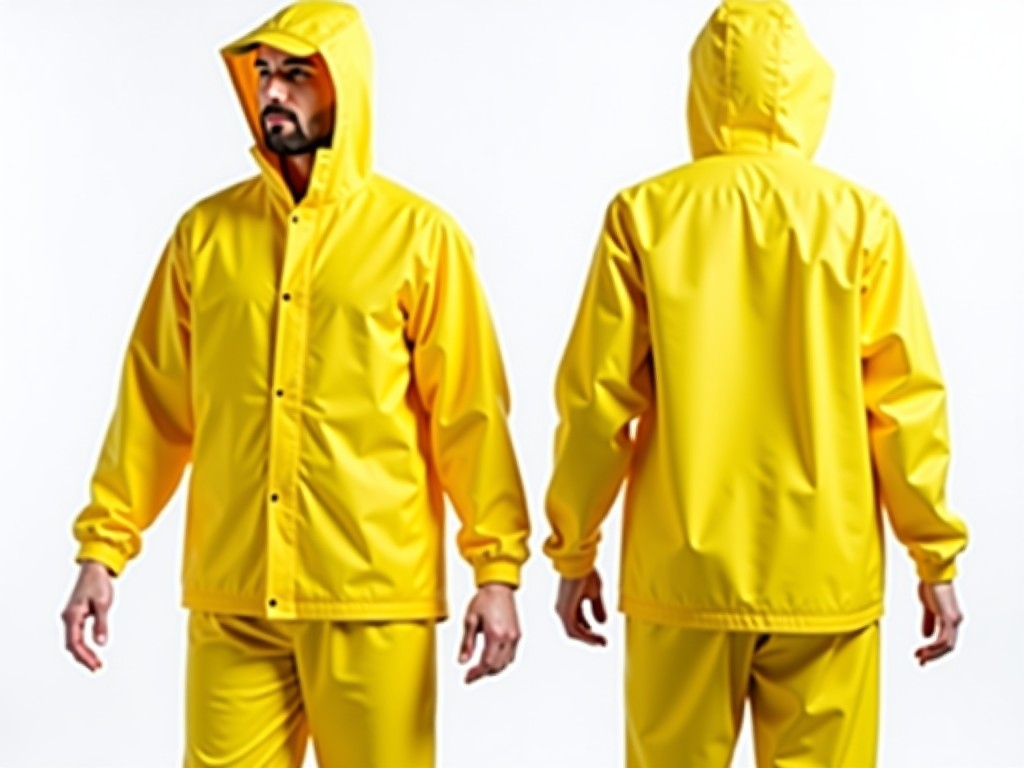
Oem Waterproof Long Sleeve Weaning Bibs
OEM Waterproof Long Sleeve Weaning Bibs
Industrial weaning bibs with extended sleeve coverage require precise material selection and seam engineering to maintain hygiene standards while accommodating infant movement. This product page details the technical specifications, construction methods, and application considerations for OEM waterproof long sleeve weaning bibs designed for high-volume food-safe manufacturing.
Material Composition and Barrier Performance
The primary barrier layer consists of thermoplastic polyurethane (TPU) film laminated to a knitted polyester backing, providing a hydrostatic head rating of ≥10,000 mm under ISO 811 testing. This configuration resists penetration from aqueous food substances, saliva, and common cleaning agents while maintaining flexibility across -20°C to 60°C temperature ranges. The TPU layer is formulated without phthalates or BPA, complying with FDA 21 CFR 177.1630 for indirect food contact surfaces.
Alternative material options include polyethylene terephthalate (PET) coated fabrics for applications requiring higher tear propagation resistance (>45 N/mm ASTM D2261) or polypropylene nonwovens for single-use clinical environments where cost per unit is prioritized over reusability. All material combinations undergo accelerated aging tests (70°C, 80% RH for 168 hours) to verify dimensional stability and coating adhesion retention above 85% of initial values.
Seal Integrity and Seam Construction
Seam waterproofing is achieved through ultrasonic welding rather than stitching, eliminating needle holes that could compromise barrier integrity. Weld seams are validated using ASTM D751 hydrostatic pressure testing, maintaining leak-free performance at 5 kPa pressure differential. Seam width is controlled to 8±1 mm to balance structural strength with flexibility in high-stress areas such as shoulder attachments and sleeve cuffs.
Critical stress points incorporate reinforced tape overlays made from the same TPU film, applied over welded seams to increase peel strength by 40% compared to unwelded seams alone. Sleeve terminations feature heat-sealed elastic channels with 15mm width silicone rubber cores, providing 120-180% elongation recovery after 100 extension cycles at 300% strain, ensuring consistent fit without inducing pressure marks on infant skin.
Design Parameters and Ergonomic Considerations
Bib length is standardized at 320mm from neckline to hem, providing coverage for infants aged 6-24 months based on 50th percentile torso measurements from WHO growth standards. Sleeve length measures 180mm from shoulder seam to cuff, designed to accommodate 90% arm circumference variation in the target demographic while allowing full elbow articulation. Neck opening utilizes a 3-position snap system with 15mm diameter polyethylene fasteners, adjustable to 280mm, 300mm, and 320mm circumferences.
Surface texture is engineered with a micro-embossed pattern (50μm depth, 200μm pitch) on the TPU layer to reduce surface tension and improve release of viscous food residues during cleaning. The interior facing uses a brushed polyester knit with 180g/m² weight and 0.8mm pile height, selected for moisture wicking properties (vertical wick height >15mm in 30 minutes per AATCC 198) and abrasion resistance (>15,000 cycles Martindale).
Quality Control and Batch Consistency
Incoming film material is inspected for thickness uniformity using laser micrometry, with acceptance criteria of ±5% deviation from nominal 0.08mm thickness across 100% of roll width. Weld seam integrity is verified through destructive peel testing on 1 in 500 production units, requiring minimum 1.8 N/mm force to initiate separation. Visual inspection under 3x magnification checks for micro-bubbles, inclusions, or incomplete welds exceeding 0.5mm in length.
Finished goods undergo functional testing including: 10-cycle wash simulation at 40°C with neutral detergent, followed by hydrostatic retest to confirm barrier retention; colorfastness evaluation against ISO 105-B02 for exposure to tomato-based and carrot-based food simulants; and dimensional stability measurement after 5 hot tumble dry cycles at 60°C. Batch traceability is maintained via laser-etched lot codes on the hem tag, linking to material certificates and test reports.
Customization Pathways for OEM Partners
OEM modifications are accommodated through defined parameter ranges rather than open-ended customization. Sleeve length can be adjusted between 150mm-210mm in 10mm increments, requiring revalidation of seam placement and elastic recovery characteristics. Neck closure systems can be converted to hook-and-loop with 25mm wide nylon tape, necessitating peel strength testing to ensure ≥1.2 N/cm adhesion after 500 cycles.
Surface printing is restricted to water-based pigment inks cured at 140°C for 90 seconds, with maximum coverage limited to 30% of visible area to preserve weld integrity. Ink formulations must pass ISO 10993-5 cytotoxicity testing and exhibit <5μg/cm² migration after 24-hour exposure to 3% acetic acid simulant. All customizations require submission of technical specifications for engineering review prior to tooling approval.
Packaging and Logistics Optimization
Standard packaging configuration uses 100% recycled polypropylene bags with 50μm thickness, heat-sealed to maintain humidity control below 40% RH during transit. Each bag contains 25 bibs folded using a standardized tri-fold method to minimize crease formation in critical seam areas. Master cartons are constructed from single-wall corrugated fiberboard (ECT 32 kN/m) with internal dimensions optimized for 20-foot container loading (560mm x 380mm x 320mm per carton, 20 cartons per layer).
Export packaging includes desiccant packets (5g silica gel per bag) and corner protectors made from recycled polyethylene foam. Shipping marks comply with ISPM 15 standards for wooden pallets when used, and all cartons display EAN-13 barcodes and human-readable lot codes. Volume-dependent options include pallet stabilization straps and moisture barrier liners for containerized shipments exceeding 30 days transit time.
| Parameter | Standard Specification | Customizable Range | Validation Method |
|---|---|---|---|
| Material Thickness | 0.08mm ±5% | 0.06-0.12mm | Laser Micrometry (ISO 4593) |
| Hydrostatic Head | ≥10,000 mm | ≥5,000 mm (single-use) | ASTM D751 Method A | Sleeve Length | 180mm | 150-210mm | Measured from shoulder seam |
| Neck Circumference | 280-320mm (3-position) | 250-350mm | Snap pull-force test (10N) |
| Seam Peel Strength | ≥1.8 N/mm | ≥1.2 N/mm (alternative) | ASTM D903 Modified |
| Wash Cycles | ≥50 cycles | ≥100 cycles (premium) | AATCC 135 + hydrostatic retest |
Technical evaluation samples are available upon receipt of completed application details including target age range, expected soiling agents, cleaning protocol specifications, and annual volume forecasts. OEM partners should submit material safety data sheets for any custom printing inks or alternative fastening systems under consideration. Lead time for initial tooling approval averages 3-4 weeks, with production lead times of 2-4 weeks thereafter depending on material availability and customization complexity.
For engineering consultations or to request a formal quotation package containing material certificates, test reports, and sample evaluation protocols, contact our technical sales team through the inquiry form. All specifications are subject to validation against your specific operational requirements before production commencement.