
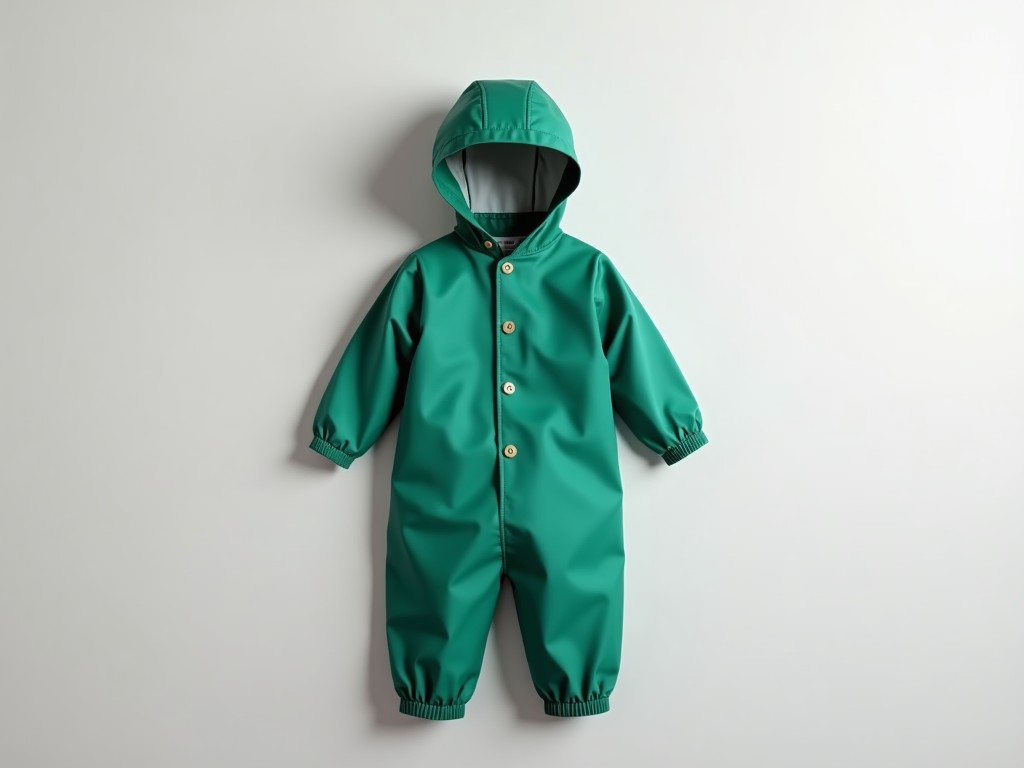
Oem Raincoat Overalls For Kids
OEM Raincoat Overalls for Kids: Technical Specifications and Customization Options
Children's protective outerwear requires precise engineering to balance mobility, weather resistance, and safety compliance. OEM raincoat overalls for kids are designed as integrated garments combining waterproof trousers with a connected upper layer, eliminating gaps at the waist that compromise protection during prolonged outdoor exposure. Unlike separate rain jackets and pants, this unified construction prevents water ingress at critical junctions while maintaining freedom of movement essential for active use in wet conditions.
Material selection directly impacts performance durability and child safety. Typical base fabrics include 150D polyester oxford with polyurethane (PU) coating rated for 3,000mm hydrostatic head resistance, providing reliable protection against moderate rainfall. Seams are sealed using ultrasonic welding or heat-activated tape with minimum 15mm overlap to achieve consistent waterproof integrity. Reflective elements, when specified, utilize retroreflective tape meeting EN ISO 20471 Class 2 standards for visibility in low-light environments.
Key Design Parameters for Pediatric Use
Anthropometric considerations dictate pattern development for children's rainwear. Sizing follows ISO 8559-1 standards with specific adjustments for growth allowance—typically 5-8% extra length in torso and limbs to accommodate seasonal use without restricting movement. Articulated knees and elbows incorporate 15-degree pre-bends to reduce fabric strain during flexion, minimizing fatigue during extended wear. Cuff adjustments use elasticated nylon with 30% stretch recovery to seal against water ingress while allowing easy donning/doffing.
Ventilation strategy addresses microclimate management despite waterproof requirements. Underarm gussets with hydrophobic mesh (100gsm nylon) enable vapor transfer while maintaining liquid water resistance. Storm flaps over zippers feature drainage channels angled at 15 degrees to direct runoff away from closure points. Hood design includes a rigid peak (5mm LDPE insert) and adjustable perimeter using barrel locks on 3mm elastic cord to prevent water collection without obstructing peripheral vision.
Weight optimization targets sub-300g for size 100cm garments to avoid burdening young wearers. This is achieved through strategic material placement—reinforcing only high-wear zones (seat, knees, cuffs) with 200D nylon oxford while using lighter 150D polyester elsewhere. Total garment weight scales predictably with size, increasing approximately 25g per 5cm height increment based on graded pattern calculations.
Material Performance Comparison
| Property | Standard PU/Polyester | PVC-Coated Polyester | Recycled PET/PU |
|---|---|---|---|
| Hydrostatic Head (mm) | 3,000 | 5,000 | 2,500-3,500 |
| MVTR (g/m²/24h) | 5,000 | <1,000 | 4,000-6,000 |
| Weight (g/m²) | 180 | 240 | 170 |
| Flexibility at -10°C | Good | Limited | Good |
| Recyclability | Limited | Poor | High (mono-material) |
Typical values; actual performance varies with coating thickness and fabric construction. Custom material combinations available upon request.
Customization Workflow for OEM Partners
Technical specification begins with defining end-use conditions—frequency of exposure, temperature range, and required durability cycle count. For school uniform applications, we recommend minimum 30 wash cycles at 40°C without delamination or loss of waterproofing. Reflective trim placement follows biomechanical guidelines: vertical strips on limbs (50mm width) and horizontal bands on torso to maximize motion-based visibility. Colorfastness testing uses ISO 105-B02 with minimum 4/5 grey scale rating after 20 UV exposure hours.
Sizing systems accommodate regional growth patterns. North American specs typically use height-based grading (80-140cm in 5cm increments), while European markets often require age-correlated sizing with adjustable waist tabs (±3cm range). Custom branding options include screen printing on storm flaps (maximum 80mm width) or woven labels at the neck interior. All trims undergo ISO 105-E04 colorfastness testing to prevent staining during prolonged wear.
Quality verification includes hydrostatic retesting after simulated wear cycles. Each production lot undergoes AQL 2.5 inspection for seam integrity (maximum 3mm leakage under 500mm water pressure for 3 minutes) and dimensional stability (maximum 3% shrinkage after washing). Test reports are available for customer review prior to shipment approval.
Applications in Institutional and Commercial Settings
Educational facilities specify these garments for outdoor learning programs where children remain active in wet weather for 2+ hours daily. The interconnected design prevents snow or rain entry during prolonged kneeling or sitting on damp surfaces—a common failure point with separate tops and bottoms. Waterproof ratings of 3,000mm hydrostatic head provide adequate protection for typical schoolyard conditions while maintaining breathability to reduce overheating during physical activity.
Recreational operators (nature camps, outdoor schools) prioritize rapid drying properties between uses. Fabrics with MVTR above 4,000g/m²/24h allow overnight drying in ventilated storage, enabling same-day reuse. Reinforced seat and knee patches (600D nylon oxford) extend service life in high-abrasion environments, reducing replacement frequency by approximately 40% compared to non-reinforced designs in field trials.
Healthcare and childcare providers require garments that withstand frequent disinfection. Materials compatible with quaternary ammonium cleaning agents (tested per ASTM E1052) maintain integrity after 50+ wipe-down cycles. Easy-access medical openings (optional) use waterproof zippers with storm flaps to allow vital sign monitoring without garment removal—a feature developed in collaboration with pediatric care facilities.
Packaging and Logistics Considerations
Flat folding techniques minimize creasing in high-stress areas. Garments are folded along natural seams with storm flaps positioned outward to prevent permanent marking on reflective surfaces. Each unit includes a desiccant packet (5g silica gel) to control moisture during transit, particularly important for shipments through humid climates. Volume efficiency averages 85 units per standard carton (60x40x30cm) for size 100cm garments, varying with size and insulation layers.
Export packaging complies with ISTA 3A standards for consolidated shipments. Corner protectors use recycled polypropylene with 200kg compressive strength. Carton sealing employs hot-melt adhesive with minimum 1.5kg/inch peel strength to prevent accidental opening during handling. Labeling includes QR codes linking to digital care instructions and material safety data sheets (MSDS) for end-user reference.
Lead times depend on material availability and customization complexity. Standard PU-coated polyester orders typically ship within 25-30 days after sample approval. Recycled material options may extend lead time by 5-7 days due to specialized sourcing. Expedited production is available for critical projects with corresponding cost adjustments based on overtime and material air freight.
Initiating Technical Collaboration
OEM development starts with submitting your technical requirements: target size range, expected usage conditions, required certifications (OEKO-TEX®, REACH, etc.), and any brand-specific design constraints. Our engineering team reviews inputs for manufacturability and returns a detailed feasibility assessment within 48 hours, including preliminary cost estimates and suggested material alternatives based on your performance priorities.
Sample production follows specification approval. First articles include full seam sealing verification and reflective trim photometric testing. We provide test reports for hydrostatic resistance, breathability, and dimensional stability before proceeding to bulk production. Adjustment cycles are limited to two rounds to maintain project timelines, with additional changes subject to engineering review.
To begin the specification process, share your project details through our technical inquiry channel. Our team will coordinate material selection, pattern development, and quality planning to deliver rainwear that meets your functional requirements and safety standards. Contact us to discuss your specific application and receive a tailored development plan.