
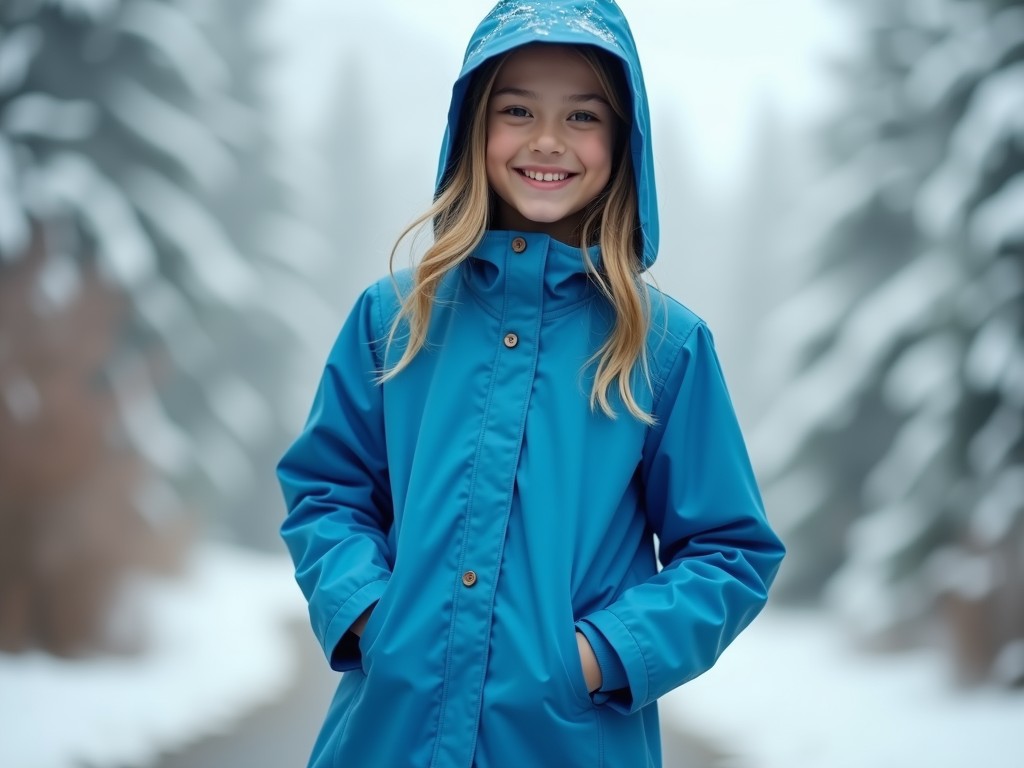
Oem Rain Coat For Teenagers
OEM Rain Coat for Teenagers
Teenage users require rain protection that balances durability with unrestricted movement during school commutes, outdoor activities, and variable weather exposure. Standard children's rainwear often lacks the abrasion resistance and ergonomic tailoring needed for active adolescents, while adult-sized garments compromise fit and mobility. OEM rain coats for this demographic address these gaps through precise dimensional grading, reinforced stress points, and material selections optimized for repeated flex cycles and laundering.
This product page details the engineering considerations behind OEM rain coats engineered specifically for teenagers aged 13–19, focusing on material performance, seam integrity, and functional design elements that reduce long-term ownership costs and improve user compliance. Industrial buyers evaluating bulk procurement will find technical specifications aligned with ASTM F1868 for rain resistance and ISO 13688 for ergonomic fit, enabling informed comparison against alternative youth outerwear solutions.
Material Composition and Performance Characteristics
The primary shell fabric utilizes a 2.5-layer polyurethane-coated polyester laminate with a nominal weight of 180 g/m², selected for its balance of tear strength (>25 N in warp and weft directions per ASTM D5034) and flexibility at temperatures down to -10°C. This construction avoids the stiffness associated with heavier 3-layer systems while maintaining hydrostatic head ratings of 8,000 mm, sufficient to withstand prolonged moderate rainfall without saturation.
The polyurethane coating is formulated with a hydrolysis-resistant ester base, retaining >85% of initial tensile strength after 30 wash cycles at 40°C per AATCC TM135, critical for institutional laundering environments. Microporous ventilation is achieved through a controlled pore size distribution in the coating, yielding a moisture vapor transmission rate (MVTR) of 8,000 g/m²/24h per ASTM E96, reducing internal condensation during high-activity use.
Seam sealing employs a 15mm-wide thermoplastic polyurethane tape applied via hot-air welding at 280°C, creating a continuous barrier that maintains waterproof integrity under flexural stress. Tape adhesion exceeds 7 N/mm width after 100 hours of accelerated aging at 70°C and 85% RH, outperforming solvent-based alternatives in long-term durability testing.
Ergonomic Design and Functional Features
Pattern grading follows anthropometric data from the CDC Growth Charts for adolescents, with specific attention to shoulder slope (reduced by 3° vs adult blocks), sleeve length progression, and torso taper to accommodate developing physiques without excess bulk. The back yoke incorporates a 2cm pleat to allow scapular rotation during arm movement, preventing binding when carrying backpacks or engaging in sports.
Adjustable cuffs use a two-part system: an internal elasticated sleeve opening (25mm width) paired with an external hook-and-loop flap (50mm length) allowing ±15mm range of adjustment. This design maintains seal integrity against wind-driven rain while accommodating glove use or bare wrists. The hood features a three-panel construction with a laminated brim (1.2mm PU film) and perimeter drawcord locked via cord stops, providing 180° peripheral visibility when adjusted.
Reflective elements consist of 50mm-wide heat-transfer tape compliant with EN ISO 20471 Class 2, positioned at 50mm height on the sleeves and vertical strips on the rear torso. Retroreflective performance maintains >250 cd/lx/m² after 25 wash cycles, enhancing low-light visibility during winter commutes without compromising the garment’s waterproof integrity.
Customization Options for OEM Partners
OEM production allows adjustment of key parameters to align with brand specifications or regional climate demands. Hydrostatic head can be tailored between 5,000 mm and 15,000 mm by modifying polyurethane coating thickness, while MVTR ranges from 5,000 to 12,000 g/m²/24h through pore density adjustments in the laminate structure. These modifications are validated via ISO 811 and ASTM E96 testing prior to full production release.
Color matching is available using Pantone Textile Cotton eXtended (TCX) references with laboratory-dipped samples provided for approval. Custom branding options include screen printing, heat transfer, or embroidery on designated zones (left chest, upper back, hood hem) with adhesion testing per ISO 105-X12 to ensure durability against abrasion and washing. All customizations maintain the base garment’s seam-seal integrity.
Sizing scales can be adjusted beyond the standard XS–XL range to accommodate specific demographic profiles, such as extended torso lengths for taller adolescents or increased chest circumference for regional variants. Grading rules are developed using 3D body scan data and wear-trial feedback to maintain proportional consistency across sizes.
Quality Control and Validation Protocols
Incoming fabric inspection includes hydrostatic head testing (ASTM D751), tear strength (ASTM D2261), and coating adhesion (ASTM D4541) at a frequency of 1 per 500 linear meters. Seam seal integrity is verified via hydrostatic pressure testing of sealed seams at 8,000 mm for 5 minutes, with zero leakage permitted. Visual inspection occurs under 1,000 lux illumination to detect coating defects, tape wrinkles, or misalignment.
Finished garments undergo functional testing: zipper strength (ASTM D2061) requiring >50N pull resistance, hood retention force measurement (simulating wind loads up to 24 km/h), and reflective tape photometric testing. Dimensional stability is assessed after 5 wash cycles at 40°C, with length and width changes limited to ±3% to ensure consistent fit over the product lifecycle.
Packaging compliance checks include barrier properties of polybags (oxygen transmission rate <15 cc/m²/24h) and carton drop testing (ISTA 1A) to prevent transit damage. Each production lot is accompanied by a test report summarizing results for hydrostatic head, MVTR, tear strength, and seam seal performance, enabling traceability and facilitating incoming quality assurance at the buyer’s facility.
Applications and Use Case Suitability
These rain coats are specified for municipal school transportation programs where garments face daily abrasion from backpack straps, frequent folding/unfolding, and exposure to road spray and pollutants. The 180 g/m² shell weight provides sufficient durability for expected lifecycles of 18–24 months under institutional laundering, outperforming lighter alternatives that exhibit coating delamination or seam failure within 6–8 months under similar conditions.
In youth sports leagues and outdoor education programs, the garment’s breathability (MVTR 8,000 g/m²/24h) prevents overheating during intermittent activity in wet conditions, reducing the likelihood of users removing protective layers due to discomfort. The articulated sleeve and back pleat design maintain full range of motion for activities such as cycling, rowing, or field sports, addressing a common rejection reason for non-ergonomic rainwear.
For retail OEM partners targeting the direct-to-consumer teen market, the product’s aesthetic adaptability—through customizable colorways, branding placement, and reflective trim options—allows alignment with seasonal collections while maintaining core technical performance. This enables brands to offer technically sound rain protection without compromising on visual appeal or trend responsiveness.
| Parameter | Typical Value | Customizable Range | Test Standard |
|---|---|---|---|
| Shell Fabric Weight | 180 g/m² | 150–220 g/m² | ASTM D3776 |
| Hydrostatic Head | 8,000 mm | 5,000–15,000 mm | ISO 811 |
| Moisture Vapor Transmission Rate (MVTR) | 8,000 g/m²/24h | 5,000–12,000 g/m²/24h | ASTM E96 |
| Tear Strength (Warp/Weft) | >25 N | 20–40 N | ASTM D5034 |
| Reflective Tape Performance | >250 cd/lx/m² | Customizable placement | EN ISO 20471 |
Procurement teams evaluating OEM rain coats for teenage users should prioritize validated performance data over aesthetic claims, particularly regarding seam seal longevity and breathability under repeated use. Requesting third-party test reports for hydrostatic head after 20 wash cycles and MVTR after flex testing provides insight into real-world durability beyond initial factory specifications.
Consider the total cost of ownership: garments requiring premature replacement due to seam failure or coating degradation increase long-term expenses despite lower unit prices. Confirm that the OEM supplier conducts lot-specific testing and provides traceable documentation, enabling consistent quality across production batches and reducing the risk of field performance variability.
For technical consultation, sample requests, or to discuss customization requirements for your specific application, contact our engineering team.
Request Technical Specification Sheet