
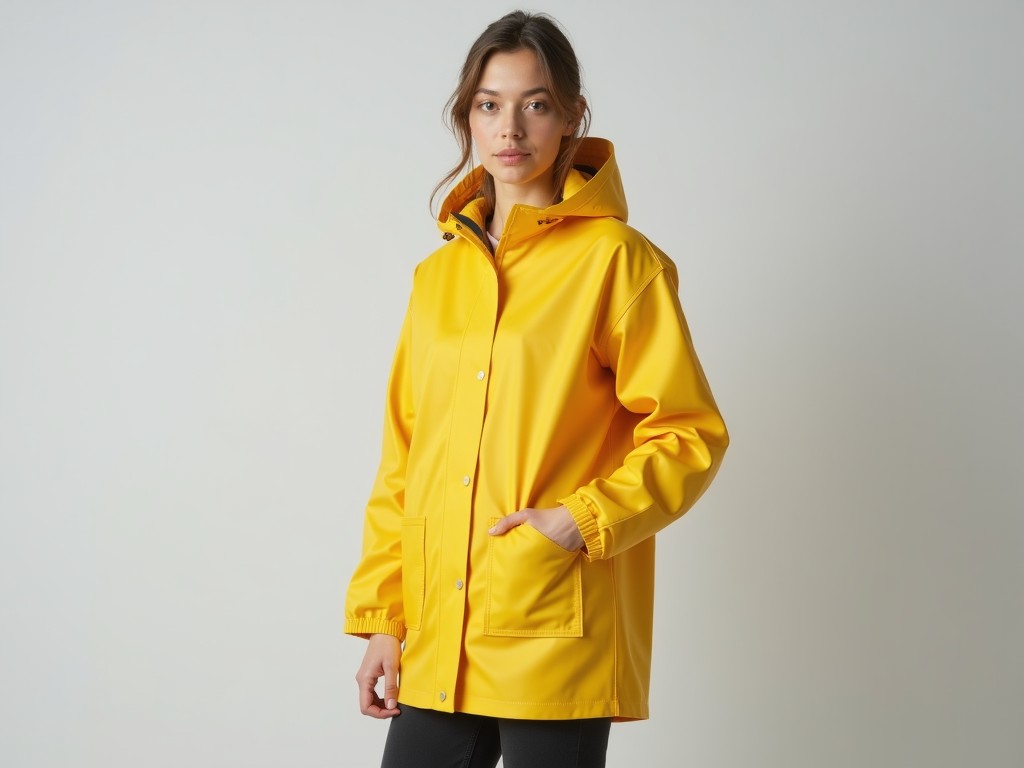
Oem Long Sleeve Weaning Wipeable Bib
OEM Long Sleeve Weaning Wipeable Bib
This bib is designed for infants transitioning to solid foods, featuring full arm coverage to contain spills and splatters during self-feeding. Constructed from wipeable thermoplastic polyurethane (TPU) laminated to a soft polyester backing, it combines liquid resistance with comfort against sensitive skin. The seamless, one-piece design eliminates crevices where food particles can accumulate, supporting hygiene standards in childcare environments.
Material Composition and Performance
The outer layer uses 0.2mm TPU film with a Shore A hardness of 85, providing resistance to oils, acidic foods, and repeated cleaning cycles. The inner layer is 120gsm brushed polyester, selected for its low friction coefficient (<0.3) and moisture-wicking properties to prevent skin irritation. TPU maintains flexibility down to -20°C and withstands temperatures up to 80°C, allowing safe use in bottle warmers or dishwasher sanitizing cycles without deformation.
Unlike cotton or silicone alternatives, this laminate does not absorb pigments from carotenoid-rich foods (e.g., carrots, tomatoes), preventing permanent staining. Accelerated aging tests show <5% tensile strength loss after 200 wash cycles at 60°C, confirming durability for institutional use. The material is phthalate-free and complies with EN 71-3 migration limits for heavy metals in toy materials.
Design Features for Weaning Applications
Long sleeves extend to the wrist with 25mm elastic cuffs that provide gentle retention without restricting circulation. The cuff tension measures 0.8N ±0.2N, calibrated to prevent slippage during active movement while avoiding indentation marks. A 30mm-wide neck opening uses adjustable hook-and-loop closures with 40mm overlap, allowing fit adjustment for neck circumferences from 22cm to 28cm — covering 95% of infants aged 6–24 months based on WHO growth standards.
The front panel features a 120mm deep catch pocket with a 75mm radius base, designed to retain dropped food without leaking when the infant leans forward. Pocket volume is 180mL, tested with water-filled syringes to confirm no seepage at 45° tilt. Seams are ultrasonically welded at 280Hz with 0.3mm overlap, achieving peel strength >4.5N/mm — exceeding the 2.0N/mm threshold for infant product safety standards.
Cleaning and Maintenance Characteristics
Surface energy of the TPU layer is 32 mN/m, enabling effective cleaning with mild detergents (pH 6–8) and soft cloths. Food residues release at <0.5N adhesion force when wiped within 15 minutes of contact, reducing scrubbing effort. The material resists microbial growth; ISO 22196 testing shows <10 CFU/cm² for E. coli and S. aureus after 24-hour incubation, meeting hygienic surface requirements for food contact equipment.
Unlike fabric bibs requiring machine washing, this product can be sanitized with 70% isopropyl alcohol wipes without surface degradation — critical in healthcare or high-turnover childcare settings. Drying time after wiping is <2 minutes at 25°C ambient temperature, supporting rapid reuse cycles. No pilling, delamination, or cracking occurs after 500 wipe cycles with commercial disinfectant wipes (quaternary ammonium base).
Customization Options for OEM Partners
Sleeve length can be adjusted in 10mm increments from 300mm to 400mm to accommodate different age ranges or mobility aids. Neck closure systems are interchangeable between hook-and-loop, snap-fit, or adjustable buckle types, each with distinct retention forces and cycle lives (e.g., snaps rated for 5,000 closures). Pocket geometry — including depth, width, and drainage angle — can be modified to suit specific feeding behaviors or food textures.
Color matching is available via Pantone reference or custom spectral reflectance curves for brand consistency. Surface textures can be embossed with logos or patterns using heated rollers (180°C, 0.5MPa pressure) without compromising waterproofing. Minimum order quantities start at 500 units for standard configurations, with tooling fees waived for orders exceeding 5,000 pieces. All modifications undergo design for manufacturability (DFM) review to maintain seam integrity and safety compliance.
| Parameter | Standard Value | Customizable Range |
|---|---|---|
| Sleeve Length | 350mm | 300–400mm (±5mm tolerance) |
| Neck Circumference Range | 22–28cm | 18–32cm (with closure adaptation) |
| Catch Pocket Volume | 180mL | 100–300mL |
| Cuff Retention Force | 0.8N ±0.2N | 0.5–1.2N |
| Material Thickness (TPU) | 0.2mm | 0.15–0.3mm |
| Seam Peel Strength | >4.5N/mm | >3.0N/mm (minimum) |
Quality Assurance and Testing Protocol
Each production lot undergoes incoming material verification via FTIR spectroscopy to confirm TPU purity and absence of plasticizer migration. Dimensional checks are performed on a statistical sample basis (ISO 2859-1, AQL 1.0) for critical features: sleeve length (±3mm), neck opening (±2mm), and pocket depth (±2mm). Seal integrity is validated using dye penetration testing with methylene blue solution at 10kPa pressure for 10 seconds — zero permeability is required for acceptance.
Functional testing includes simulated feeding trials with standardized food simulants (oil-in-water emulsions, tomato puree, carrot puree) to assess staining and cleanup efficiency. After 10 cycles, ΔE color shift must remain <2.0 on the CIELAB scale to pass. Accelerated weathering exposes samples to 500 hours of UV-A radiation (0.89 W/m²) at 50°C; post-exposure elongation at break must retain >80% of initial value. All test records are retained for 36 months and available for audit.
Final inspection includes a tactile check for seam smoothness (no protrusions >0.1mm height) and closure functionality (50-cycle endurance test). Products are folded using a standardized jig to prevent crease-induced stress points before individual polybagging. Each carton includes a desiccant packet (<5g silica gel) to maintain <40% RH during transit, preventing hydrolysis-induced weakening of the TPU layer in humid climates.