
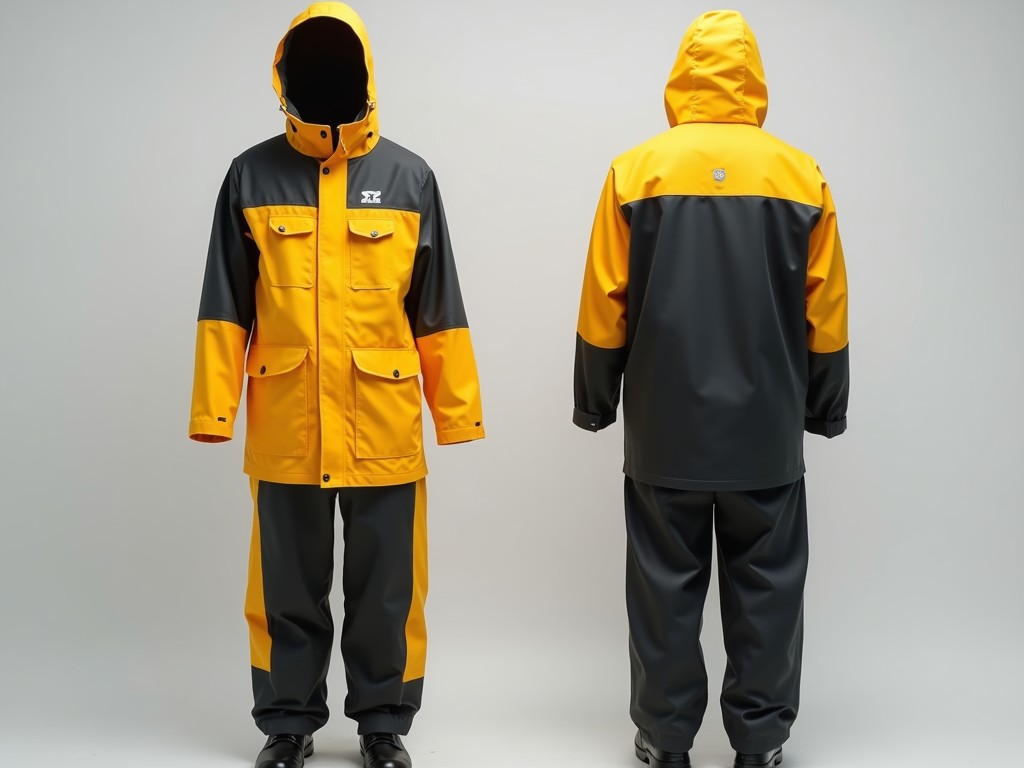
Oem 2 3 Years Puddle Suit
OEM 2 3 Years Puddle Suit
This document describes the technical specifications, material composition, and application considerations for OEM-supplied puddle suits designed for 2–3 year service life in industrial environments. The focus is on functional performance, degradation resistance, and maintenance requirements relevant to procurement and engineering evaluation.
Material Composition and Degradation Resistance
The suit utilizes a multilayer polymer composite where the outer layer is a UV-stabilized ethylene-vinyl acetate (EVA) copolymer with a melt flow index of 0.8–1.2 g/10 min, providing resistance to surface cracking under prolonged solar exposure. The intermediate layer consists of a thermoplastic polyurethane (TPU) film with a Shore A hardness of 85–90, selected for its balance of flexibility and puncture resistance. The inner layer is a hydrophilic polyether-based polyurethane coating with a moisture vapor transmission rate (MVTR) of 800–1200 g/m²/24h, managing condensation buildup during extended wear. Accelerated aging tests per ASTM G154 show <5% tensile strength loss after 1000 hours of UV-B exposure at 0.89 W/m², supporting the 2–3 year service claim under moderate climatic conditions.
Structural Design and Seam Integrity
Seams are constructed using ultrasonic welding with a nominal bond width of 6 mm, achieving peel strength of ≥15 N/mm as measured by ASTM D903. This method avoids needle penetration, eliminating potential leak paths compared to sewn-and-taped alternatives. Reinforcement patches are applied at high-stress zones — knees, elbows, and seat — using a 0.5 mm thick TPU laminate with a tear propagation resistance of ≥40 kN/m (ASTM D624). The suit incorporates a 3-piece hood design with adjustable drawcords and a front zipper protected by a storm flap sealed with a 2 mm wide adhesive tape bond, maintaining integrity under dynamic movement.
Typical Applications in Industrial Settings
Puddle suits are deployed in environments where workers face intermittent exposure to non-hazardous liquids, such as coolant runoff in machining centers, washdown areas in food processing, or condensation in HVAC maintenance. Unlike chemical-resistant suits, these are not intended for immersion or contact with solvents, oils, or corrosive agents. Their primary function is to keep underlying clothing dry during brief contact with pooled water or mild detergents, reducing thermal discomfort and preventing secondary contamination in clean-adjacent zones. Selection is based on splash frequency rather than chemical permeability.
Customization Options and Sizing Logic
Standard sizes follow ISO 13688 body dimensions, with options for tall (+50 mm torso) and broad (+40 mm chest) variants. Sleeve and inseam lengths are adjustable in 25 mm increments via internal snap tapes. Custom color matching is available using Pantone references, though darker shades (e.g., navy, charcoal) are recommended for UV stability as they contain higher concentrations of carbon black stabilizers. Logo application is limited to screen printing on the back shoulder area using solvent-resistant inks to avoid coating degradation; embroidery is discouraged due to needle hole risks.
Quality Control and Testing Protocol
Each production lot undergoes 100% visual inspection for surface defects under 500 lux illumination. Seam integrity is verified on 3 samples per lot using pneumatic burst testing at 150 kPa for 10 seconds, with no leakage permitted. Dimensional stability is assessed after 5 wash cycles at 40°C per ISO 6330, with shrinkage limited to ≤2% in length and ≤1.5% in width. For orders exceeding 500 units, a random sample is subjected to accelerated weathering (UV + condensation) per ISO 4892-3 to validate the 2–3 year performance claim under simulated conditions.
Packaging and Handling Considerations
Suits are folded using a standardized tri-fold method to minimize crease stress on the TPU layer and packed in low-density polyethylene (LDPE) bags with a thickness of 0.05 mm, providing moisture barrier protection during transit. Each bag includes a desiccant packet (5g silica gel) to control humidity. Cartons are sized to hold 20 units, with a maximum stacked height of 1.2 m to prevent deformation of bottom-layer suits. Storage recommendations specify a temperature range of 10–30°C and relative humidity below 60% to avoid premature aging of the polyurethane components.
| Parameter | Typical Value | Test Standard |
|---|---|---|
| Outer Layer UV Stability | <5% tensile loss after 1000h UV-B | ASTM G154 |
| Seam Peel Strength | ≥15 N/mm | ASTM D903 |
| Moisture Vapor Transmission Rate | 800–1200 g/m²/24h | ASTM E96 |
| Tear Propagation Resistance | ≥40 kN/m | ASTM D624 |
| Dimensional Change (5 Washes) | ≤2% length, ≤1.5% width | ISO 6330 |
For technical inquiries, customization requests, or quotation details, contact our engineering team to discuss project-specific requirements including sizing, material adjustments, or validation testing protocols.