
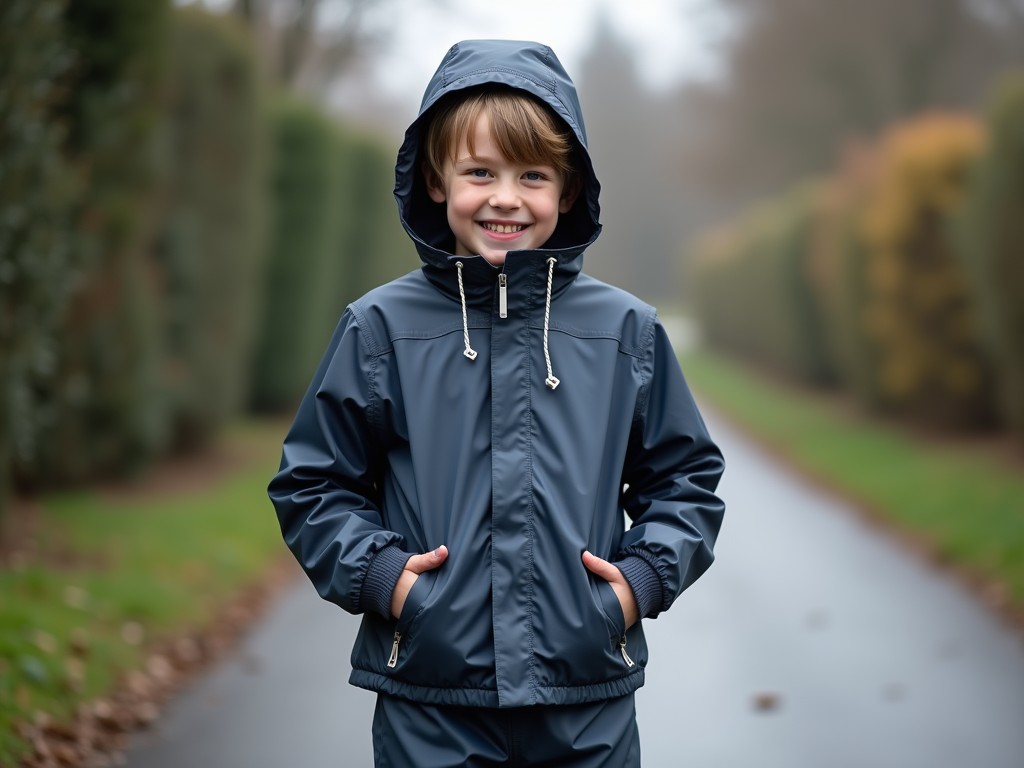
Hooded Rain Jackets For Juniors
Hooded Rain Jackets for Juniors
Junior-sized hooded rain jackets are engineered for young users requiring reliable weather protection in active environments such as school commutes, outdoor recreation, and light industrial settings. These garments prioritize freedom of movement, durability under repeated use, and effective moisture management without compromising safety or comfort.
Unlike adult-oriented rainwear, junior designs account for smaller torso proportions, shorter sleeve lengths, and reduced shoulder width while maintaining proportional hood coverage and functional features. Seam placement, zipper length, and pocket positioning are adjusted to prevent chafing and ensure ease of independent use by children aged 6 to 14 years.
Material selection focuses on lightweight yet resilient fabrics that resist tearing from backpack straps, playground equipment, or branch snags. Waterproofing is achieved through microporous membranes or polyurethane coatings rated for specific hydrostatic head performance, balanced with breathability to prevent interior moisture buildup during physical activity.
Core Technical Specifications
The performance of junior hooded rain jackets is defined by three interdependent parameters: waterproof rating, breathability (measured as moisture vapor transmission rate), and seam integrity. These values are not maximized independently but optimized for the physiological and activity profile of pre-adolescent users.
Waterproof protection is typically specified using hydrostatic head testing (ISO 811), with common ratings ranging from 5,000 mm to 10,000 mm for general use. Higher ratings (15,000 mm+) are reserved for prolonged exposure to heavy rain or wind-driven conditions, though they may reduce breathability if not paired with advanced membrane technology.
Breathability is quantified by moisture vapor transmission rate (MVTR) in grams per square meter per 24 hours (g/m²/24h). Junior jackets targeting active use generally require MVTR values above 5,000 g/m²/24h to prevent sweat accumulation during walking, running, or cycling. Lower values may suffice for passive use but increase discomfort during exertion.
Material Construction and Layering
Most junior rain jackets employ a 2-layer or 2.5-layer laminate system. The outer face fabric provides abrasion resistance and DWR (durable water repellent) treatment, while the bonded membrane or coating delivers waterproofing. A protective layer—either a separate lining (2-layer) or printed grid/scrim (2.5-layer)—prevents direct skin contact with the membrane and improves longevity.
Face fabrics are commonly nylon or polyester with denier ratings between 50D and 75D. Lower denier (e.g., 50D) reduces weight and increases packability but may sacrifice tear strength. Higher denier (75D+) improves resistance to snags and punctures, beneficial in environments with rough surfaces or frequent gear contact.
The waterproofing layer is typically a polyurethane (PU) coating or a microporous polytetrafluoroethylene (ePTFE) membrane. PU coatings are cost-effective and flexible but may degrade over time with UV exposure and flexing. ePTFE membranes offer superior long-term breathability and durability but increase material cost. Some manufacturers use hydrophilic PU membranes that activate with moisture gradient, balancing performance and price.
DWR finishes are applied to the outer fabric to cause water to bead and roll off, preventing saturation of the face layer. This maintains breathability by avoiding waterlogging, which can reduce MVTR by up to 60%. DWR effectiveness diminishes with washing and abrasion; reactivation via low-heat tumbling is recommended after multiple cycles.
Design Features for Junior Users
Hood design is critical for junior rain jackets due to proportional head size and limited neck mobility. Hoods are shaped to provide frontal and lateral coverage without obstructing peripheral vision. Adjustment systems use elastic cords with cord locks or toggle stops—never drawstrings that pose entanglement risks—allowing one-handed adjustment while wearing gloves or mittens.
Front closures utilize coil or molded plastic zippers with storm flaps to prevent water ingress. Zipper garages at the chin reduce irritation, and reverse-coil designs minimize snagging on backpacks. Zipper pulls are oversized or textured for easy grip by small hands. Some models include a chin guard made of brushed tricot to prevent windburn.
Pocket configurations are limited to reduce bulk and snag hazards. Hand pockets are often welt-style with drainage holes or covered flaps. Interior pockets, if present, are mesh-based for ventilation and located away from the spine to avoid pressure points when wearing a backpack. Reflective trim is strategically placed on sleeves, hood, and back for low-light visibility, complying with children’s outdoor safety standards.
Sizing and Fit Considerations
Junior sizing is based on height and chest circumference rather than age alone, accommodating varied growth patterns. Standard size ranges typically span from 110 cm (43") height/56 cm (22") chest to 164 cm (65") height/82 cm (32") chest, corresponding approximately to sizes 6X through 14 in youth apparel. Each size increment adjusts torso length, sleeve length, and hood circumference proportionally.
Fit is designed to allow layering over lightweight fleece or long-sleeve shirts without restricting movement. Sleeve length is measured from center-back neck to wrist with arm slightly bent, ensuring coverage when reaching forward. Body length provides adequate hip coverage while sitting or bending, preventing exposure during active play.
Adjustability features include adjustable hem drawcords (internally routed for safety) and hook-and-loop cuff tabs. These allow users to seal out wind and rain while accommodating growth over a season. Cuffs are not elasticated to avoid restricting circulation; instead, low-profile tabs provide secure closure without pressure points.
Performance Comparison Table
| Parameter | Typical Range (Junior Use) | Performance Implication |
|---|---|---|
| Hydrostatic Head | 5,000 – 10,000 mm | Sufficient for moderate rain; higher values needed for prolonged exposure |
| MVTR (Breathability) | 5,000 – 8,000 g/m²/24h | Balances sweat management with waterproofing for active children |
| Face Fabric Denier | 50D – 75D nylon/polyester | 50D: lighter, more packable; 75D: higher abrasion resistance |
| Hood Adjustment | Elastic cord with toggle stops | Safe, one-handed adjustment; no entanglement risk |
| Reflective Trim | 3M™ Scotchlite™ or equivalent, ≥50 cd/lx/m² | Meets EN 1150 or ANSI/ISEA 107 visibility standards for children |
Quality Control and Testing
Manufacturing consistency is verified through standardized testing protocols. Hydrostatic head and MVTR are assessed per ISO 811 and ISO 11092, respectively, on finished garments—not just fabric swatches—to account for seam and closure performance. Seam strength is tested via grab test (ASTM D5034) to ensure tape adhesion and stitching integrity under load.
DWR effectiveness is evaluated using spray rating tests (AATCC 22) before and after wash cycles to predict real-world performance. Colorfastness to light, washing, and rubbing (ISO 105-B02, ISO 105-C06, ISO 105-X12) ensures durability against fading and staining from frequent use. All materials are screened for restricted substances per Oeko-Tex Standard 100 or equivalent to ensure skin safety.
Functional testing includes hood movement range, zipper cycle endurance (minimum 5,000 cycles per ASTM D2061), and reflective trim photometric performance. These validations reduce field failure risks and support reliable performance across multiple seasons of use.
Applications and Use Cases
These jackets are commonly specified for school transportation programs where children walk or wait for buses in variable weather. The combination of waterproofing, breathability, and visibility features reduces discomfort and improves safety during morning and afternoon commutes. Lightweight construction allows storage in backpacks without adding significant bulk.
In youth sports and recreational leagues, hooded rain jackets serve as outer layers during practice delays or outdoor events. Their ability to be worn over uniforms or jerseys without restricting motion makes them practical for soccer, baseball, and track activities. Quick-drying interior layers prevent chill from sweat retention during intermittent activity.
Municipal parks departments and youth organizations often procure these garments for staff-led outdoor programs. Durability requirements emphasize resistance to abrasion from playground equipment, picnic tables, and trail vegetation. Easy-care fabrics that withstand frequent machine washing support high-turnover inventory use.
For technical specifications, custom sizing requests, or bulk quotation inquiries, contact our engineering team to discuss material options, performance tuning, and packaging configurations suited to your operational requirements.