
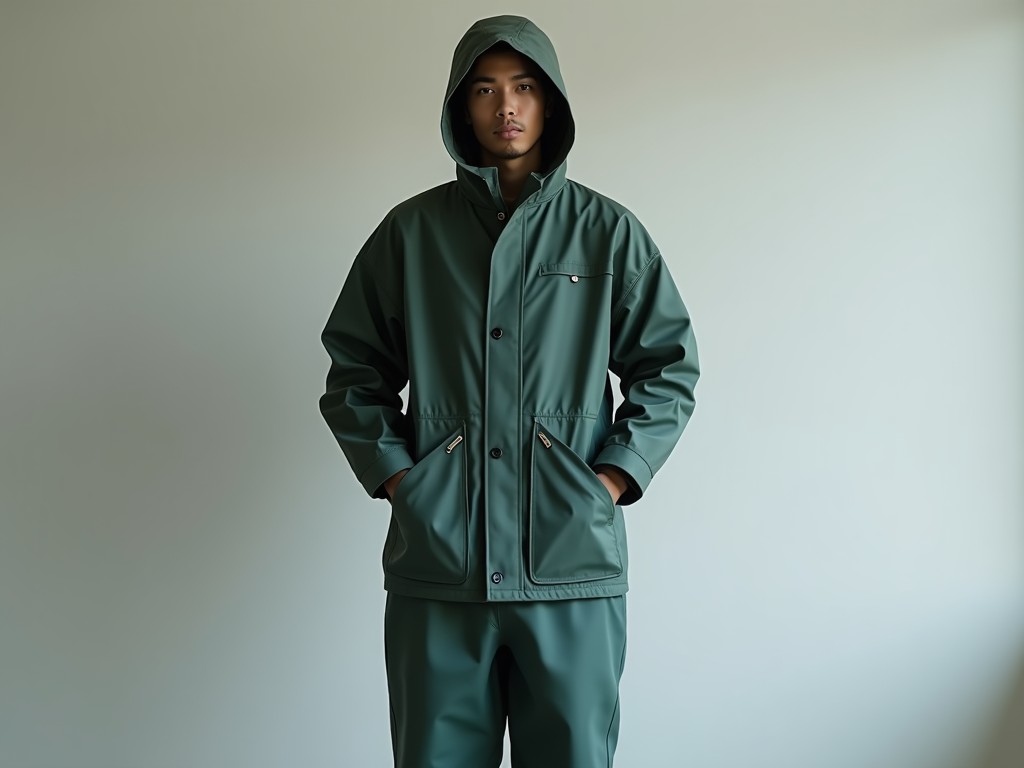
China Lined Puddle Suit 2 3 4
China Lined Puddle Suit 2 3 4
The China lined puddle suit 2 3 4 is a specialized protective garment designed for personnel working in environments where exposure to liquid hydrocarbons, chemicals, or wet industrial processes is anticipated. The designation "2 3 4" refers to the layered construction: an outer shell, a middle barrier layer, and an inner comfort liner, each serving a distinct functional purpose in moisture management and chemical resistance.
Unlike standard rainwear, this suit is engineered for prolonged contact with puddles of process fluids commonly found in refineries, chemical plants, and wastewater treatment facilities. The layered system prevents liquid penetration while allowing vapor transmission to reduce heat stress during extended wear. Each layer is selected based on compatibility with specific fluid types, ensuring the suit maintains integrity under expected exposure conditions.
Layered Construction and Material Selection
The outer shell (layer 2) is typically formulated from a PVC-coated polyester or polyurethane-impregnated nylon, chosen for its abrasion resistance and initial fluid repellency. This layer faces direct contact with external contaminants and must withstand mechanical wear from tools, equipment, and rough surfaces common in industrial settings.
The middle barrier layer (layer 3) provides the primary chemical and liquid resistance. It is commonly constructed from a multilayer laminate such as ethylene-vinyl alcohol (EVOH) or polyethylene (PE) barrier film bonded to a supportive substrate. This layer is critical for preventing permeation of hydrocarbons, solvents, or aqueous chemicals through the suit material, with performance validated against ASTM F739 or equivalent standards for specific chemicals.
The inner comfort liner (layer 4) is designed to manage moisture against the skin and enhance wearability. Typically made from a hydrophilic polyester mesh or polypropylene nonwoven, this layer wicks perspiration away from the body while maintaining a separation between the wearer and the barrier layer. It reduces the risk of skin irritation and improves comfort during shifts lasting 8–12 hours.
Design Features for Industrial Use
The suit incorporates sealed seams using either heat welding or chemical adhesive tape to eliminate potential leakage points at stitch lines. Seam integrity is verified through hydrostatic testing, with typical requirements exceeding 10 kPa water pressure resistance to ensure no liquid ingress under expected puddle depths.
Closure systems include storm flaps over zippers, adjustable cuffs with hook-and-loop fasteners, and integrated boot overlaps to prevent fluid entry at extremities. The hood is designed to interface with hard hats or respiratory protection, featuring adjustable drawcords and a sealed face opening to maintain protection when worn with additional PPE.
Ventilation options may include underarm grommets or back vents with protective flaps, allowing controlled airflow without compromising barrier integrity. These features are particularly important in high-temperature environments where heat buildup could otherwise limit wear time.
Typical Applications and Environmental Suitability
The China lined puddle suit 2 3 4 is commonly deployed in upstream oil and gas operations where personnel may encounter condensate, produced water, or drilling mud puddles during wellhead maintenance or pipeline inspections. Its resistance to aliphatic and aromatic hydrocarbons makes it suitable for such environments where standard rainwear would degrade or permeate quickly.
In downstream refining, the suit is used during turnaround operations, tank cleaning, and spill response scenarios involving exposure to gasoline, diesel, kerosene, or light cycle oils. The middle layer’s resistance to BTEX compounds (benzene, toluene, ethylbenzene, xylene) is a key selection criterion in these applications.
Municipal and industrial wastewater facilities utilize this suit for workers engaged in sludge handling, clarifier maintenance, or pump station repairs where contact with sewage, effluents, or chemical dosing agents is likely. The barrier layer’s effectiveness against aqueous salts and mild acids or bases supports its use in these cyclical wet environments.
Customization Options Based on Process Requirements
The suit can be adapted to specific chemical exposures by altering the middle barrier layer composition. For example, increased resistance to ketones or esters may require a different laminate structure, while exposure to chlorinated solvents might necessitate a fluoropolymer-enhanced layer. These modifications are made based on permeation test data provided by the client or derived from fluid safety data sheets.
Sizing is available in standard industrial ranges (S to 3XL) with options for tall or proportionally adjusted cuts to accommodate diverse body types. Custom lengths for the torso, sleeves, or inseam can be specified to ensure proper overlap with boots and gloves, minimizing gaps that could lead to exposure.
Additional features such as reinforced knee pads, tool loops, radio pockets, or detachable liners for cold weather can be integrated upon request. These modifications are evaluated for their impact on seam integrity and overall barrier performance before implementation.
| Feature | Standard Specification | Customizable Option |
|---|---|---|
| Outer Shell Material | PVC-coated polyester | PU-coated nylon, weighted polyester |
| Barrier Layer | EVOH/PE laminate | Multilayer PE, fluoropolymer-enhanced |
| Inner Liner | Hydrophilic polyester mesh | Antimicrobial treated, thermal variant |
| Seam Type | Heat-welded | Taped, ultrasonically welded |
| Closure System | Storm flap over zipper | Double flap, adhesive closure |
| Available Sizes | S–3XL | Tall, custom inseam/torso |
Selection of the appropriate configuration begins with a hazard assessment identifying the specific fluids, concentrations, temperatures, and exposure durations expected in the work environment. This data informs the material selection for each layer, particularly the barrier layer, which must demonstrate adequate breakthrough time and permeation resistance under anticipated conditions.
Prototyping and wear trials are recommended before bulk procurement to validate fit, comfort, and functional performance in real-world scenarios. Feedback from end users on mobility, heat retention, and ease of donning/doffing often leads to refinements in cut, vent placement, or closure design.
For organizations requiring consistent PPE standards across multiple sites, standardized specifications can be established and maintained through controlled documentation, ensuring that replacement suits meet the same performance criteria as the original procurement.