
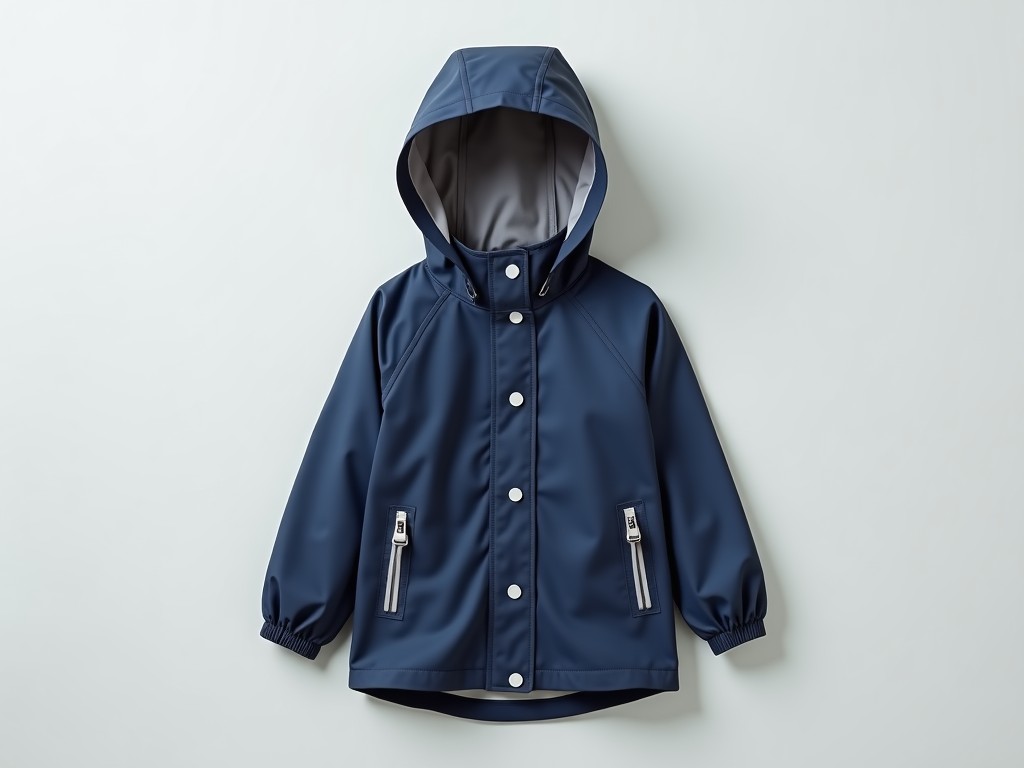
China Childrens Waterproof Jackets Sale
Children's Waterproof Jackets – Industrial Supply for Bulk Procurement
Procurement teams sourcing children's outerwear for institutional, retail, or distribution channels require technical clarity on material performance, seam integrity, and compliance readiness. This page details the engineering specifications and manufacturing considerations for bulk-supplied children's waterproof jackets, focusing on measurable attributes that reduce supply chain risk and ensure consistent product conformity.
Unlike consumer-grade marketing descriptions, this document emphasizes objective criteria: hydrostatic head ratings, tape adhesion strength, breathability metrics, and dimensional stability under repeated washing cycles. Buyers evaluating large-volume orders benefit from understanding how these parameters directly impact end-use durability and regulatory alignment.
All specifications outlined are based on standard industrial production tolerances. Custom adjustments to coating weight, seam tape width, or lining composition are available upon formal request, subject to minimum order quantities and tooling constraints.
Core Technical Specifications
The baseline waterproof performance of these jackets is defined by the hydrostatic head resistance of the outer shell fabric, measured in millimeters of water column (mmH₂O) under standardized test conditions (ISO 811). This metric determines the pressure at which water begins to penetrate the material, directly correlating to real-world rain resistance.
Standard production units utilize a polyurethane (PU) coated polyester shell with a minimum hydrostatic head of 3,000 mmH₂O, suitable for prolonged exposure to moderate rainfall. Higher-performance variants, achievable through increased coating density or alternative membrane lamination, can reach 5,000–8,000 mmH₂O for applications requiring extended outdoor use in heavy precipitation.
Breathability, quantified as moisture vapor transmission rate (MVTR) in g/m²/24h (ISO 11092), is intentionally balanced against waterproofing to prevent internal condensation during active use. Typical MVTR values range from 2,000 to 5,000 g/m²/24h, depending on coating thickness and laminate structure — critical for comfort in school uniforms or youth outdoor programs.
Seam Construction and Waterproof Integrity
Waterproof performance is only as reliable as the weakest seam. Industrial-grade children's jackets employ fully taped seams using heat-activated polyurethane tape applied over stitched joints. The adhesion strength of this tape is measured in N/cm (Newtons per centimeter) via peel adhesion tests (ASTM D903), with minimums set to prevent delamination under flexing or washing stress.
Standard seam tape adhesion exceeds 2.5 N/cm after 5 wash cycles at 40°C, ensuring long-term integrity in institutional laundering environments. Tape width is typically 20mm, covering both needle holes and stitch lines to create a continuous barrier. Non-taped or critically taped (only major seams) constructions are not offered for bulk supply due to unacceptably high failure rates in field use.
Seam placement follows ergonomic patterning to avoid high-stress zones — shoulders, underarms, and side seams are prioritized for taping. Each production batch undergoes spot-check testing for seam leakage using hydrostatic pressure tests on sealed assemblies, with acceptance criteria requiring zero leakage at 2,000 mmH₂O for 5 minutes.
Material Composition and Lining Options
The outer shell is predominantly 100% polyester filament yarn, woven in a 150D × 150D plain or twill weave for abrasion resistance and dimensional stability. Polyester is selected over nylon for its lower moisture regain (<0.4%), UV stability, and cost predictability in high-volume procurement. Denier and thread count directly influence tear strength and snag resistance — critical for children's active wear.
Interior linings vary by intended use and thermal requirements. Common options include:
- 100% polyester mesh (100 g/m²) — enhances breathability, reduces cling, standard for spring/fall variants
- Brushed polyester fleece (180 g/m²) — adds lightweight insulation, suitable for cooler climates
- Nylon taffeta lining (60 g/m²) — low-friction surface for easy layering, used in shell-only designs
All lining materials are selected for low pilling tendency (ISO 12945-2, minimum 3–4 after 5000 cycles) and dimensional stability after washing. No natural fibers (cotton, wool) are used in standard linings due to moisture retention and microbial growth risks in institutional settings.
Closure Systems and Functional Details
Front closures utilize coil or molded plastic zippers with water-resistant flaps or storm covers. Zipper tape is polyester-based, with teeth composed of acetal or nylon for corrosion resistance. Pull tabs are designed without small detachable parts to meet child safety regulations (EN 71-1, ASTM F963). Zipper strength is rated for minimum 30N lateral load before tooth disengagement.
Cuffs and hems employ elasticized or adjustable closures — typically rubberized drawcords with cord stops or Velcro®-compatible hook-and-loop tapes. Adjustability range is standardized to accommodate growth spans: cuffs adjust ±25mm, hems ±50mm. Drawcord ends are bar-tucked or sealed to prevent entanglement hazards.
Pocket configurations are minimal and safety-driven: side pockets feature inverted pleats or welts with drain holes to prevent water accumulation. Interior pockets, if included, are mesh-lined and positioned away from heat sources. Reflective trims, when specified, use retroreflective tape meeting EN ISO 20471 standards for low-light visibility.
Quality Control and Testing Protocol
Batch consistency is verified through standardized incoming material inspection and in-line production checks. Fabric rolls are tested for hydrostatic head, MVTR, and tear strength (ASTM D2261) before cutting. Cut components undergo visual inspection for defects, with AQL 2.5 applied for major flaws (holes, tears, misaligned seams).
Finished garments receive functional testing: zipper operation (50 cycles), seam leakage (hydrostatic pressure), and dimensional change after washing (ISO 6330). Each batch includes a test jacket subjected to 5 wash cycles at 40°C followed by tumble drying, with post-test measurements comparing to pre-wash baselines. Acceptable shrinkage is ≤3% in length and ≤2% in width.
Colorfastness to washing, light, and perspiration is evaluated per ISO 105 series, with minimum ratings of 3–4 for staining and 4 for color change. No azo dyes or phthalates exceeding regulatory limits (REACH, CPSIA) are used in any component. Test reports are available upon request for approved suppliers.
Typical Applications and End-Use Considerations
These jackets are engineered for institutional procurement where uniform performance and safety compliance are non-negotiable. Common end uses include school district outerwear programs, youth sports league uniforms, summer camp supplies, and municipal recreation department inventories. In these settings, garments undergo frequent washing, exposure to variable weather, and extended wear cycles — conditions that amplify weaknesses in substandard materials or construction.
Unlike retail-focused products driven by seasonal trends, industrial supply prioritizes longevity and consistency. A jacket specified for school use may remain in service for 12–18 months across multiple students, requiring resistance to pilling, seam failure, and coating degradation. Procurement decisions based on hydrostatic head and MVTR values reduce the likelihood of premature returns or reputational risk from inadequate weather protection.
Buyers should consider layering compatibility when specifying linings. Mesh-lined shells serve as effective rain guards over insulating mid-layers, while fleece-lined versions offer standalone warmth in mild climates. Thermal performance can be modeled using clo values, though such data is project-dependent and not standardized across all variants.
Customization and Procurement Flexibility
Standard specifications serve as a baseline for quotation. Adjustments to coating weight, seam tape type, lining weight, or trim color are feasible within defined production constraints. For example, increasing PU coating from 0.15mm to 0.25mm raises hydrostatic head to approximately 5,000 mmH₂O but reduces MVTR proportionally — a trade-off that must be evaluated based on expected activity levels and climate exposure.
Sizing runs follow international childrenswear charts (e.g., ISO 8559-1) with tolerance bands of ±10mm for chest and ±15mm for height. Custom sizing grids are available for large-volume OEM orders, subject to pattern development fees and minimum lot sizes (typically 500+ units per size). Color matching to Pantone or textile swatches is achievable for orders exceeding 1,000 units per shade.
Packaging options include individual polybags with suction holes, bulk packing in corrugated cartons (5–10 units per layer), or palletized shipment with moisture barriers. Labeling can include care instructions in multiple languages, size tags with tear-resistant construction, and barcodes for inventory integration. All packaging materials meet recycling standards where applicable.
| Parameter | Standard Value | Test Method / Reference |
|---|---|---|
| Outer Shell Hydrostatic Head | 3,000 mmH₂O (min) | ISO 811 |
| Seam Tape Adhesion Strength | 2.5 N/cm (min after 5 washes) | ASTM D903 |
| Moisture Vapor Transmission Rate (MVTR) | 2,000–5,000 g/m²/24h | ISO 11092 |
| Colorfastness to Washing | Minimum 3–4 (staining) | ISO 105-C06 |
| Dimensional Change (Wash 40°C) | ≤3% length, ≤2% width | ISO 6330 |
| Zipper Lateral Strength | 30N minimum | ASTM D2061 |
For procurement engineers and sourcing managers, the table above provides a reference for validating supplier claims against objective benchmarks. Values marked as "minimum" or "range" reflect production tolerances; actual test results for specific batches are available upon request. Deviations from these specifications require formal change approval and may impact pricing or lead time.