
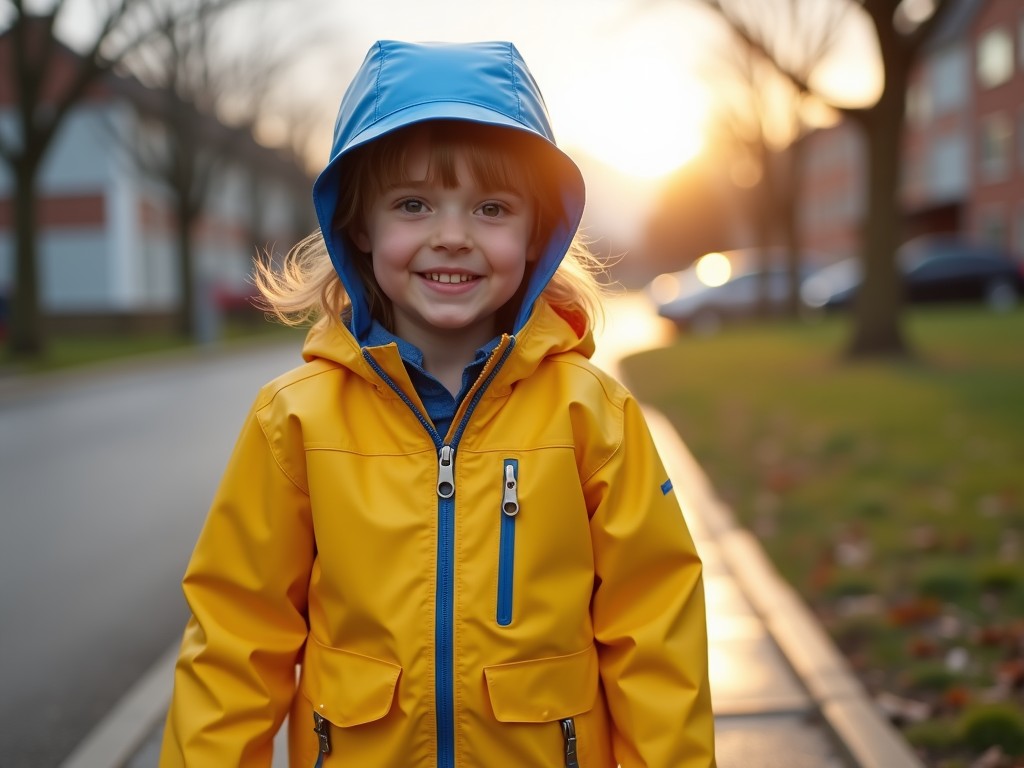
Childrens Waterproof Windproof Jackets
Children's Waterproof Windproof Jackets
Children's waterproof windproof jackets are engineered outerwear designed to protect young wearers from precipitation and wind chill while maintaining breathability and freedom of movement. These garments combine laminated or coated fabric systems with sealed seams and adjustable closures to create a barrier against external moisture and air infiltration. Unlike standard rainwear, they integrate wind-resistant membranes or tightly woven constructions that reduce convective heat loss without compromising flexibility. The design prioritizes safety, durability, and comfort for active use in variable outdoor conditions.
Material Composition and Performance Characteristics
The outer shell typically uses nylon or polyester with a denier range of 75D to 210D, selected for tear resistance and abrasion durability during active play. A hydrophilic polyurethane (PU) or microporous polytetrafluoroethylene (ePTFE) membrane is laminated to the inner side of the shell, providing waterproof ratings between 5,000 mm and 15,000 mm hydrostatic head while maintaining moisture vapor transmission rates (MVTR) of 5,000 to 15,000 g/m²/24h. Wind resistance is achieved through either the membrane’s inherent properties or a tightly woven outer fabric with an air permeability below 5.0 cfm (cubic feet per minute) under ASTM D737 testing.
Insulation, when present, consists of synthetic polyester fill ranging from 40g to 100g per square meter, chosen for its ability to retain thermal efficiency when damp. Durable water repellent (DWR) finishes are applied to the outer surface using fluoropolymer or silicone-based chemistries to cause water beading and runoff, though this layer degrades over time and requires reactivation. All materials comply with CPSIA and REACH regulations for restricted substances, ensuring safety for prolonged skin contact.
Construction Features for Functionality and Safety
Seams are fully sealed using thermoplastic polyurethane (TPU) tape applied via heat bonding to prevent water penetration at stitch points, meeting ISO 811 standards for waterproofness. Zippers are coated or laminated with water-resistant flaps and feature chin guards to prevent skin irritation; front closures often include storm flaps with hook-and-loop or snap fasteners for added wind protection. Adjustable cuffs use elastic or hook-and-loop closures to seal against wind and snow ingress, while hems may include drawcords or elastic grippers to maintain fit during movement.
Reflective elements are strategically placed on sleeves, back, and hood using retroreflective tape compliant with EN 13356 standards to enhance visibility in low-light conditions. Hoods are either fixed or detachable, with perimeter elasticity or adjustable toggles to ensure coverage without obstructing vision. Pocket designs prioritize security with zippered or flap-covered closures to prevent loss of small items, and internal mesh linings promote airflow to reduce condensation buildup during activity.
Sizing, Fit, and Mobility Considerations
Jackets are sized according to chest circumference, height, and age brackets, typically ranging from 2T/92cm to 14/160cm in incremental sizing to accommodate growth patterns. The cut follows an articulated or ergonomic pattern with gusseted underarms and curved sleeves to allow full range of motion during climbing, running, or cycling. Layering compatibility is built into the design, with sufficient internal volume to accommodate a mid-layer fleece or base layer without restricting movement or compressing insulation.
Length is calibrated to provide coverage at the hips and lower back during sitting or bending, while avoiding excessive length that could impede leg movement. Safety considerations include breakaway hood toggles and elasticized cuffs that release under snag hazards to reduce entanglement risk. All trims, labels, and components are tested for detachable part safety under ASTM F963 to prevent choking hazards in younger age groups.
Typical Performance Specifications
| Parameter | Typical Range | Test Standard |
|---|---|---|
| Waterproof Rating | 5,000 – 15,000 mm HH | ISO 811 |
| Breathability (MVTR) | 5,000 – 15,000 g/m²/24h | ASTM E96 BWD |
| Air Permeability | < 5.0 cfm | ASTM D737 |
| Tear Strength (Outer Shell) | > 15 N (warp), > 12 N (weft) | ASTM D2261 |
| Reflective Coefficient | > 250 cd/lx/m² | EN 13356 |
*Values represent typical performance for standard constructions. Actual specifications vary based on material selection, coating weight, and layer configuration. Custom requirements can be accommodated upon request.
Quality Control and Manufacturing Considerations
Production begins with fabric inspection for defects, coating uniformity, and dimensional stability using 4-point or 10-point systems to assess visual and functional quality. Lamination adhesion is tested via peel strength (ASTM D903) to ensure bond integrity between shell and membrane under flex and wash cycles. Seam sealing effectiveness is verified through hydrostatic pressure testing on taped seams to confirm leak resistance under prolonged exposure.
Each batch undergoes wash testing (AATCC 135) to evaluate DWR retention, colorfastness, and dimensional change after multiple cycles. Final inspection includes functional testing of zippers, closures, and reflective elements, along with dimensional verification against size charts. Packaging uses polybags with desiccants to prevent moisture ingress during storage and transit, with carton labeling that includes size, care instructions, and compliance marks for traceability.
Applications and Use Case Suitability
These jackets are suited for environments where children are exposed to intermittent precipitation, wind, and fluctuating temperatures—such as school commutes, playground use, hiking, or camping. The breathability threshold prevents overheating during moderate activity, while the wind resistance minimizes convective cooling in open or elevated terrain. Unlike non-breathable rain ponchos, they maintain comfort during sustained movement by allowing moisture vapor escape, reducing the risk of dampness from perspiration.
In urban settings, the reflective elements enhance safety during low-light travel, while the durable construction withstands abrasion from backpacks and frequent washing. For cold-wet climates, insulated variants provide thermal protection without the bulk of traditional snowsuits, enabling layering flexibility. The design avoids restrictive features that could impede mobility in active play, making them appropriate for ages 2–12 where independence and physical development are priorities.
Care, Maintenance, and Longevity Factors
To maintain performance, jackets should be washed according to care labels using mild detergent at 30°C or cold, avoiding fabric softeners that can degrade DWR and membrane functionality. Tumble drying on low heat or air drying is recommended; high heat can damage coatings or melt seam tape. DWR reactivation can be achieved through heat application (iron on low with cloth barrier or dryer) after washing to restore surface beading.
Regular inspection of seam tape, zippers, and reflective elements helps identify wear before failure. With proper care, the waterproof and windproof performance can remain effective for 20–30 wash cycles, after which re-treatment or professional servicing may be needed. Storage in a cool, dry place away from direct sunlight prevents UV degradation of coatings and extends usable life. Repairs to minor tears or seam delamination are possible using specialized tape or adhesives, supporting extended use.
Customization and Procurement Options
Manufacturers offer customization in color, branding placement, and trim options to meet institutional or retail requirements. Hood design, pocket configuration, and insulation levels can be adjusted based on climate targets and intended use. Sizing charts can be modified to align with regional growth data, and reflective patterns can be tailored for specific visibility standards. Minimum order quantities typically start at 100 units per style, with sample development available upon request.
Lead times range from 4 to 8 weeks for standard orders, depending on fabric availability and complexity of custom features. Export packaging includes moisture barriers and cartoning designed for international shipping compliance. Documentation such as test reports, material safety data sheets (MSDS), and certificates of conformity (e.g., CPSIA, REACH) are provided with each shipment to support regulatory compliance and quality assurance.
Environmental and Lifecycle Considerations
Material selection considers end-of-life pathways, with increasing use of recycled polyester in shells and linings to reduce virgin resource consumption. Some constructions use PFC-free DWR alternatives to minimize persistent environmental impact, though performance trade-offs in longevity may apply. Design for disassembly is limited due to laminated constructions, but mono-material options are emerging to improve recyclability in specialized streams.
Manufacturers may offer take-back programs or recommend textile recycling facilities for post-consumer processing. Energy and water usage in production are monitored through facility-level metrics, though specific values vary by supplier. Longevity is extended through repairability and proper care, reducing replacement frequency and associated environmental load. Compliance with bluesign® or OEKO-TEX® standards is available upon request for chemically responsible manufacturing.
For technical specifications, sample requests, or to discuss custom requirements for children's waterproof windproof jackets, contact our engineering team. We provide detailed material data sheets, test reports, and sizing guidance to support informed procurement decisions.
Request Technical Information