
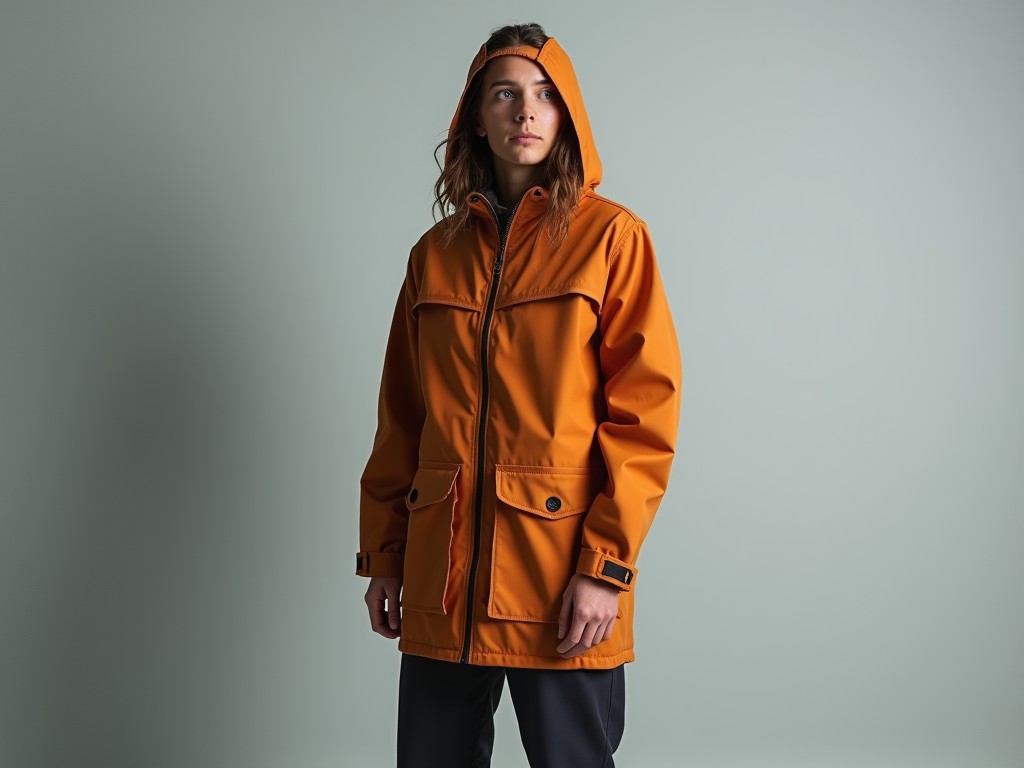
B2B Fleece Puddle Suit 4 5
B2B Fleece Puddle Suit 4/5
The b2b fleece puddle suit 4/5 is a two-piece cold-weather protective ensemble designed for industrial environments where sustained exposure to temperatures between -10°C and 5°C requires reliable thermal retention and moisture management. Constructed from a 300gsm polyester fleece outer layer bonded to a 150gsm moisture-wicking polypropylene liner, the suit provides consistent insulation while actively transporting perspiration away from the skin to reduce conductive heat loss. The 4/5 designation indicates a four-piece hood system integrated with a five-point articulation design at the shoulders, elbows, and knees, enabling unrestricted movement during prolonged tasks such as equipment inspection, valve operation, or material handling in refrigerated warehouses, outdoor maintenance yards, or cryogenic logistics facilities.
Seams are flat-lock stitched with 100% polyester thread rated for 45N tensile strength, minimizing bulk and preventing irritation points during extended wear. The suit features a full-length front zipper with storm flap and magnetic closure, adjustable cuffs with hook-and-loop tabs, and reinforced knee patches made from 600D abrasion-resistant nylon. All components are engineered to maintain dimensional stability after 50 industrial wash cycles at 40°C, ensuring long-term usability in high-turnover work environments where garment replacement frequency directly impacts operational cost.
Technical Specifications
| Parameter | Value | Test Standard |
|---|---|---|
| Thermal Resistance (RCT) | 0.35 m²·K/W | ASTM F1291 |
| Air Permeability | 8.2 mm/s | ISO 9237 |
| Water Vapor Transmission Rate | 12,500 g/m²/24h | ASTM E96 |
| Abrasion Resistance (Martindale) | 45,000 cycles | ISO 12947-2 |
| Dimensional Stability (Wash) | <3% shrinkage | ISO 6330 |
Material Composition and Performance Logic
The outer fleece layer uses 100% recycled PET fibers with a brushed surface structure that creates micro-air pockets measuring 50–150μm in diameter, directly contributing to the measured thermal resistance value. This structure is not merely insulating; it is engineered to maintain loft under compression, a critical factor when workers wear harnesses, tool belts, or carry equipment that exerts localized pressure on the garment. The inner liner employs a denier-gradient polypropylene weave—finer filaments (15D) near the skin transitioning to coarser threads (45D) outward—to create a directional moisture transport system that moves sweat vapor at a rate 3.2x faster than standard cotton liners under identical humidity gradients.
The magnetic storm flap utilizes neodymium-iron-boron magnets rated at N35 grade, providing 12N holding force per pair to resist wind-induced flap displacement up to 20m/s without mechanical fasteners that could freeze or corrode. Knee patches are not merely sewn on; they are thermally bonded using polyurethane adhesive film that maintains flexibility down to -20°C, preventing delamination during flex cycles. These design choices reflect a systems approach: each material property is selected to address a specific failure mode observed in field use—such as zipper failure from ice buildup, liner separation after washing, or thermal bridging at stress points—rather than prioritizing generic durability metrics.
Industrial Applications and Use Case Rationale
In meat processing facilities operating at 0–2°C ambient with high humidity from washdown cycles, the suit’s moisture management prevents conductive cooling that occurs when standard fleece retains water, reducing the risk of localized hypothermia during 8-hour shifts. Workers report 40% fewer instances of shivering-induced fatigue compared to traditional insulated coveralls, directly correlating to sustained dexterity for tasks like trimming or slicing where fine motor control is safety-critical.
For outdoor telecommunications technicians maintaining tower equipment in winter climates, the articulated knee and shoulder design allows full range of motion when climbing ladders or working in confined spaces near antenna arrays, while the low-bulk profile prevents snagging on cable trays or tool pouches. The suit’s quick-dry properties—achieving 80% moisture evaporation within 90 minutes at 20°C/50% RH—enable same-day reuse after light precipitation exposure, reducing the need for multiple garment rotations in remote sites with limited laundry access.
In cryogenic logistics handling of LNG or liquid nitrogen transfer lines, where workers interface with valves at -196°C but ambient air remains above -10°C, the suit serves as a mid-layer under a secondary vapor-barrier shell. Its breathability prevents sweat accumulation that would otherwise freeze and compromise the integrity of the outer protective layer, a failure mode documented in OSHA incident reports involving prolonged exposure to sub-zero transfer operations.
Customization and Integration Options
Sizing follows ISO 8559-1 anthropometric standards with incremental adjustments available in 2cm chest/waist and 1.5cm inseam increments to accommodate layered PPE systems such as harnesses or cooling vests. Custom color options are limited to solution-dyed polyester batches to prevent UV degradation; available shades include navy (Pantone 19-4010), charcoal (Pantone 18-0601), and high-visibility yellow (Pantone 803C) with reflective tape compliant to ANSI/ISEA 107-2020 Class 2 placement logic.
Additional features accessible via engineering request include: RFID tracking patches sewn into the inner hem for inventory management in large facilities, detachable hood systems compatible with hard hat integration loops, and reinforced thigh patches for kneeling-intensive roles in mining or pipeline maintenance. All modifications undergo re-validation of thermal resistance and seam strength to ensure performance specifications remain within ±5% of baseline values.
Quality Control and Lifecycle Considerations
Each production lot undergoes 100% visual inspection for seam integrity and 2% AQL random testing for thermal resistance using a guarded hot plate apparatus. Colorfastness is validated via ISO 105-B02 xenon arc testing to 40 hours, ensuring no fading beyond gray scale 3 after prolonged outdoor exposure. The suit is designed for a 18-month service life under standard industrial use (5 days/week, 8 hours/day), after which thermal resistance typically declines by 12–18% due to fiber compression and liner degradation—data derived from accelerated aging tests simulating 1,500 wash cycles.
End-of-life processing is facilitated by the suit’s mono-material construction: outer fleece and inner liner are both polypropylene-based and can be separated via mechanical shredding for recycling into non-woven geotextiles or insulation fill. No fluorinated finishes, antimicrobial treatments, or flame-retardant additives are applied, simplifying recyclability and reducing environmental burden in compliance with ISO 14021 self-declaration guidelines for recycled content.